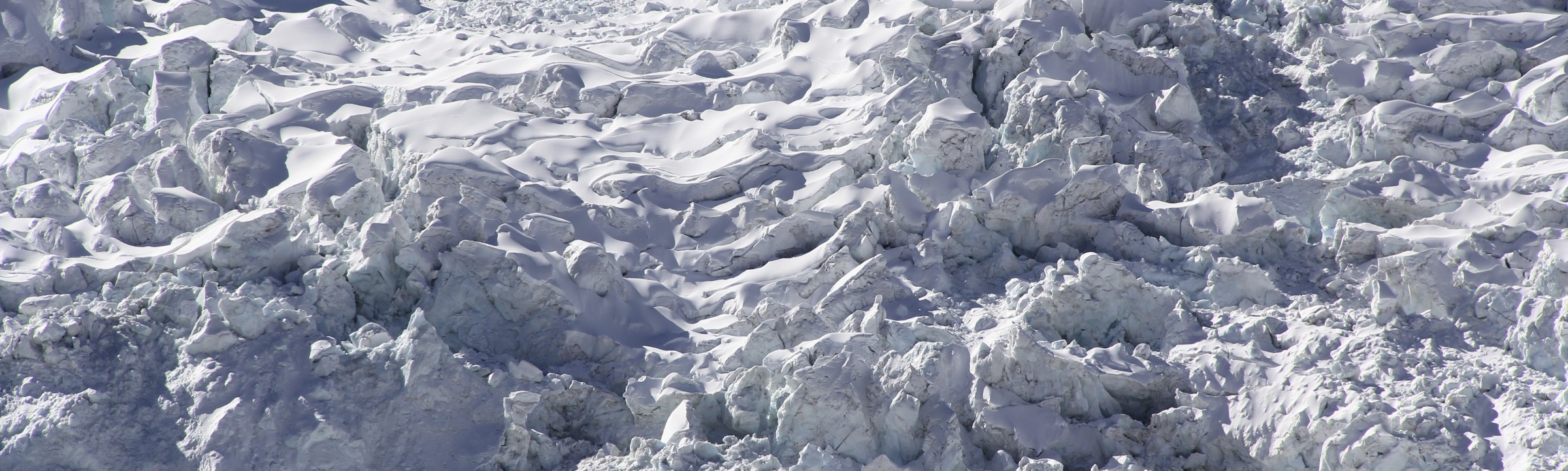
I caught a five hour bus east from Esfahan across one edge of the Dasht-e Kavir desert to the picturesque city of Yazd. I'd been told by a few different travelers that Yazd was their highlight of Iran, so I was really keen to settle down for a few days and explore the city and the region.
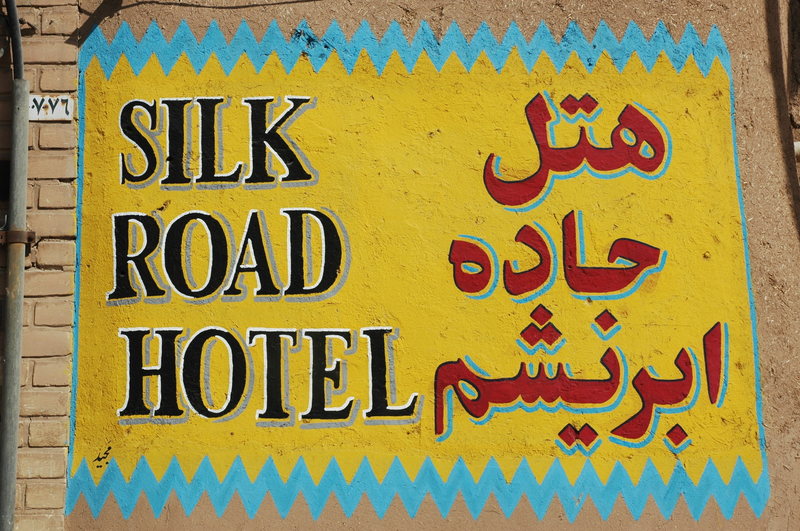
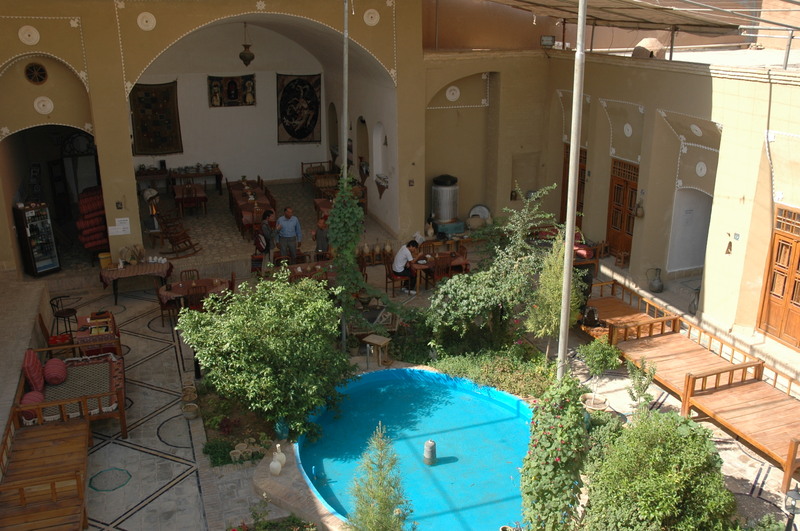
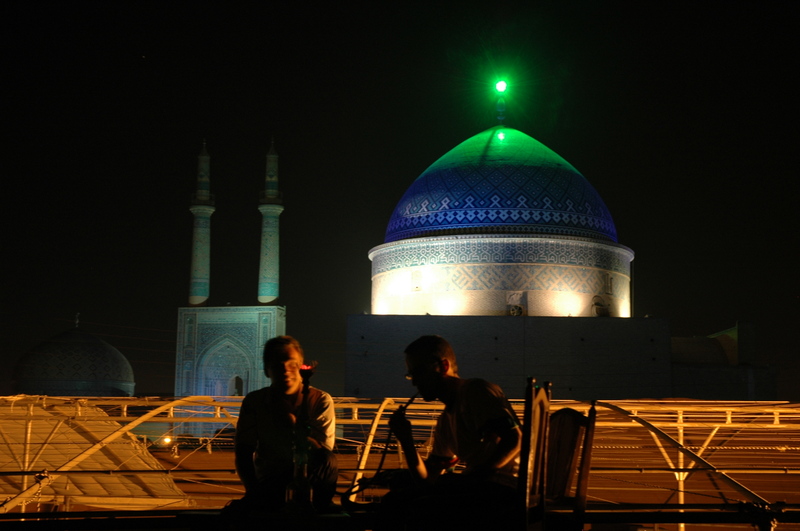
I checked in to the aptly-named Silk Road Hotel (I'm trying to retrace its route after all!) and settled down for the evening. For the first time since I arrived in Iran I met several other backpackers and travelers, and I have to admit it was great to be able to speak something more than pigeon English again! The hotel is awesome – a converted merchant's house, with a delighful central courtyard (they're very common here and remind me of another hot place – southern Spain around Sevilla) and rooftop area perfect for enjoying tea and a qalyan (water pipe) in the evenings. Check out the pics – not bad for $5 a night, eh?!
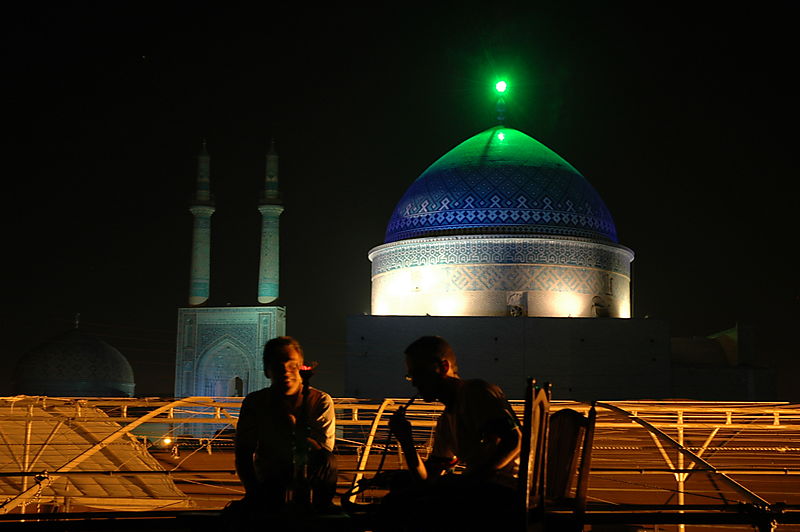
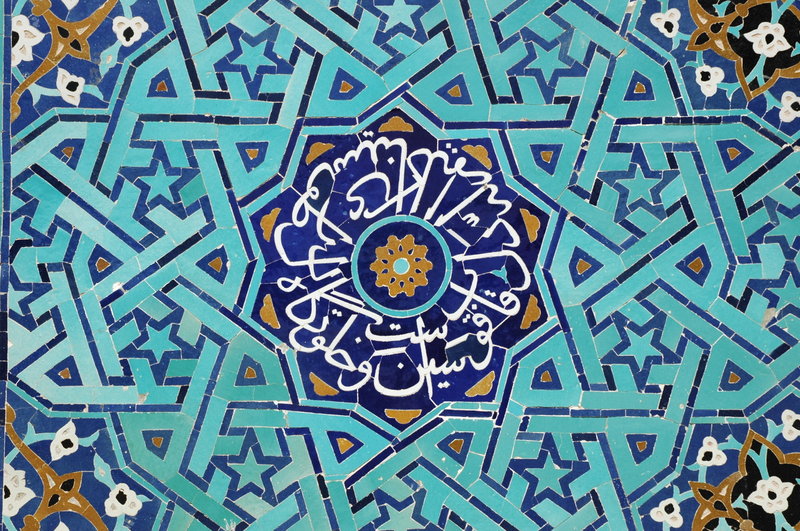
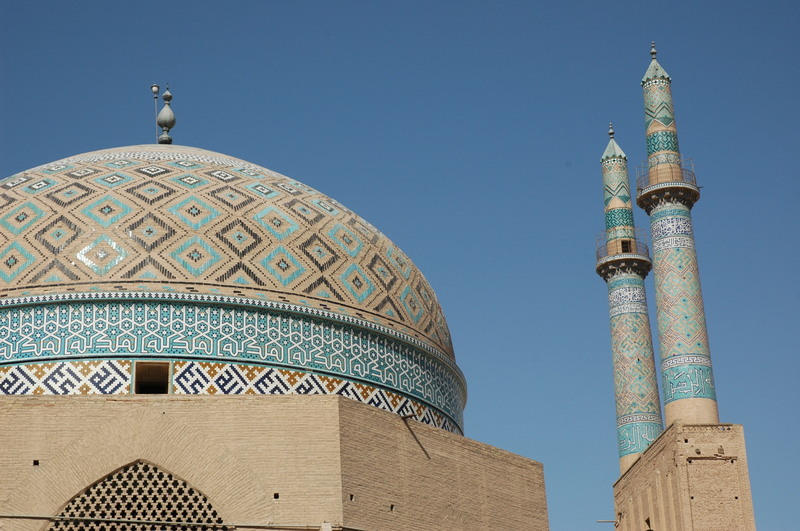
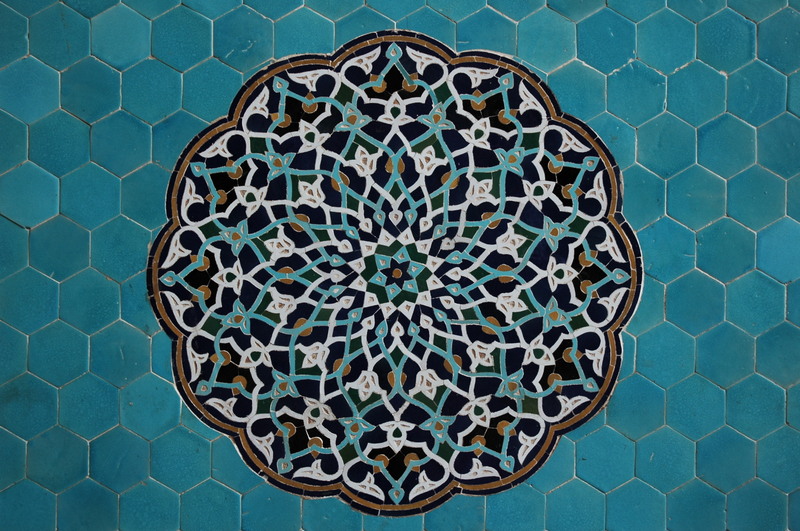
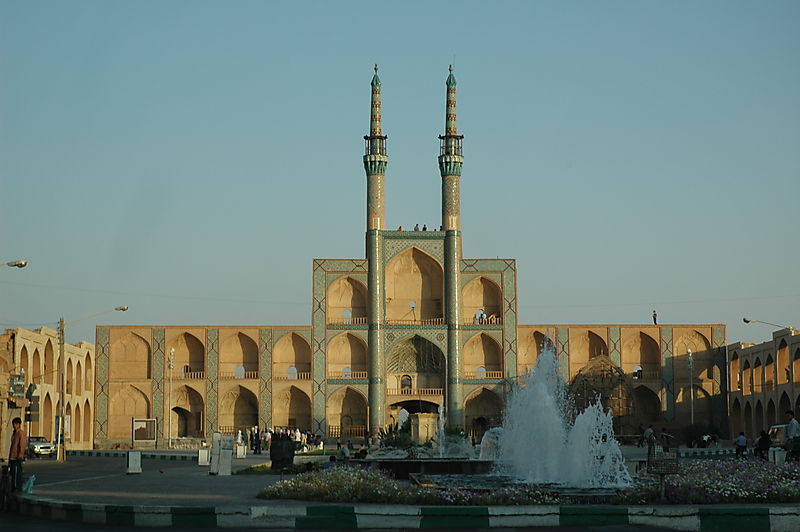
After my first good night's sleep in a while, I rolled out of bed, threw my boots on and went to explore the old city. First stop was the Jameh (Friday) Mosque right next door to the hotel which has a huge entrance portal topped with two beautifully tiled minarets from the 15th century.
Another highlight of the region around Yazd are its "qanats". These are underground water channels that have been dug and maintained for centuries. They carry water from the base of the mountains and fresh springs into the towns (for drinking etc.) and fields (for agriculture). If there's any one thing that makes living in this dry desert environment possible, it's the qanats. All through the city you see stairways down to the qanats where people used to go and collect water in jugs, and I was able to explore a couple. I also had a look in the interesting Water Museum and was astounded by some of the figures – the tunnels are sometimes over 60km long, dug completely by hand, and have been used in Iran for over 2000 years. Amazing! Unfortunately, since electric pumps came along, the water table has dropped so far that most of them aren't in use any more.
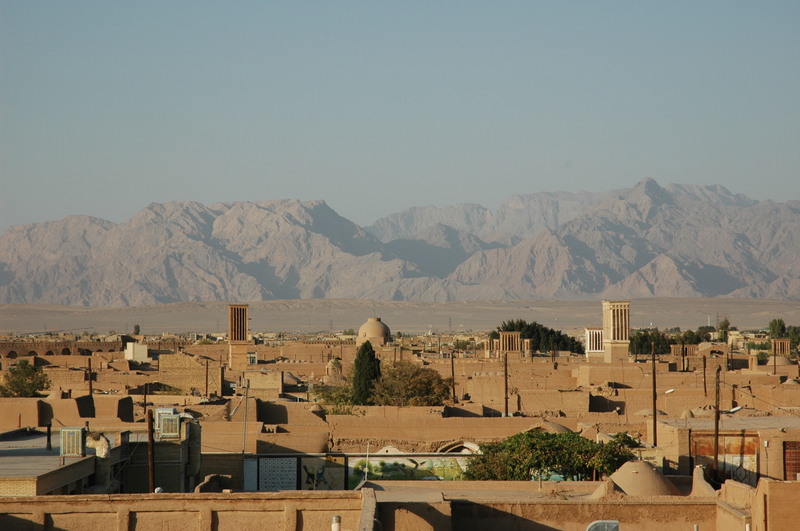
Like most of the towns around here the majority of the buildings are constructed out of mud and straw (perfect for all the earthquakes that Iran gets – remember Bam?), but the great thing about this place is that there's a really good concentration of them in the old city centre. It was great fun to wander around the alleys and get thoroughly lost. It was interesting to see the many "badgirs" – these are ingenious old ventilation "air cooling" systems sometimes over 30m tall that catch any breeze over the city and draw it into the house, cooling it with water on the way down. There are many still in use.
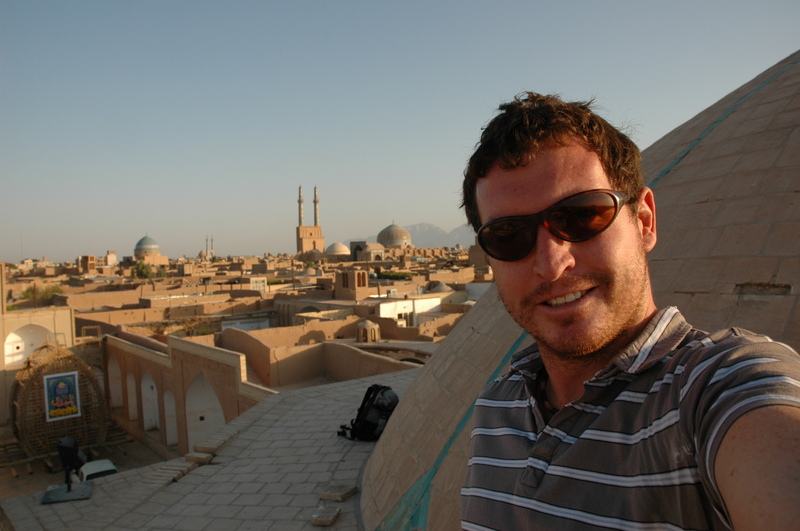
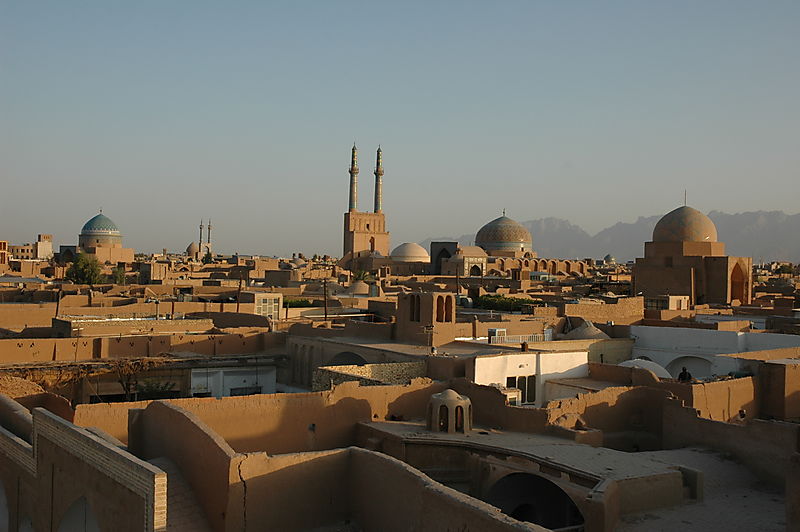
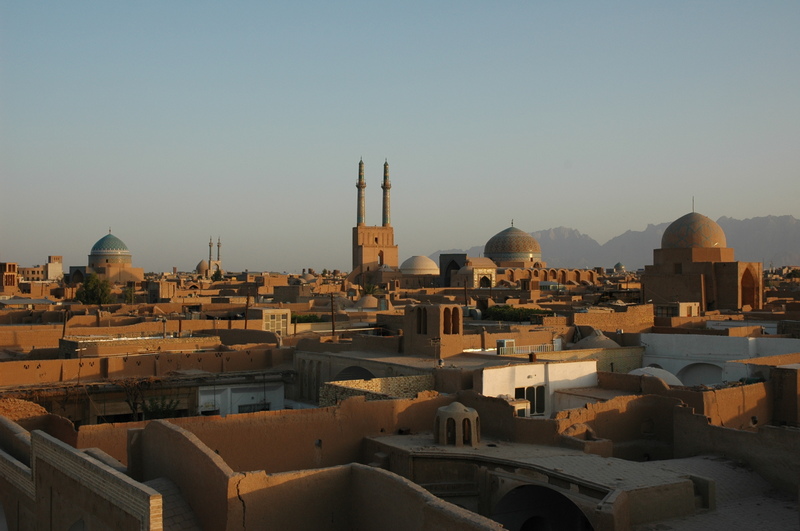
I wandered through the town and had a look at some of the sights along the way – a water reservoir with its own badgirs, the Tomb of the 12 Imams etc. I made my way to the derelict Hosseinieh and was allowed to climb onto the roof for sunset. I finally had my first unobstructed views over the town to the flat desert expanses and dramatic mountains beyond – fantastic! A real highlight of my trip to Iran.

I'm in Esfahan and LOVING it – THIS is the Iran I came to see! The city is Iran's masterpiece, the jewel of ancient Persia and allegedly one of the finest cities in the Islamic world. And it hasn't disappointed!!!
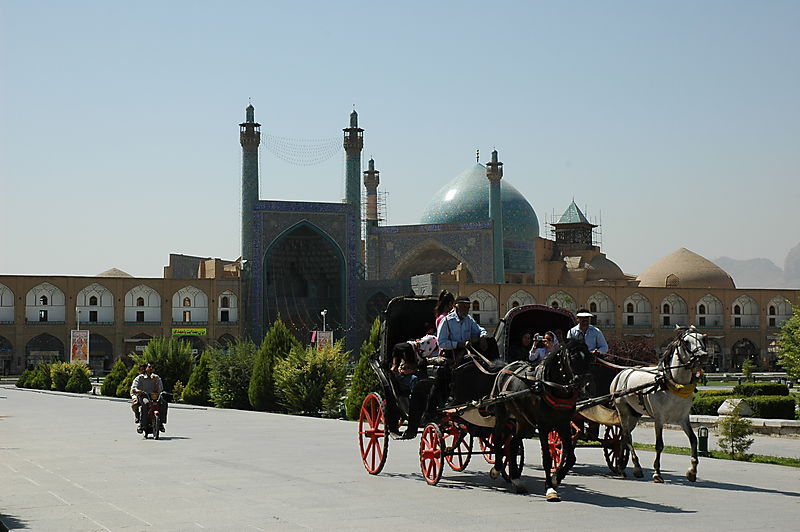
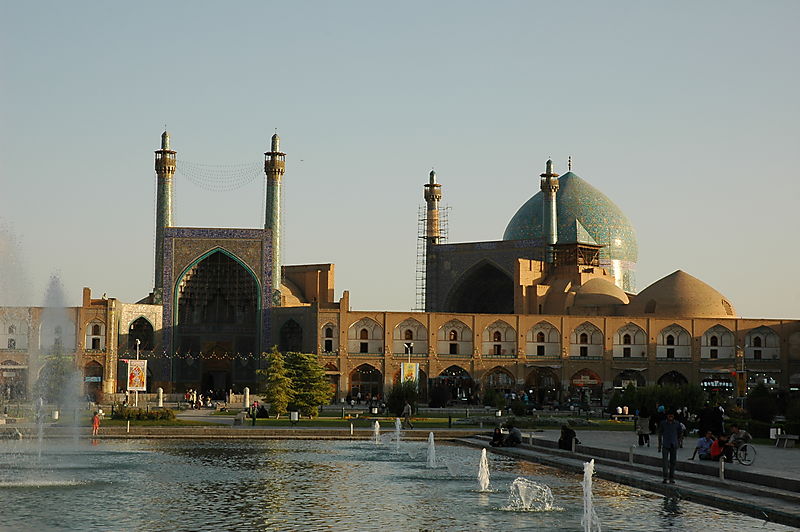
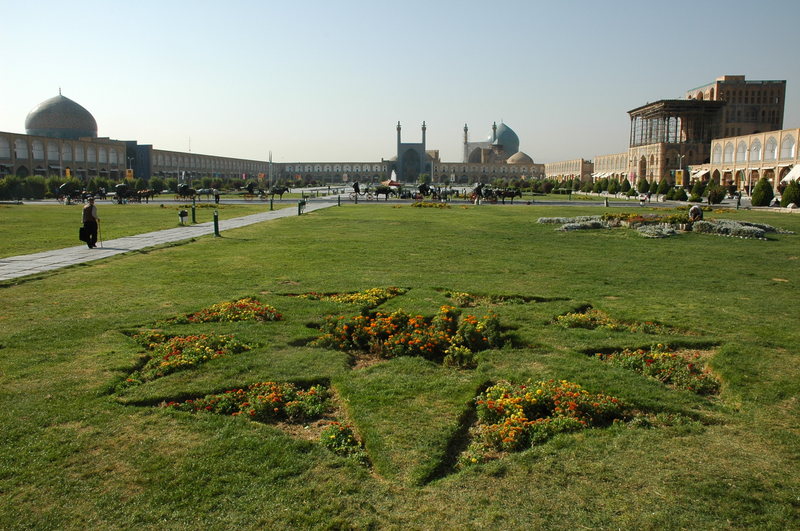
No I'm not boasting about seeing half of the world – not yet, anyway! The French poet Renier described Esfahan as "half of the world" in the 16th century, and it was the wonders surrounding the massive Naqsh-e Jahan (Pattern of the World) square that he was describing. The city flourished after 1602 when Shah Abbas the Great relocated his capital to Esfahan and set about building a truly royal city, with most of the grandest sights situated around the square (second largest in the world behind Tiananmen Square). The square has since been renamed Meydan-e Imam (Imam Square) and it's an incredible place to soak up and explore.
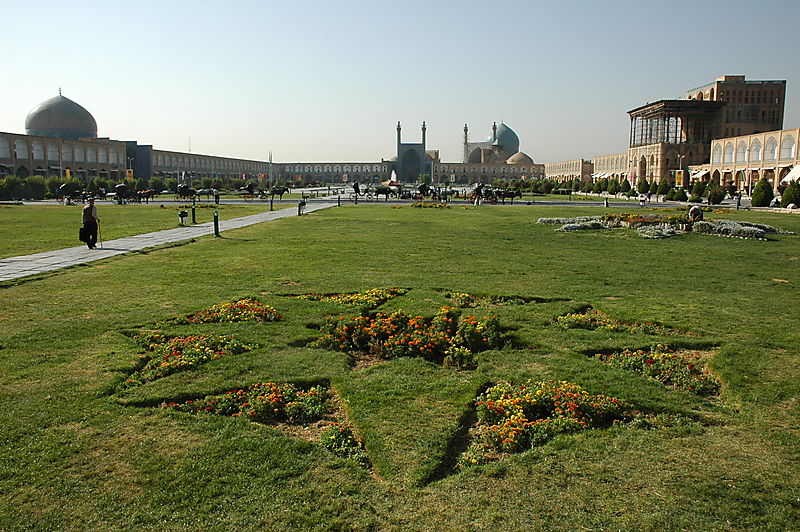
Here are a few of the sights around the square:
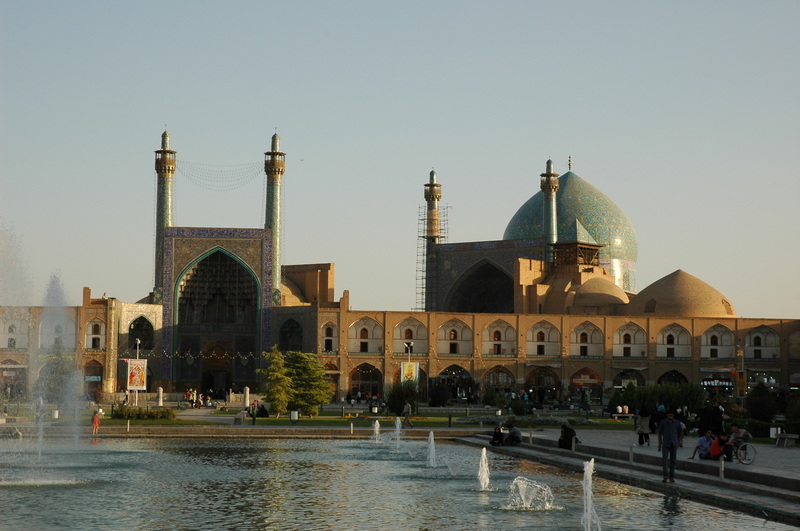
Imam Mosque: Built in 1611 over four years, the mosque is one of the finest in the world with beautiful blue-tiled mosaic designs and a wonderful symmetry to its structure. You enter the mosque through a 30m high portal flanked by two minarets, and from there you enter the main courtyard with a pool in the middle of it. Unfortunately there was a lot of renovation going on and the courtyard was covered with overhead tarpaulins, so I didn't get the "full effect". It was still impressive though. On each side of the courtyard was a tall iwan leading to a vaulted sanctuary. The main sanctuary to the south it topped with a 51m high tiled dome, and its construction is so perfect that if you clap your hands you hear over ten echoes come back.
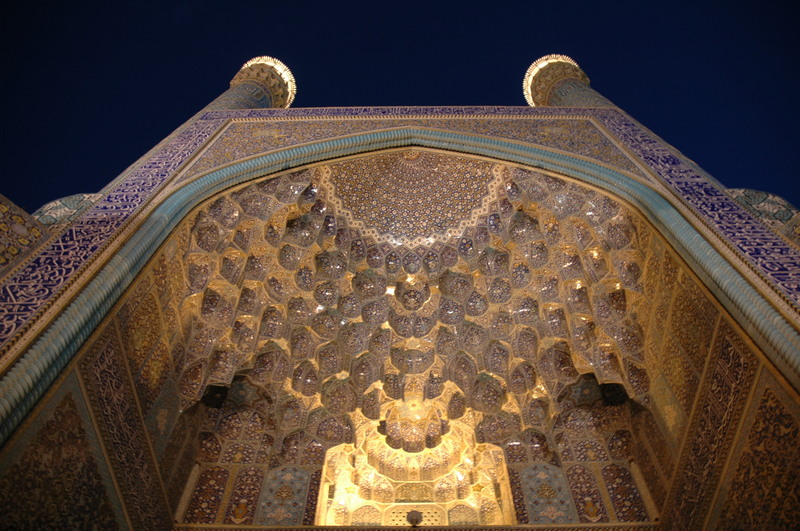
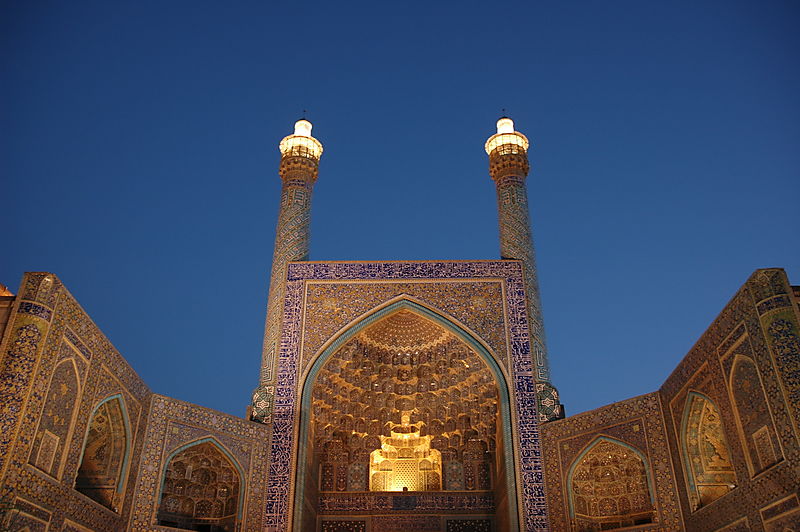
The entrance portal illuminated at twilight.
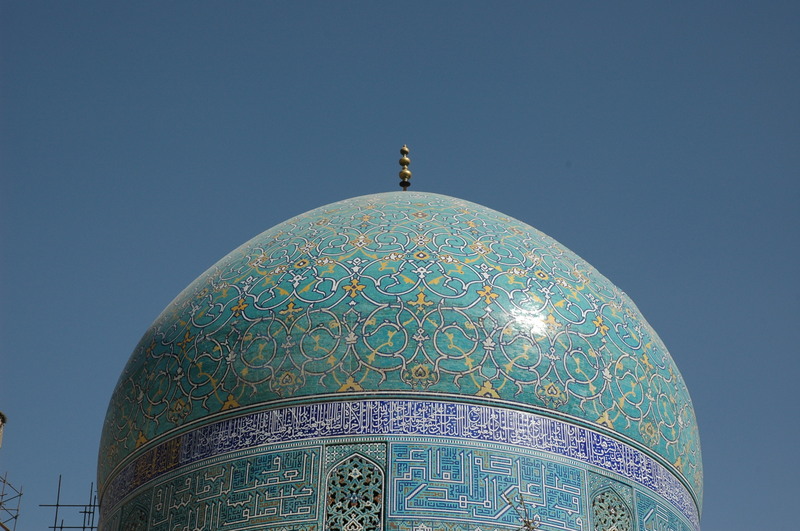
Sheikh Lotfollah Mosque: This smaller mosque on the eastern side of the square was my personal fave. Unlike the Imam Mosque, this one has a delighful cream-coloured tiled dome that changes colour dramatically at sunset. The entrance and the interior are exquisite and decorated with some fantastic mosaic tiles and Arabic script.

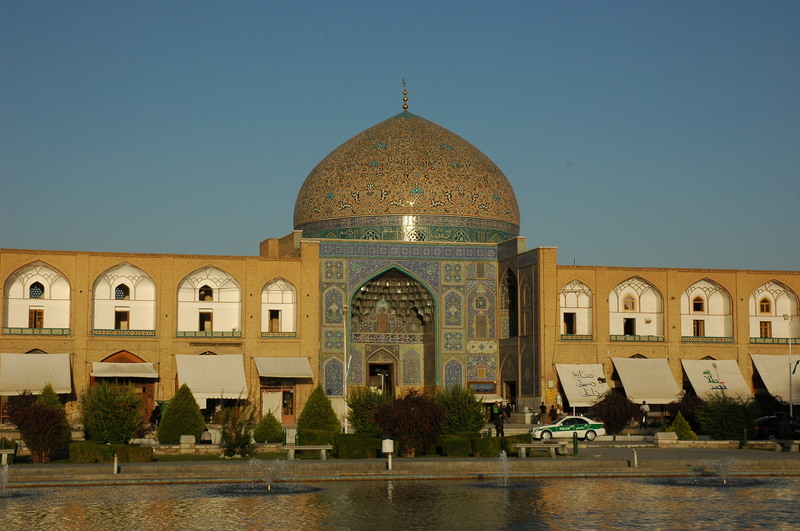
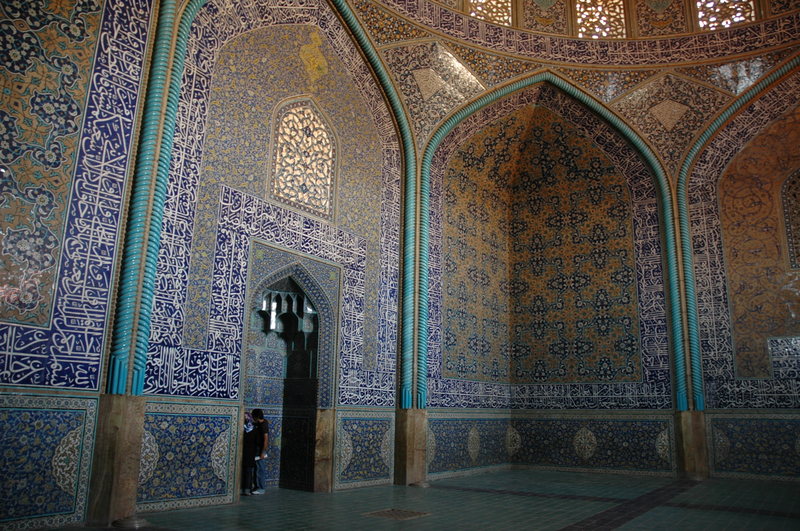
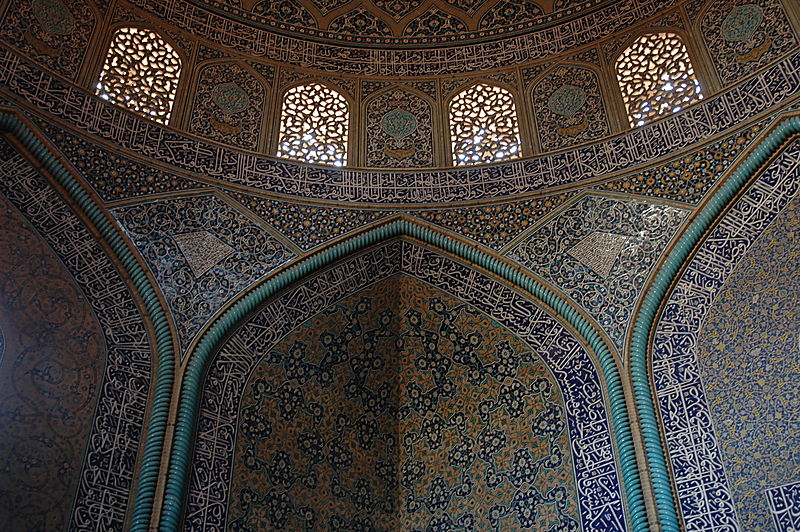



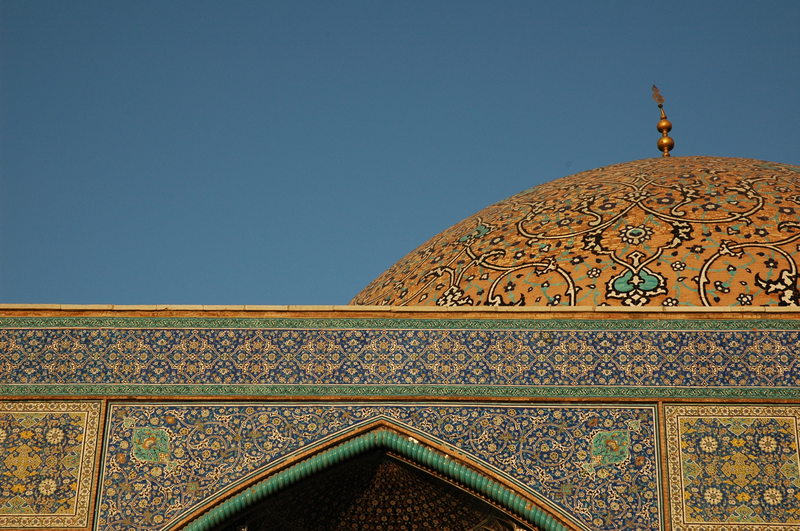
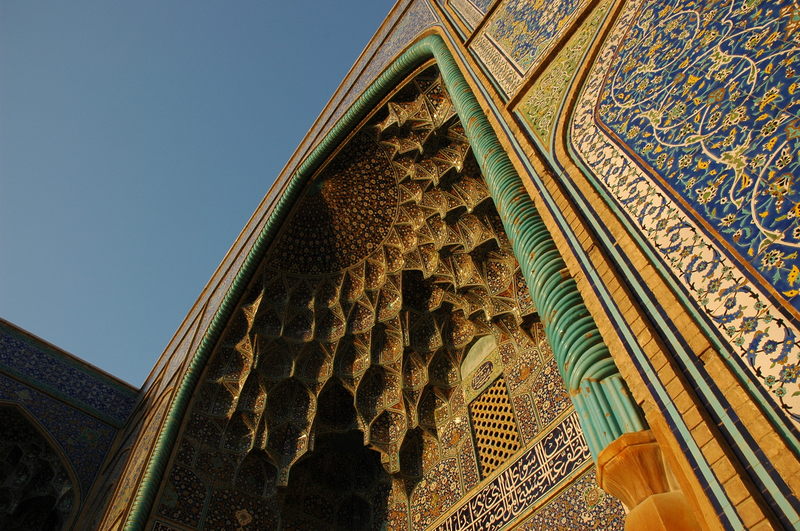
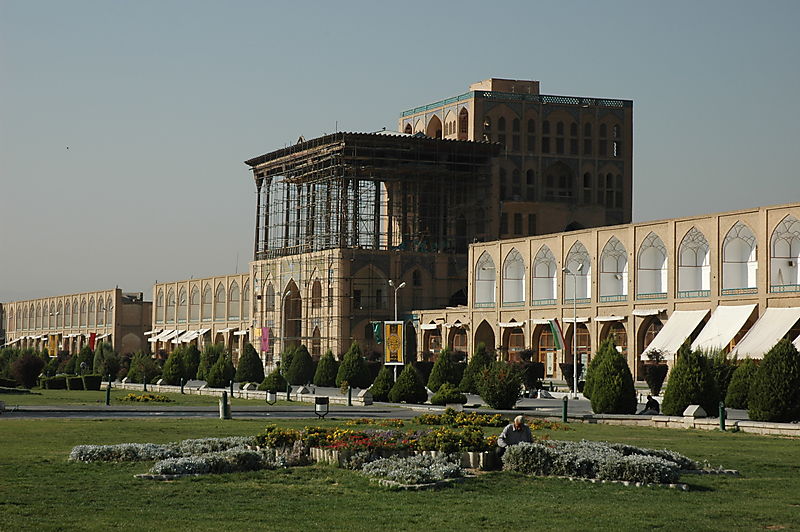
Ali Qapu Palace: The tall palace sits on the western side of the square, and also serves as a gateway to the royal buildings behind it. It has a large terrace a few floors up that has some of the best views of the square – but (of course) unfortunately most of the palace was covered in scaffolding!


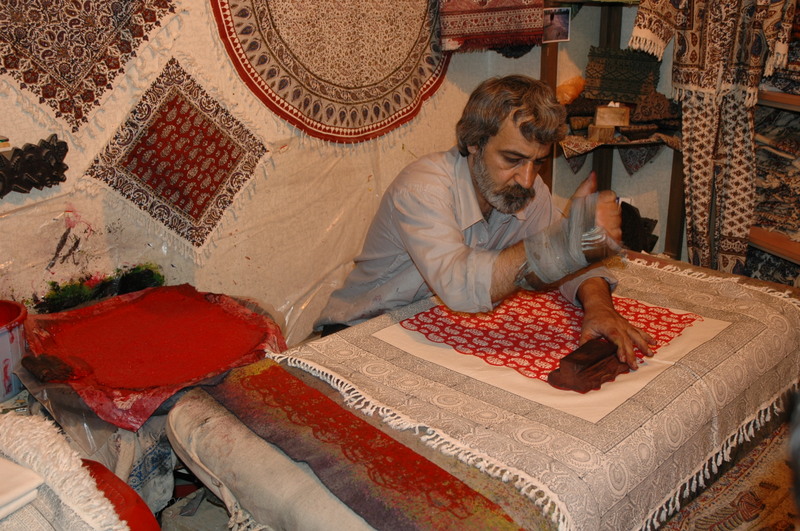
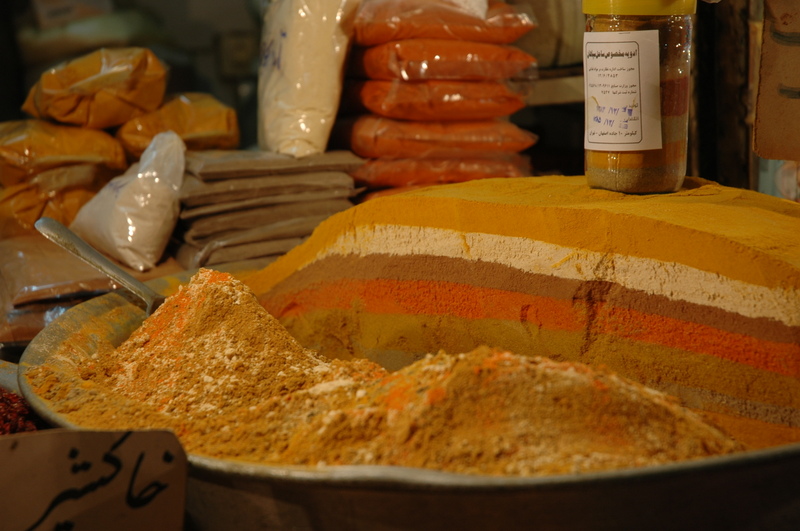
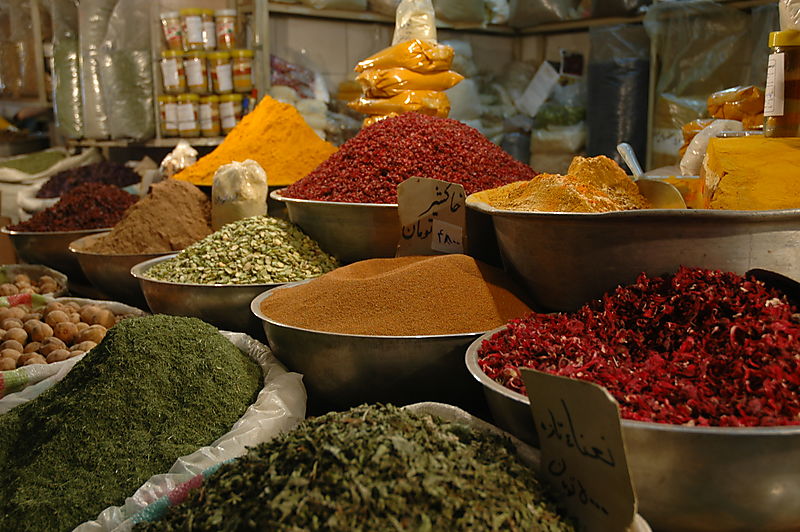
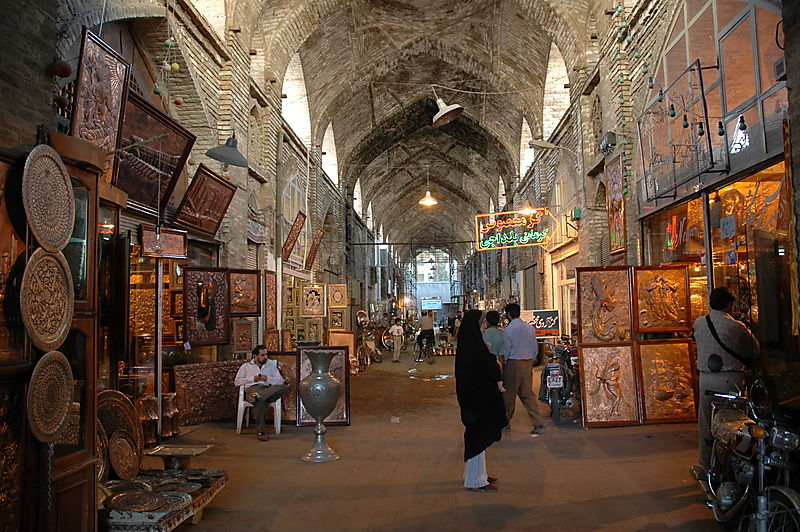
Bazar-e Bozorg: This covered bazaar is one of the largest in Iran, and can be entered from the north side of the square through the Qeysarieh Portal. It's a real labyrinth of passages with caravanserais spreading off to the sides, and good fun to get lost in for a couple of hours. There's everything in there from the ubiquitous carpet shop and souvenir knick-knacks to spices and everyday items that the Esfahanis come looking for.
I almost came close to buying a carpet while I was in Esfahan. I fell in love with a style called a "bijar" and started looking around the various shops to compare prices. Unfortunately, I quickly found that while reasonably priced, I just didn't have the cash to pay for them – if you'll remember, I had to enter the country with all the cash I'd need, as credit cards and travelers cheques don't fly here.
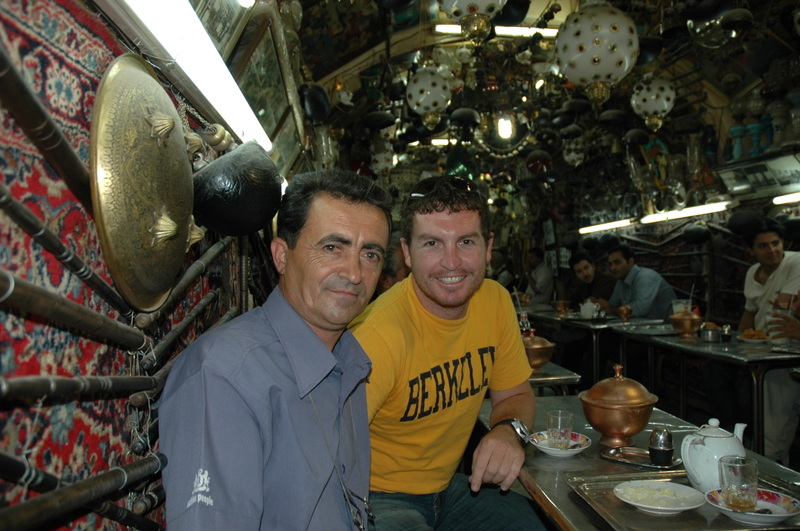

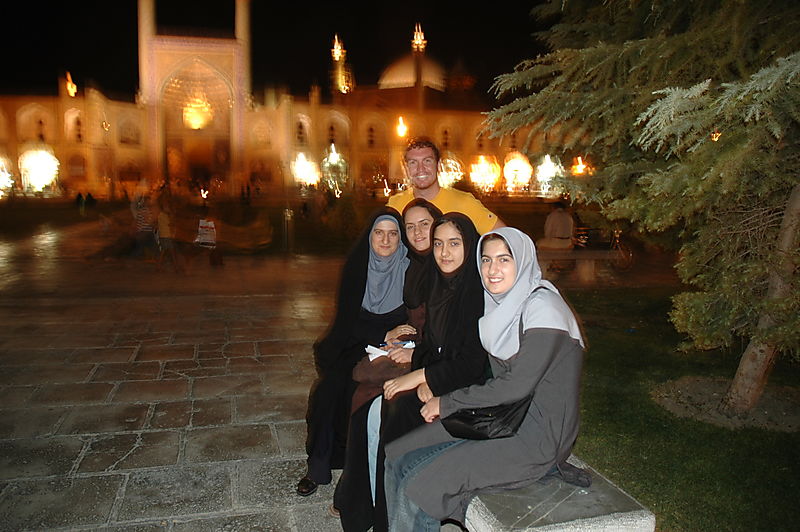
(L) Enjoying a tea in the most eccentric of tea houses. (R) Chilling in the square with my new-found friends.
Jameh Mosque: At the other end of the bazaar, a few kilometres away from Imam Square, is 800-year-old Jameh Mosque. It's been added to for centuries and therefore provides you with a glimpse of the different architectural styles through the ages – Seljuk, Mongol, Safavid, Timurid etc. It has an open plan with four iwans facing the central courtyard. Much of it was covered in scaffolding for renovations and repairs, but it was still spectacular.
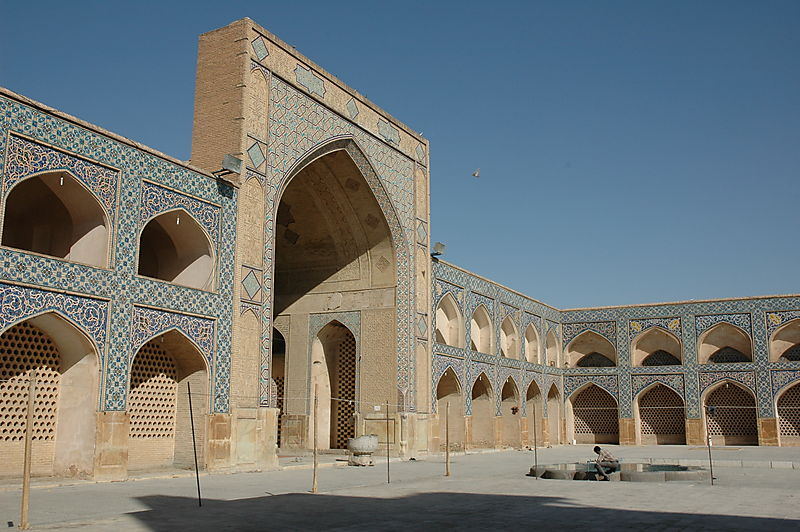

And some other sights around the city:
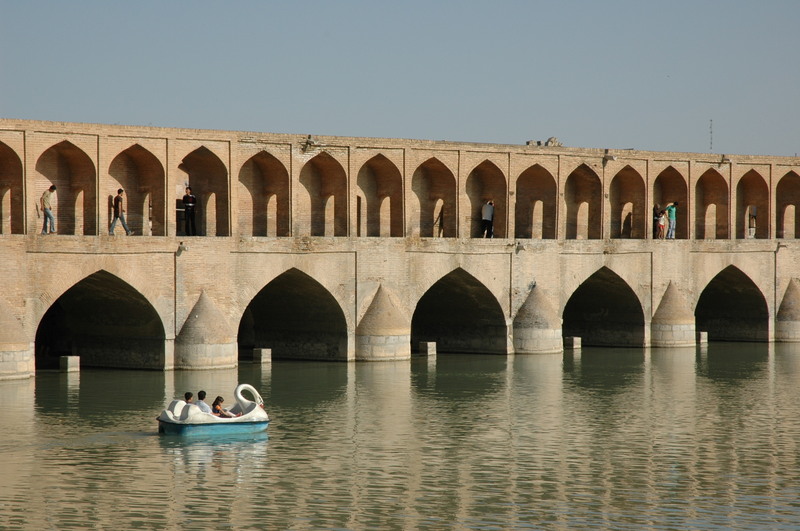
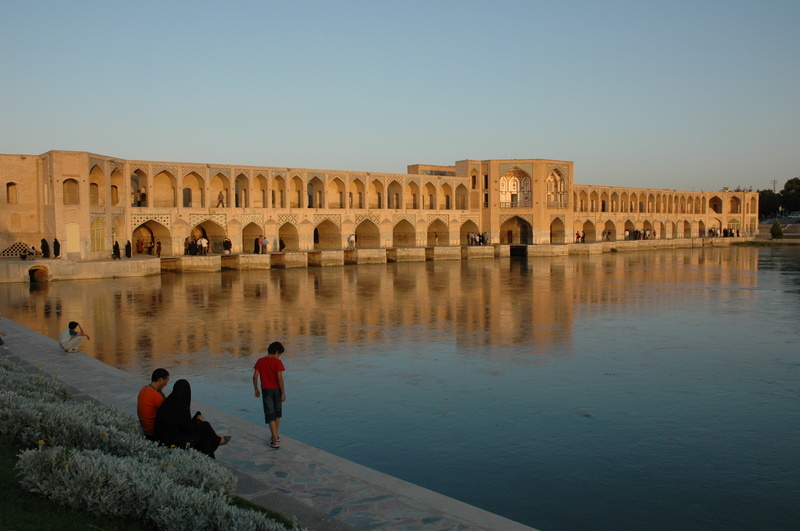
Zayandeh River Bridges: The river running through the city is almost unique in that it rises up out of the ground upstream of the city, and disappears back underground downstream of the city. In Esfahan, the river is crossed by several old bridges built in the early 17th century. My two picks were the 298m-long Si-o-Seh bridge and the 132m Khaju Bridge. I spent an afternoon walking along thr river bank through parks from one bridge to another, stopping off at teahouses along the way to chat to the locals.
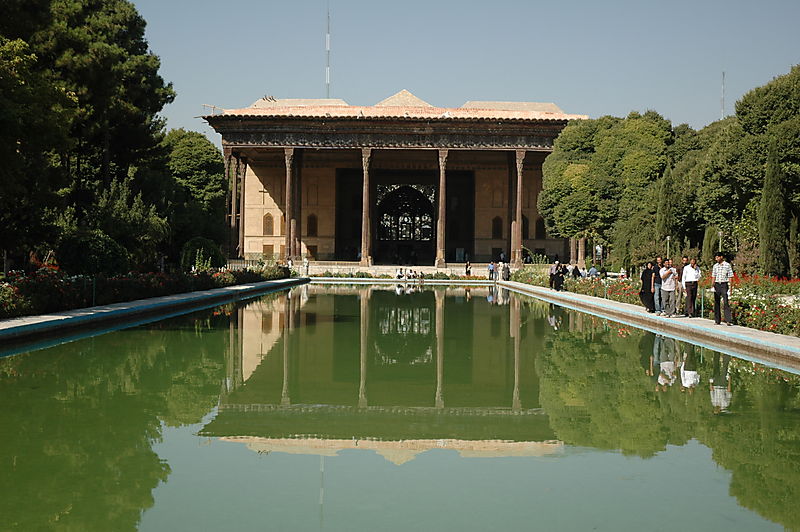
Chehel Sotun Palace: Just off Imam Square, this palace is the one that the Shah built for himself in the early 1600s (although the present-day structure was built in 1706 after a fire). It's entered via a talar terrace with slender wooden pillars that makes a lovely transition from the pool in front of the building to the interior of the building. The Great Hall inside was decorated with some lovely frescoes, some unfortunately in not such good shape after Afghans (18th century) and revolutionaries (1979) had their wicked way with them.

I got up early this morning and raced back up to the Chinese Embassy at 9am opening time. I wanted to get the visa cranked out that day and knew I was against the clock (consular diplomats are lazy the world over and only work a couple of hours for a couple of days of the week). When my taxi rounded the corner, I was astounded to see hundreds of people waiting outside. Shit!!! Turned out that the Canton Fair is coming up soon and all the businessmen were after their visas for it. It also turned out that people had been camping out since the previous evening to make sure the got served. F#ck. What hope would I have?
Weeeeeell, I turned on the foreign tourist card and it worked like a charm. I was bumped up the order and dealt with in a cool 15 minutes. I then had to go to the bank to pay the visa fee, but once that was out of the way I had time to kill until the 2pm pick-up. Luck played its part and I bumped into a local guy I'd met briefly the previous day at the embassy (he had his own visa woes). His name was Mohammed, an entrepreneur in the ceramic tile business. When he heard my plan was to sit on my pack and read a book until I could get my passport back, he had none of it and was instead keen for me to come with him to his house in North Tehran to meet his wife. Kelly turned out to be a Texan who'd met Moh in Kyrgyzstan a little while back, and they'd got married just 1 1/2 months ago. Kelly was, like me, going crazy in Tehran and she was really glad to have some "Western" company for the day.
Actually, hanging out with them in their gorgeous North Tehran apartment was a real eye-opener into modern Iran, and it was a great chance to talk to Moh and his cousin Reza about their business, politics (domestic and international) and life in Iran. At one stage I joked with Kelly that after a month and a half in Iran she must be dying for a beer – next thing you know I had a cold Tuborg in my hand! Turns out that drinking alcohol in the Armenian Christian community is tolerated by the regime, and a healthy black market in booze has sprouted up around it. It was also particularly entertaining watching Kelly grumble and moan as she changed out of her shorts and t-shirt into loose and baggy "outdoor" clothes (gotta watch out for those fasion police!), and I especially liked her half-arsed attempt at a head scarf.


Typical urban scene in North Tehran. Saying goodbye to Moh and Kelly.
It was hard to drag myself away from such comfy surroundings, but I knew I had to get going to get out of Tehran that night. Reza gave me a ride down to the Metro and I caught it to the gigantic Southern Bus Terminal to find a bus headed my way. Of course I hadn't factored in that it was the equivalent of a Friday evening AND the one big long weekend of the year, so the place was rammed! People and chaos everywhere, buses full and turning away people. I was desperate to get out of the city at that point but thought I was screwed and prepared to sleep in the station, but in a last-ditch effort I was able to wangle a ticket later that night – phew! I kicked around the terminal for hours as I waited, sitting on my backpack and watching the world go by, still feeling pretty worse for wear.
It wasn't a long bus ride to Kashan but it was well past midnight by the time we arrived. Once again a local man took me under his wing and made sure I got to my hotel and found a bed for the night. AND FINALLY I'M OUT OF TEHRAN!!! YAY!!! It's such a relief to be out of there, the city didn't exactly enthrall me. And boy did I sleep like a baby on the lumpy, hard mattress…
The next morning I got up with a spring in my step, feeling well-rested, healthier, and keen to get out there and see what Kashan has to offer. I knew the bazaar would likely be closed because of the public holiday but I walked through it anyway. I eventually found my way to Khan-e Tabatabei, and old mid-19th century traditional house once owned by a wealth merchant. It was great to wander around and enjoy the architecture of the place (which reminded me in parts of some of the stuff I saw around Agra Fort in India), and I had the place all to myself.


Domed ceiling. Mirrored walls.


Old school water cooler!
After lunch I caught a taxi out to Bagh-e Tarikhi-ye Fin, a peaceful set of gardens and fountains built around a series of natural springs. Peaceful was what I wanted but screaming kids was what I got! It was the start of celebrations for the Birthday of Imam Mahdi, the "12th Imam", and every family in Iran had clearly head to the hills to camp out on any patch of dirt/grass they could find and picnic. The garden itself was a bit of a let-down (the fact I haven't even got a good photo of it to put here is a bit of a giveaway) but it was interesting to see where former prime minister Amir Kabir was imprisoned in the 1840's and in 1951 given the choice of how he wanted to die by the Shah (in case you're wondering, he went for slitting his own wrists).

That evening, following a long sermon from the Supreme Leader blasted out all around town, the streets filled as everyone came out to celebrate the 12th Imam's birthday, one of the holiest days of the year for the Persians. I was shown around town by a group of young boys with furry moustaches, whose English unfortunately wasn't good enough to answer my questions about what was going on. It was all a little confusing, but a spectacle I'm glad I got to see.
I've had many examples of Persian hospitality since I've been here, but this one was a stand-out. I was wandering through the gardens when a middle-aged man approached me. He was a bit podgy and had terrible teeth, and at first I thought he was coming over to practice his English with me (I get that a lot). I quickly realized that wasn't the case as his vocab consisted of just a handful of words. He enquired as to why I was Iran – it's the generic question I get asked – and, seemingly happy with my reply, walked off. Later on he approached me again and said, "Sir I am at your service, my house is yours." Incredible…! I of course thanked him profusely.
Early the next morning, before I headed to the bus station to catch my bus for Esfahan, I took one last slow lap of the bazaar. I struck gold at one tea house and was let up onto the mud-and-straw roof of the bazaar to get a birds-eye view of the town.


Fascinating shapes in the domed roof of the bazaar.


On the roof of the bazaar.


A pretty "typical" tea house that I found in the Kashan bazaar. Note the eccentricities and influence of the Zoroastrian religion with the combination of fire and water in the fountain.