Day 98: I’ve Now Seen “Half of the World!”
I'm in Esfahan and LOVING it – THIS is the Iran I came to see! The city is Iran's masterpiece, the jewel of ancient Persia and allegedly one of the finest cities in the Islamic world. And it hasn't disappointed!!!
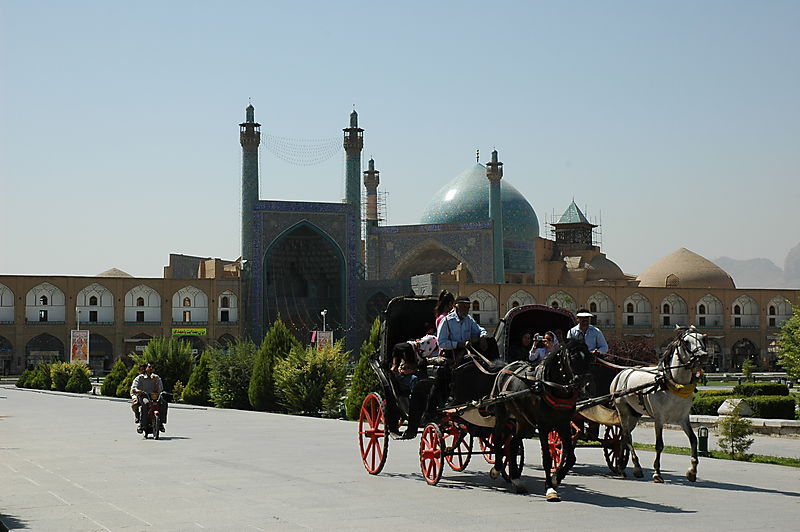
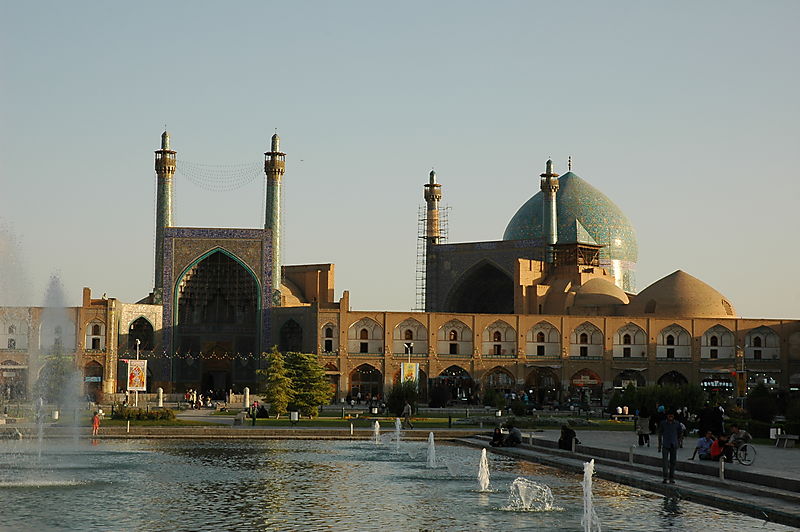
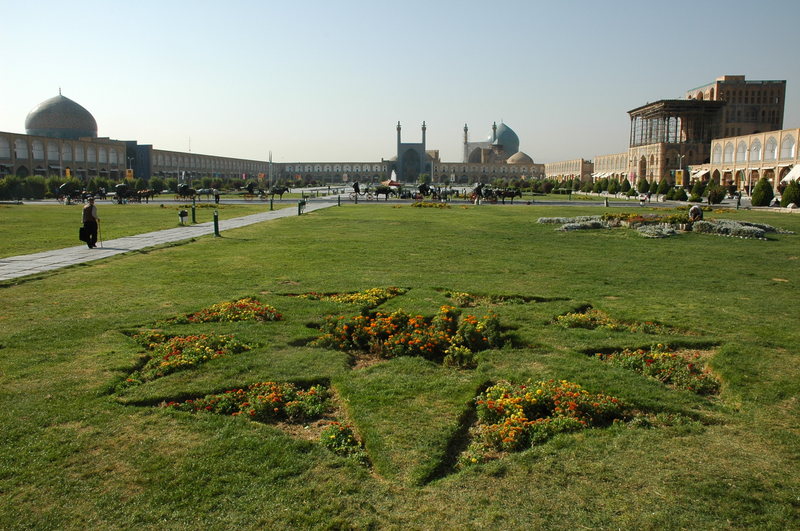
No I'm not boasting about seeing half of the world – not yet, anyway! The French poet Renier described Esfahan as "half of the world" in the 16th century, and it was the wonders surrounding the massive Naqsh-e Jahan (Pattern of the World) square that he was describing. The city flourished after 1602 when Shah Abbas the Great relocated his capital to Esfahan and set about building a truly royal city, with most of the grandest sights situated around the square (second largest in the world behind Tiananmen Square). The square has since been renamed Meydan-e Imam (Imam Square) and it's an incredible place to soak up and explore.
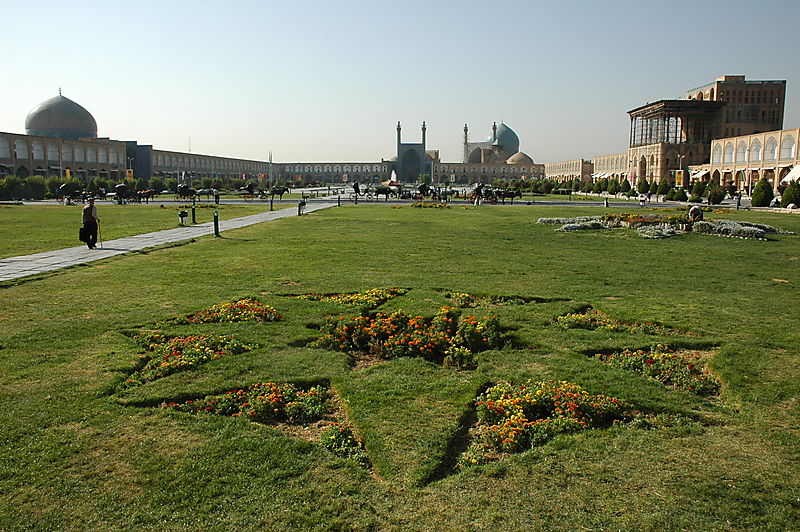
Here are a few of the sights around the square:
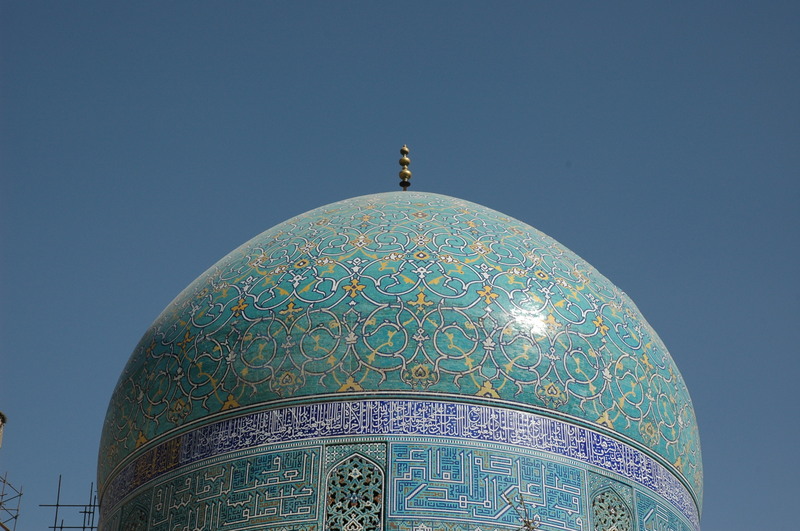
Imam Mosque: Built in 1611 over four years, the mosque is one of the finest in the world with beautiful blue-tiled mosaic designs and a wonderful symmetry to its structure. You enter the mosque through a 30m high portal flanked by two minarets, and from there you enter the main courtyard with a pool in the middle of it. Unfortunately there was a lot of renovation going on and the courtyard was covered with overhead tarpaulins, so I didn't get the "full effect". It was still impressive though. On each side of the courtyard was a tall iwan leading to a vaulted sanctuary. The main sanctuary to the south it topped with a 51m high tiled dome, and its construction is so perfect that if you clap your hands you hear over ten echoes come back.
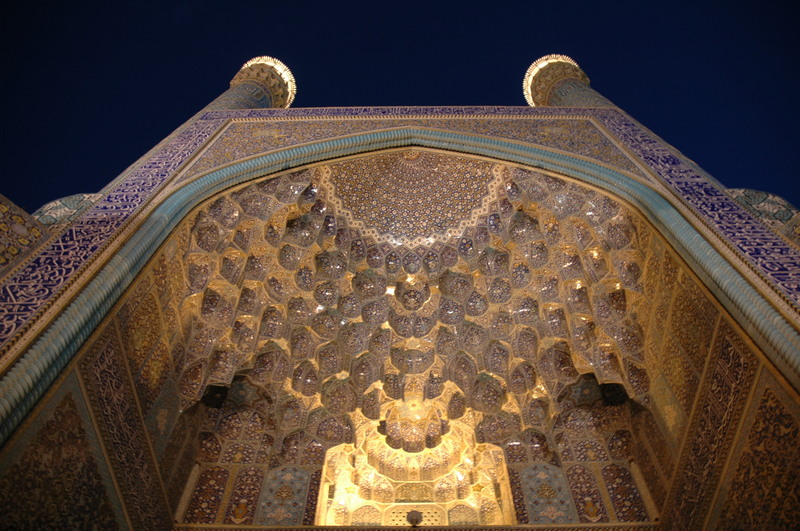
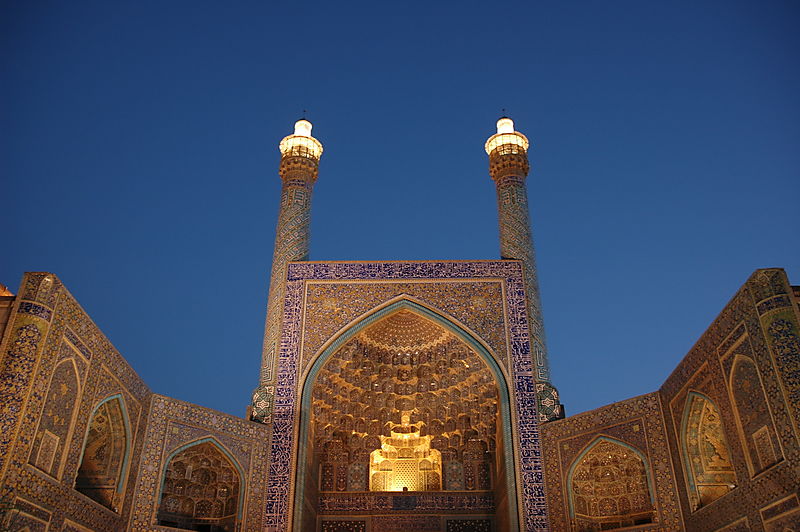
The entrance portal illuminated at twilight.
Sheikh Lotfollah Mosque: This smaller mosque on the eastern side of the square was my personal fave. Unlike the Imam Mosque, this one has a delighful cream-coloured tiled dome that changes colour dramatically at sunset. The entrance and the interior are exquisite and decorated with some fantastic mosaic tiles and Arabic script.

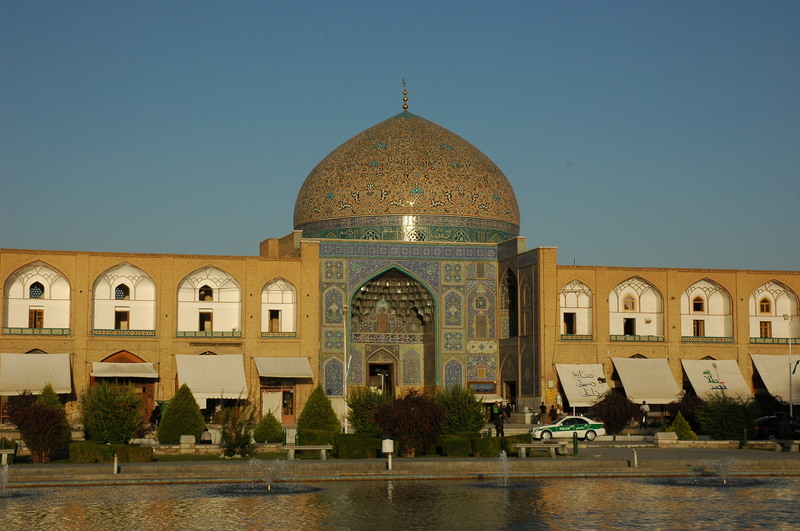
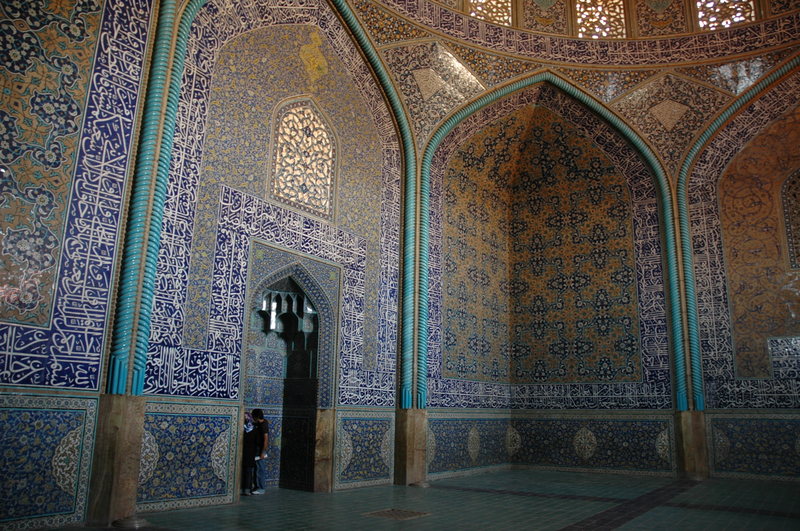
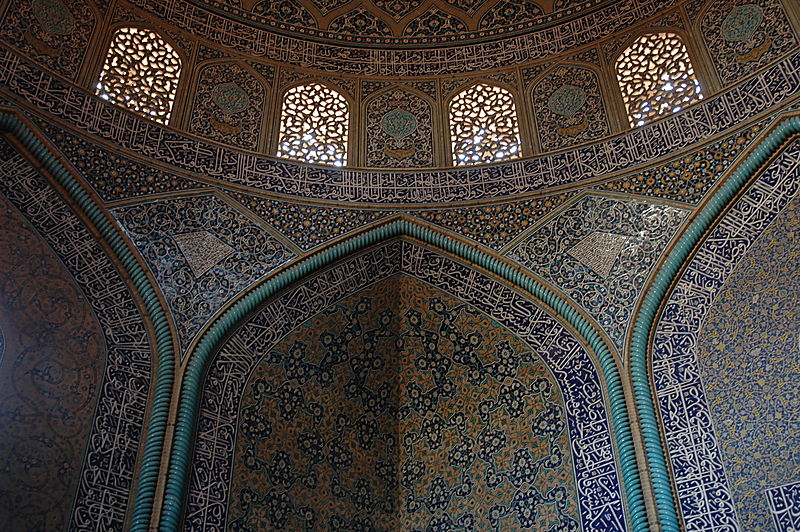


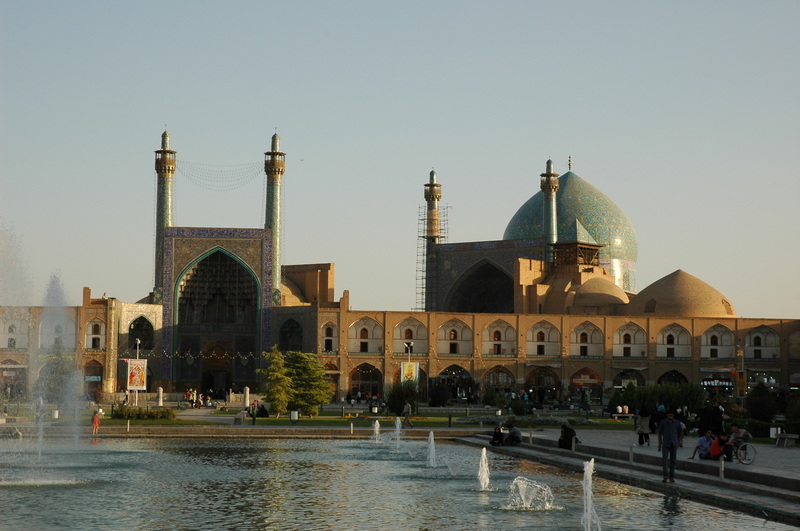

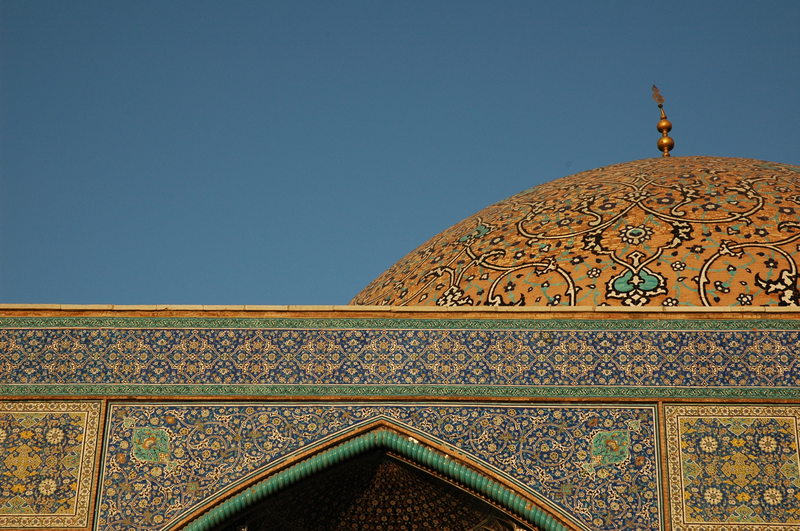
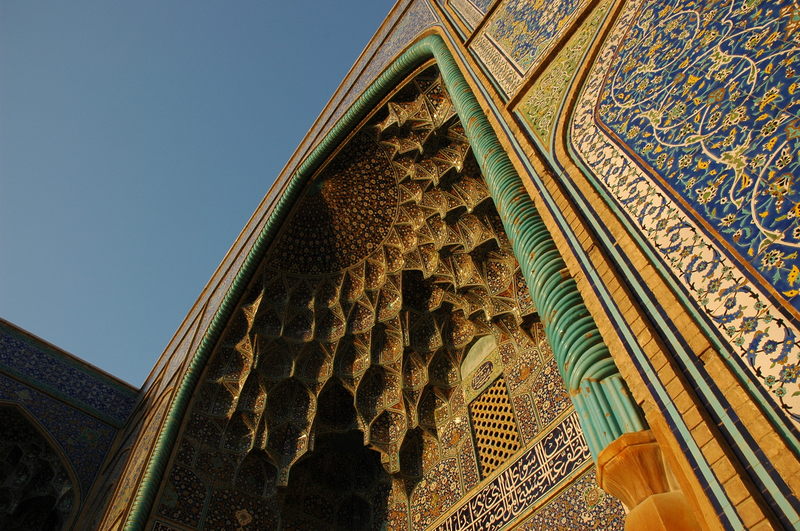
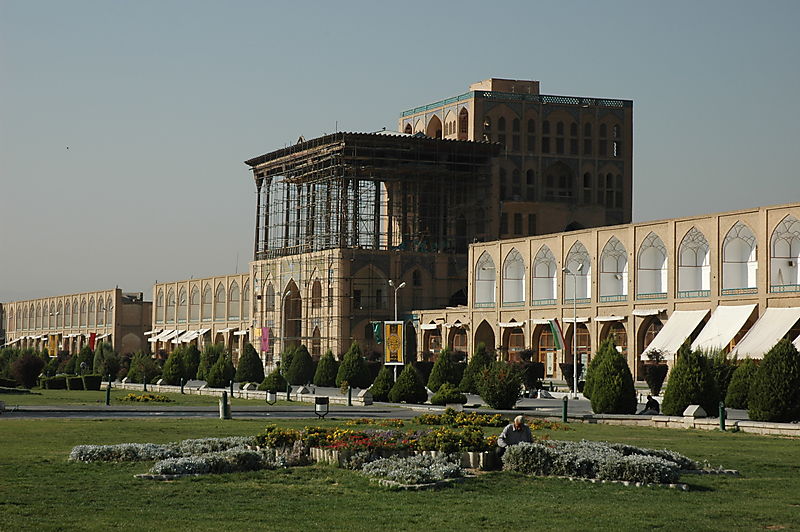
Ali Qapu Palace: The tall palace sits on the western side of the square, and also serves as a gateway to the royal buildings behind it. It has a large terrace a few floors up that has some of the best views of the square – but (of course) unfortunately most of the palace was covered in scaffolding!


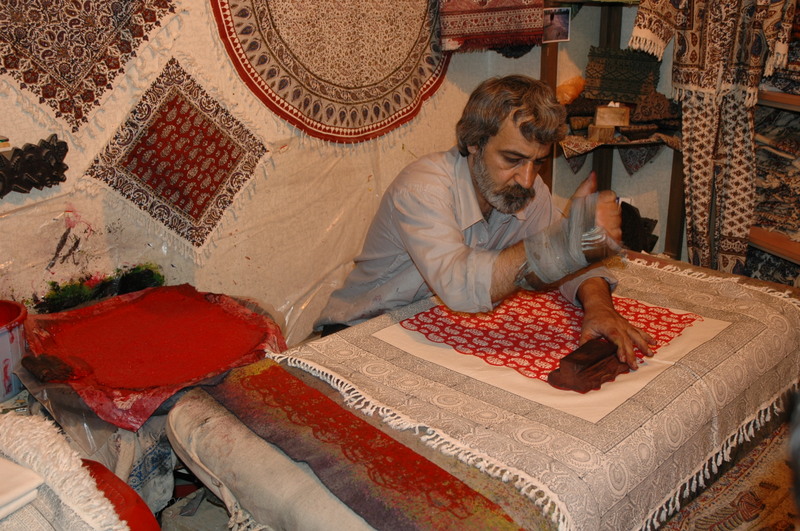
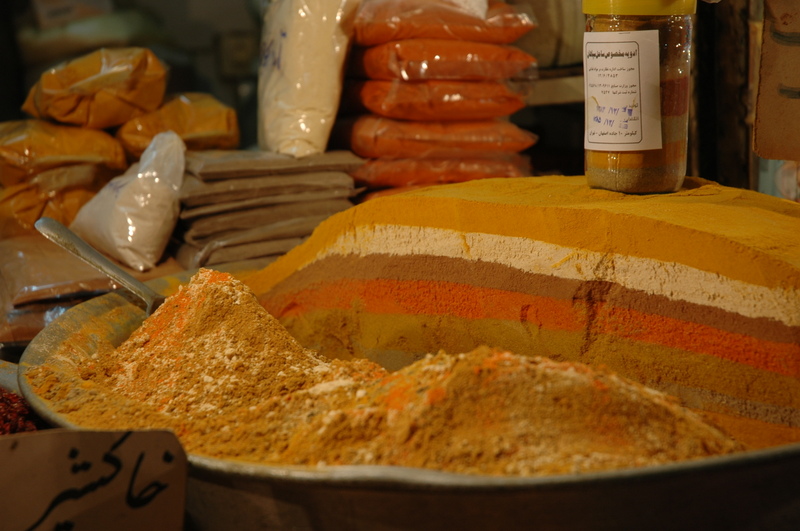
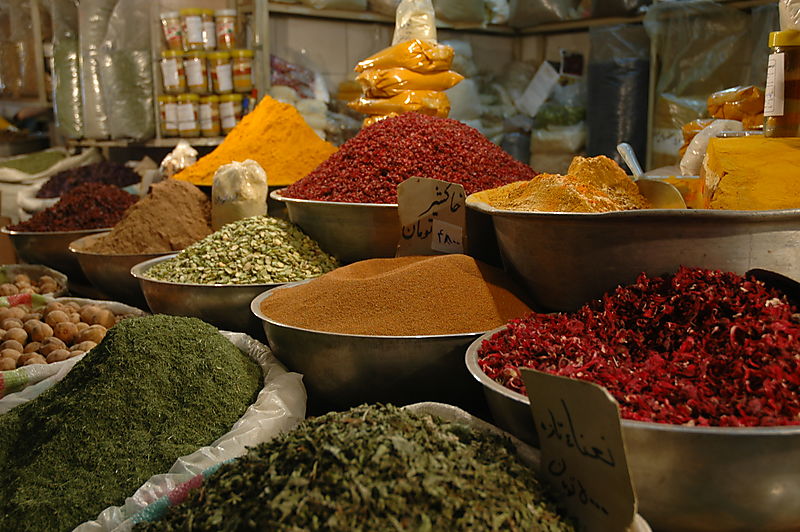
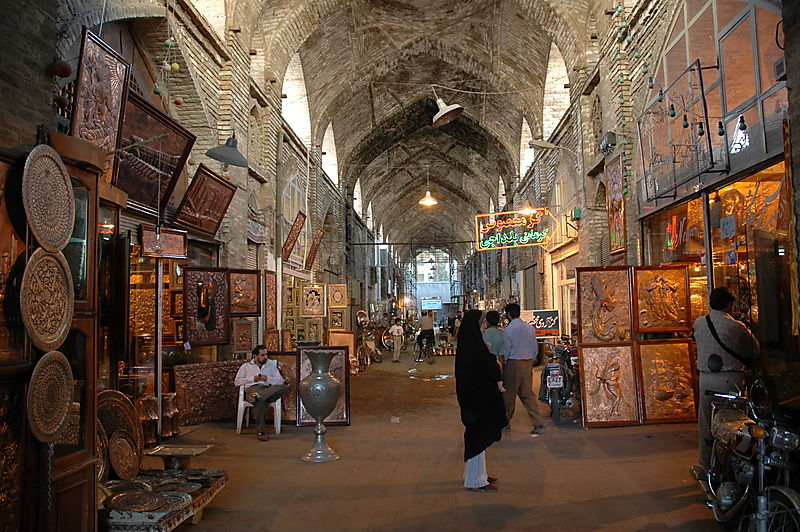
Bazar-e Bozorg: This covered bazaar is one of the largest in Iran, and can be entered from the north side of the square through the Qeysarieh Portal. It's a real labyrinth of passages with caravanserais spreading off to the sides, and good fun to get lost in for a couple of hours. There's everything in there from the ubiquitous carpet shop and souvenir knick-knacks to spices and everyday items that the Esfahanis come looking for.
I almost came close to buying a carpet while I was in Esfahan. I fell in love with a style called a "bijar" and started looking around the various shops to compare prices. Unfortunately, I quickly found that while reasonably priced, I just didn't have the cash to pay for them – if you'll remember, I had to enter the country with all the cash I'd need, as credit cards and travelers cheques don't fly here.
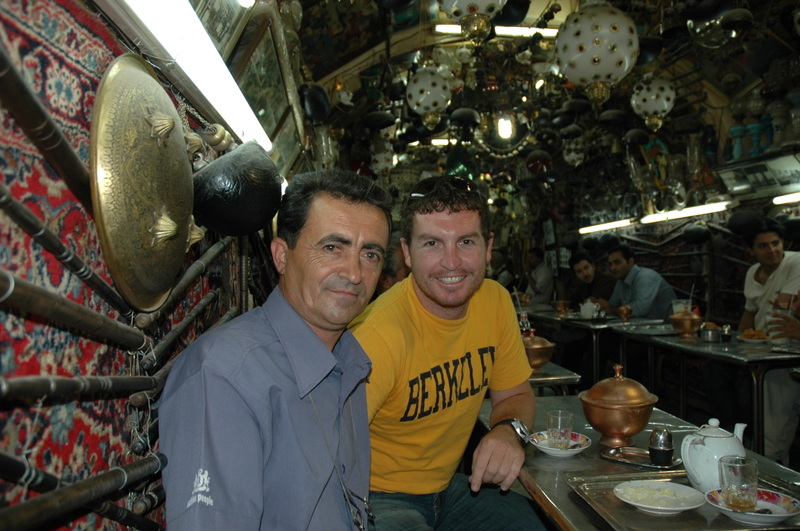

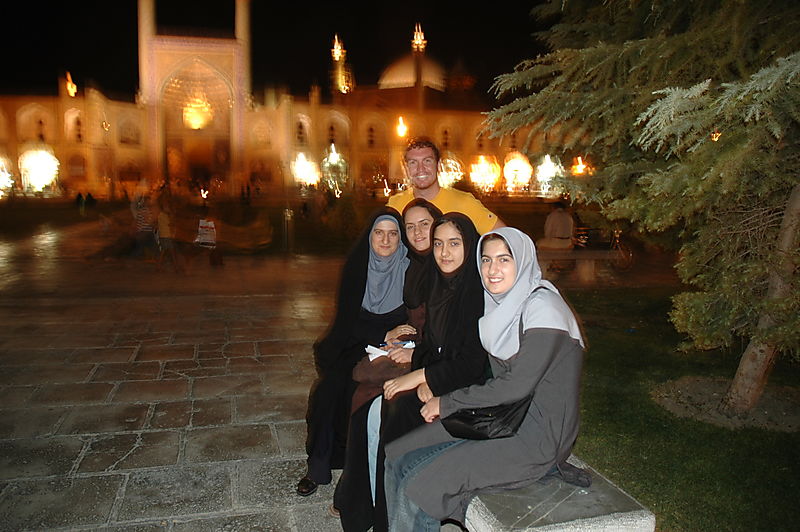
(L) Enjoying a tea in the most eccentric of tea houses. (R) Chilling in the square with my new-found friends.
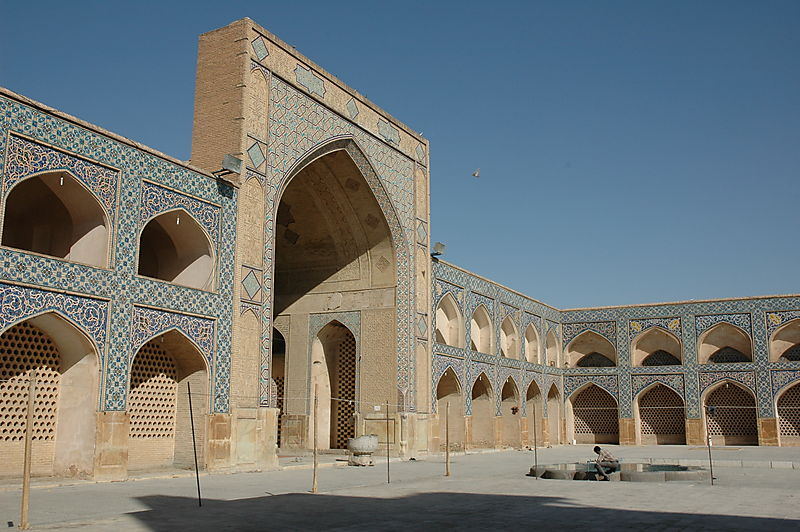
Jameh Mosque: At the other end of the bazaar, a few kilometres away from Imam Square, is 800-year-old Jameh Mosque. It's been added to for centuries and therefore provides you with a glimpse of the different architectural styles through the ages – Seljuk, Mongol, Safavid, Timurid etc. It has an open plan with four iwans facing the central courtyard. Much of it was covered in scaffolding for renovations and repairs, but it was still spectacular.

And some other sights around the city:
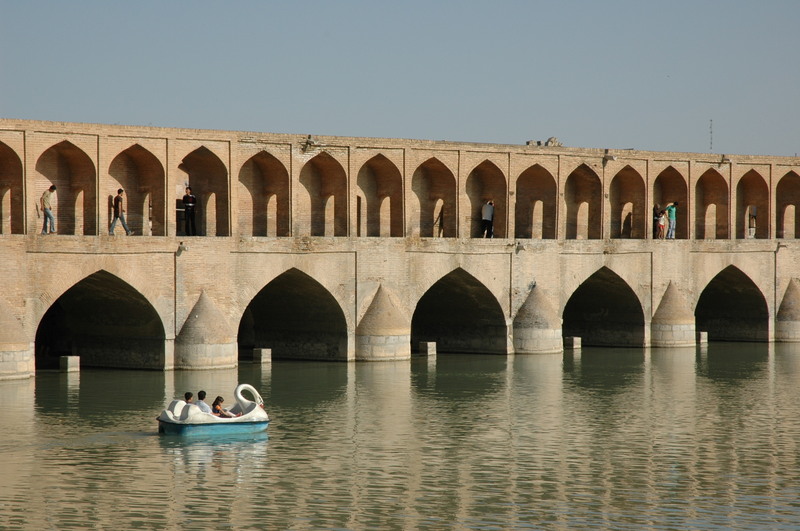
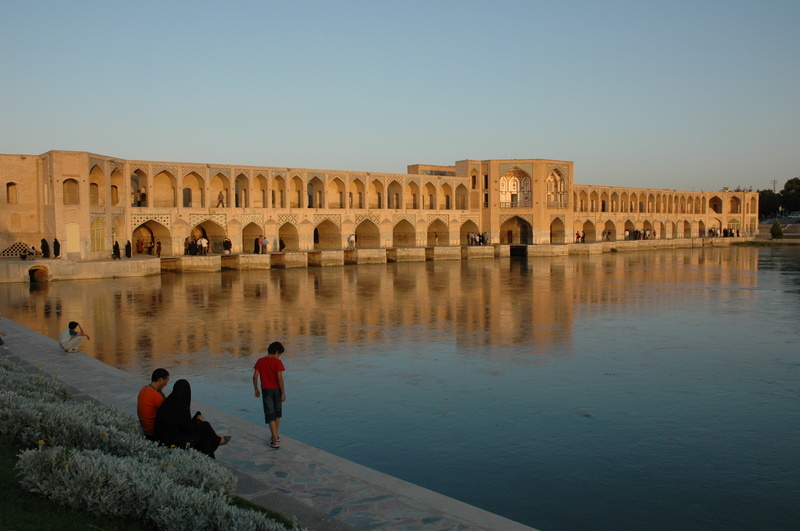
Zayandeh River Bridges: The river running through the city is almost unique in that it rises up out of the ground upstream of the city, and disappears back underground downstream of the city. In Esfahan, the river is crossed by several old bridges built in the early 17th century. My two picks were the 298m-long Si-o-Seh bridge and the 132m Khaju Bridge. I spent an afternoon walking along thr river bank through parks from one bridge to another, stopping off at teahouses along the way to chat to the locals.
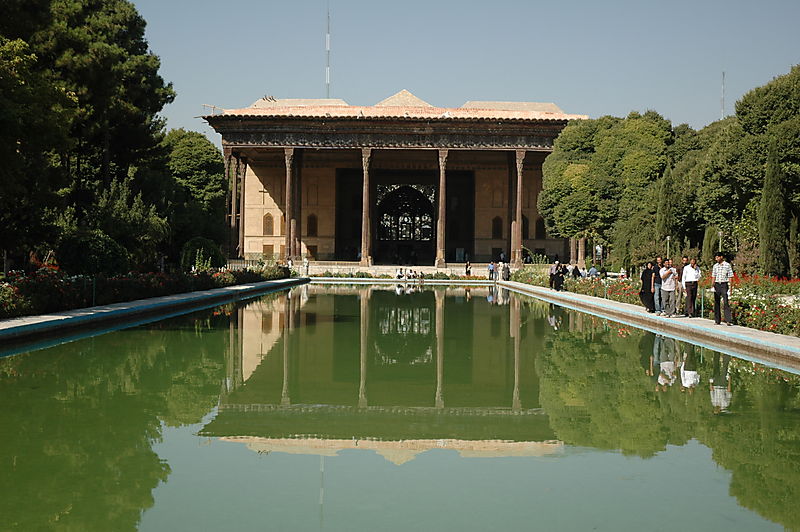
Chehel Sotun Palace: Just off Imam Square, this palace is the one that the Shah built for himself in the early 1600s (although the present-day structure was built in 1706 after a fire). It's entered via a talar terrace with slender wooden pillars that makes a lovely transition from the pool in front of the building to the interior of the building. The Great Hall inside was decorated with some lovely frescoes, some unfortunately in not such good shape after Afghans (18th century) and revolutionaries (1979) had their wicked way with them.