Persepolis was absolutely INCREDIBLE!!!!!!!!!!!! Easily one of the most impressive ancient sights I’ve ever seen – right up there with Tikal in Guatemala or Mt. Nemrut in Turkey.
The site of the ancient royal city of Persepolis is about 50km north of Shiraz. It’s the remains of one of the three Achaemenid capitals and stood vacant apart from the time the royals were in town. Work was begun at the site under the reign of Darius I (the Great) around 518 BC. It was added to by successive royals over about 150 years until Alexander the Great swept through and razed it to the ground.
Persepolisis built onto the sloping escarpment of Mt. Rahmat at the edge of a large plain. The foundation is constructed of large interlocking stones (done without a hint of mortar, which reminded me of the Inca walls I’ve seen), so the whole site is raised a good 10-20 metres above the valley floor and looks truly monumental as you enter from below.
We entered the city up the Grand Stairway, and passed under the massive Gate of All Nations which was flanked by some incredible stone carvings of bull-like figures that we were told had strong Assyrian character. One thing I liked about the site is that the Achaemenids had integrated styles and designs from not just their 18-nation empire but from many different ancient worlds and religions (Egyptians, Zoroastrians etc.).
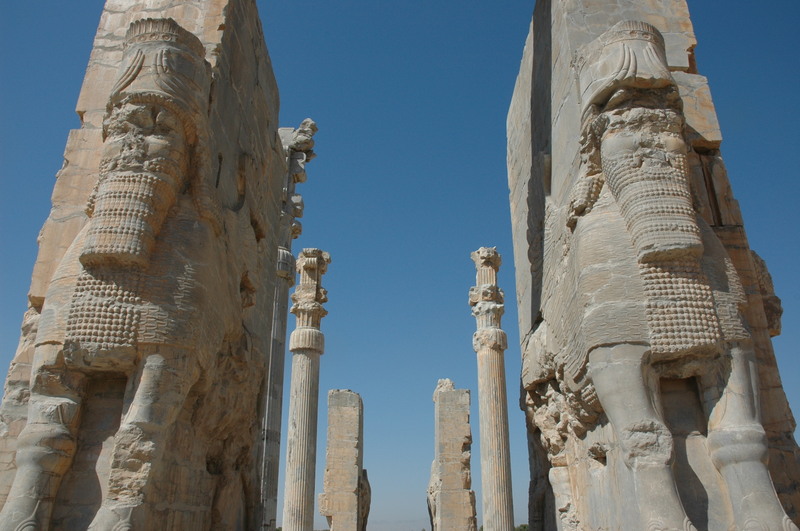
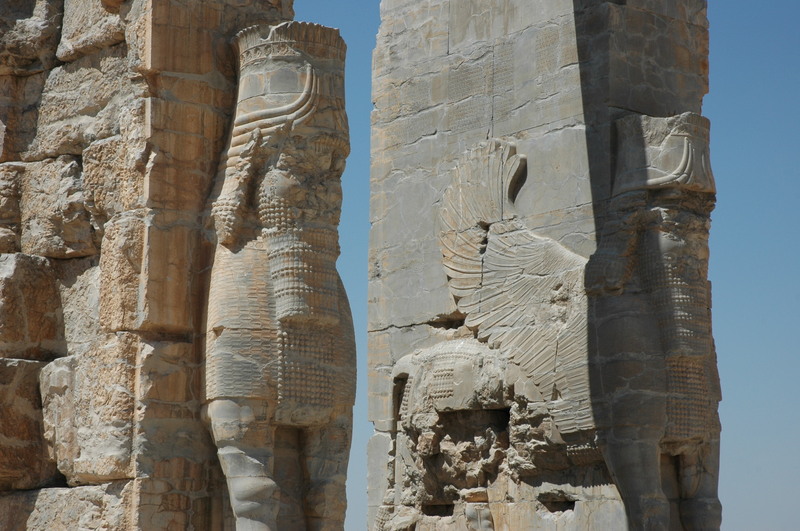
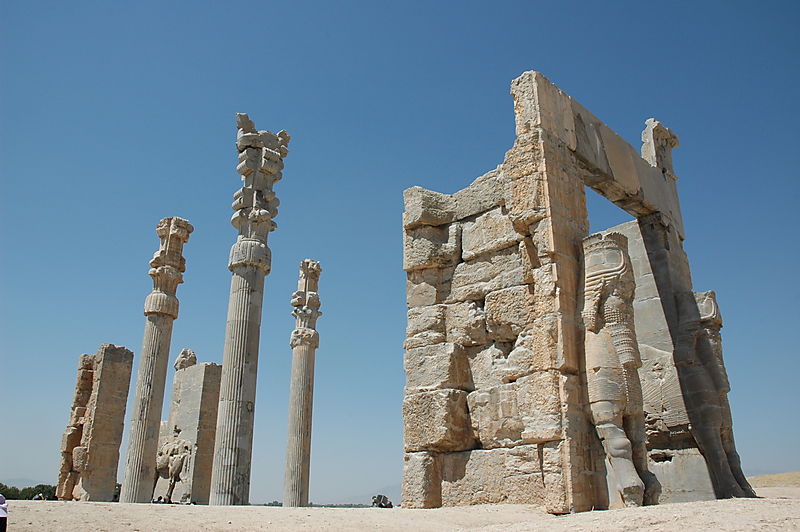
The Gate of All Nations.
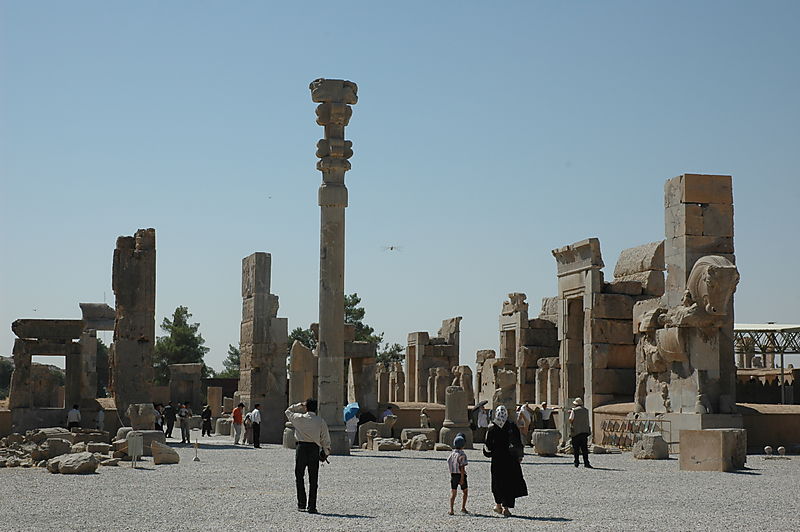
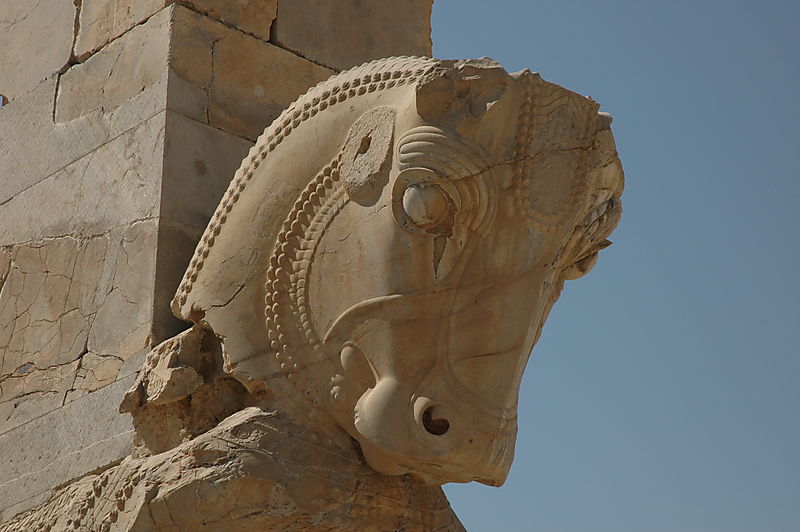
Looking across towards the Palace of 100 Columns.
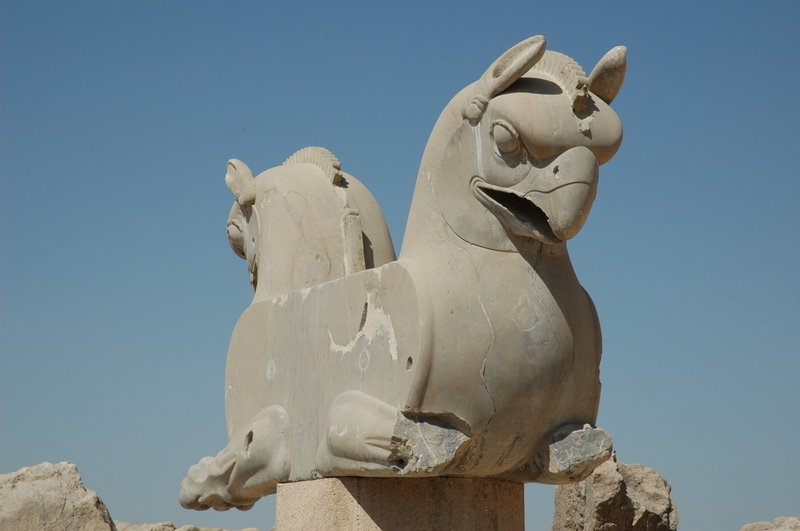
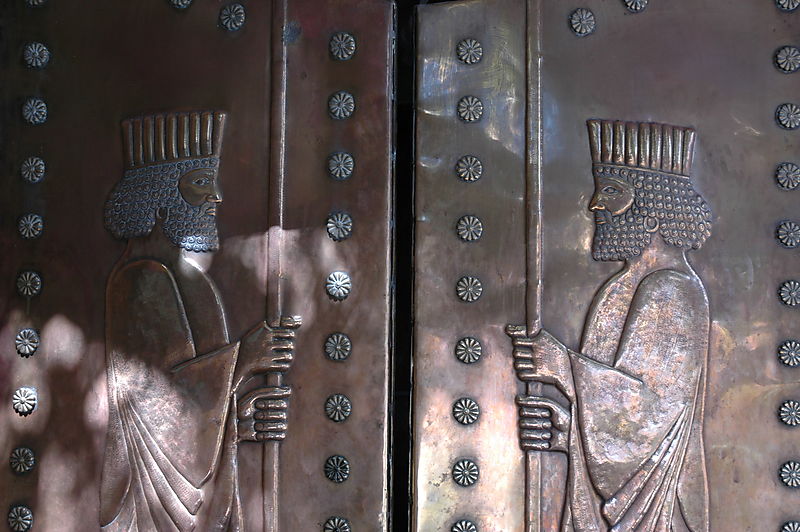
The Palace of 100 Columns was incredibly impressive, in particular the gates you enter through, which had some bas relief carvings in superb condition – especially considering they’ve been out in the elements for two millennia! It was difficult to imagine what the palace must have been like with the columns still standing (they were timber and burnt down when Alexander the Great razed the city) and with additional huge timbers supporting the roofs of all the different palaces and halls. The Apadana Palace (Central Hall) had 23m high columns with carved capitals on top – incredible!
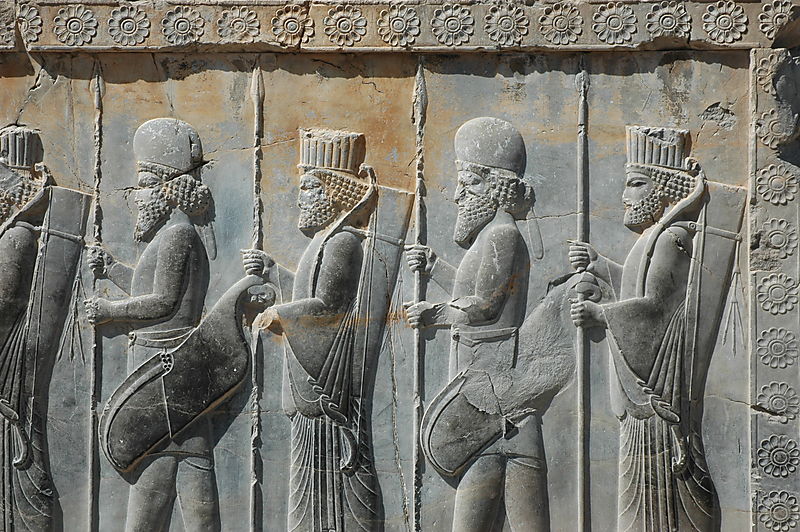
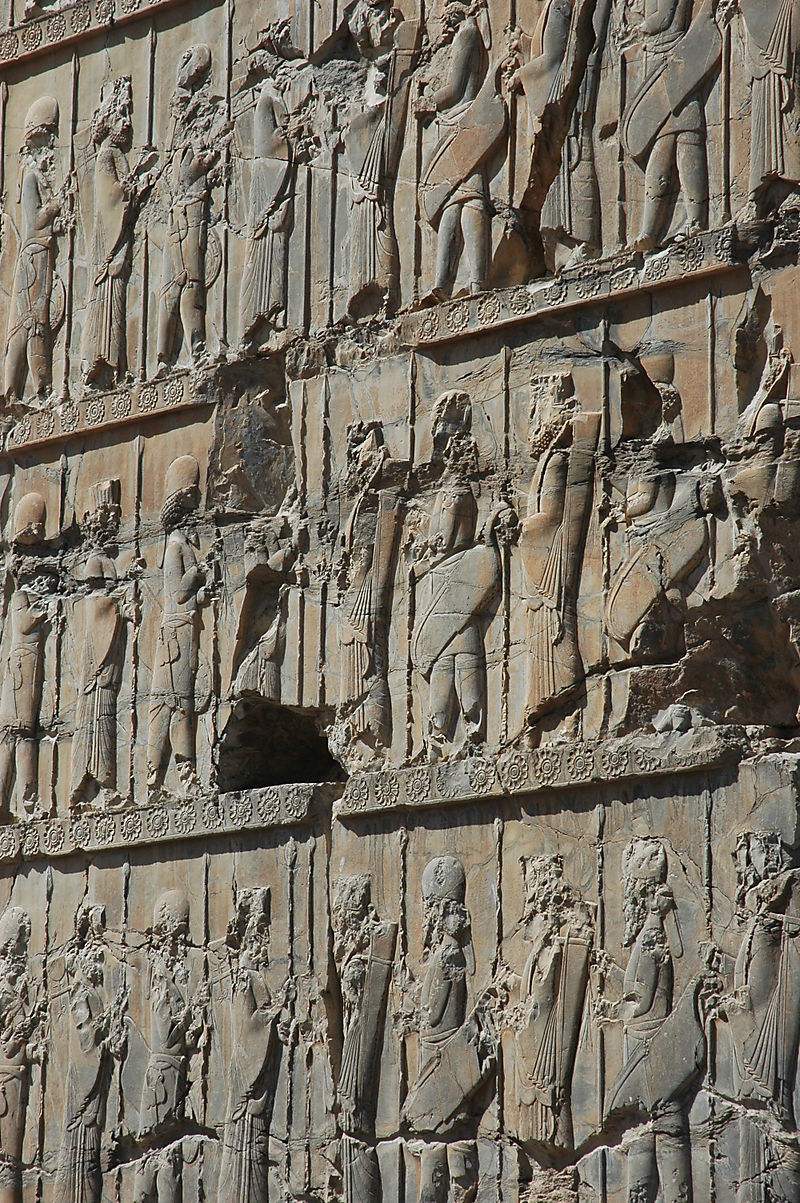
The Apadana Staircase, which lead from the Palace of 100 Columns to the Central Hall, was another highlight. Now under cover, the carvings on these staircases were just immaculate and showed a procession of people walking up the stairs bringing offerings to their king.
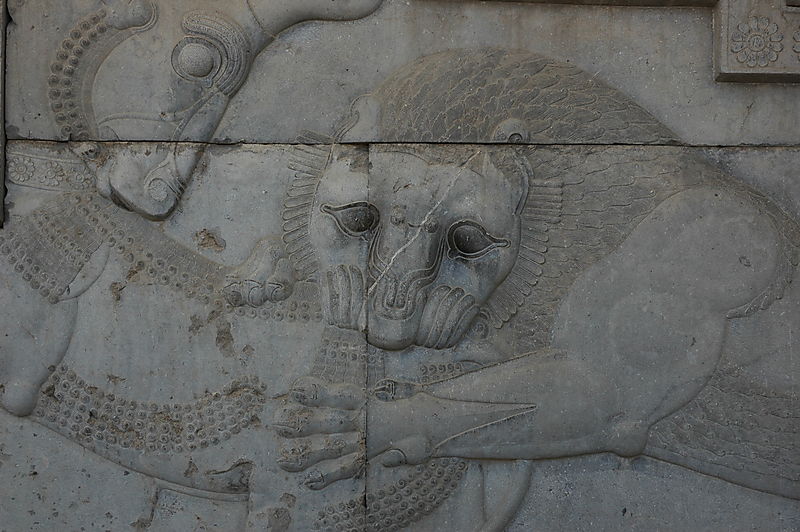
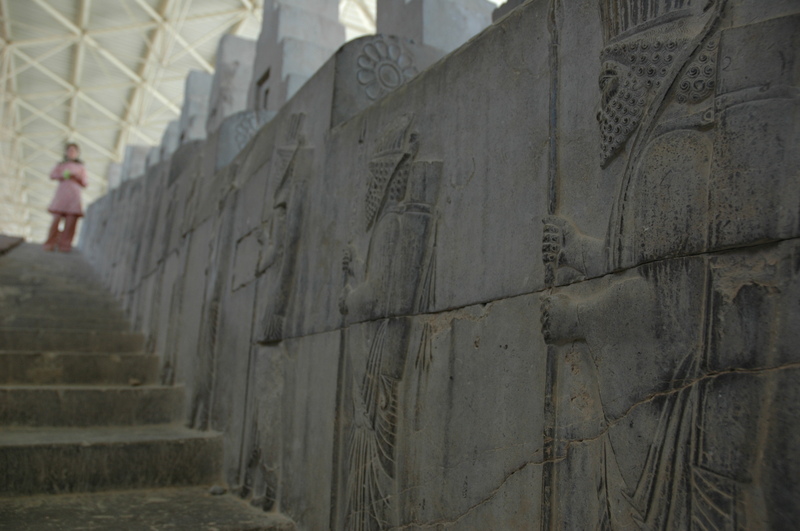
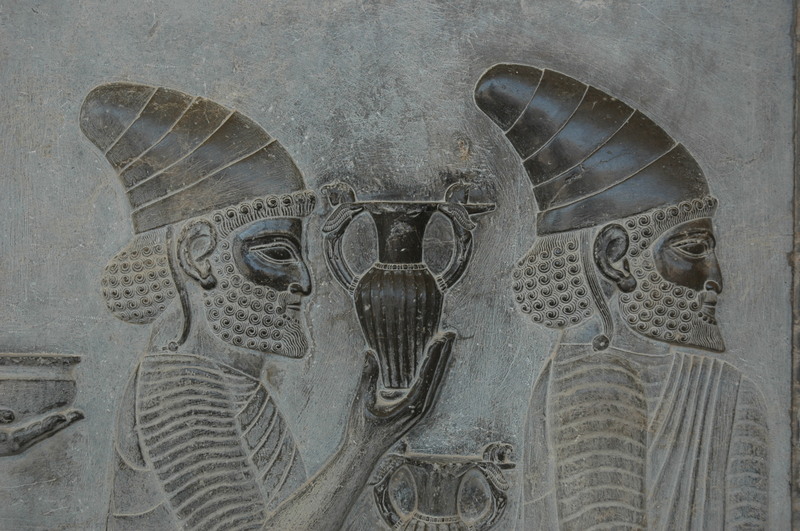
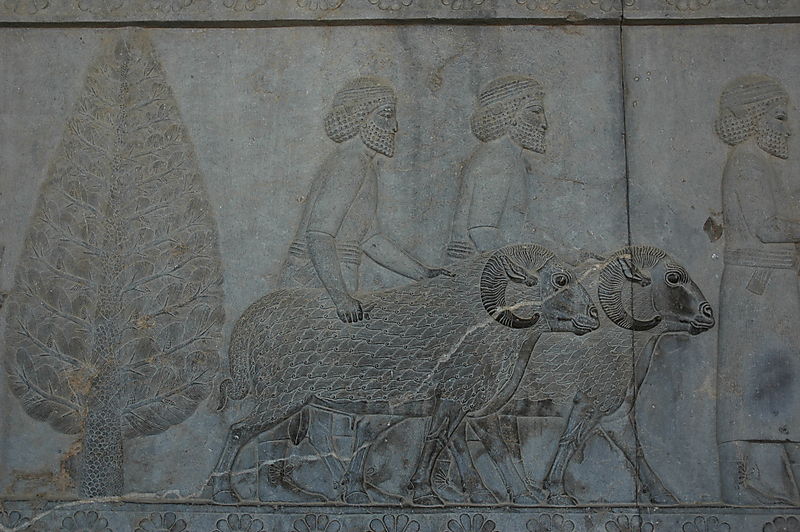

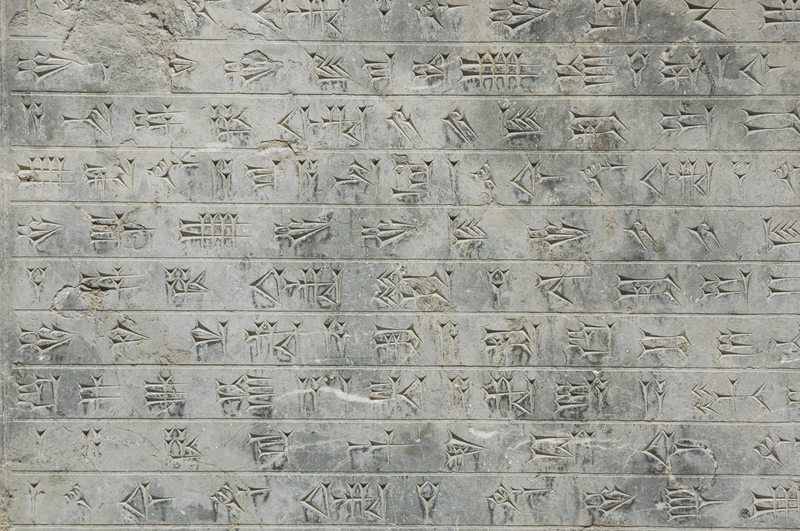
Here are a few photos from Darius’s Royal Palace, still in incredibly good condition and adorned with many of the same carvings as the staircase:

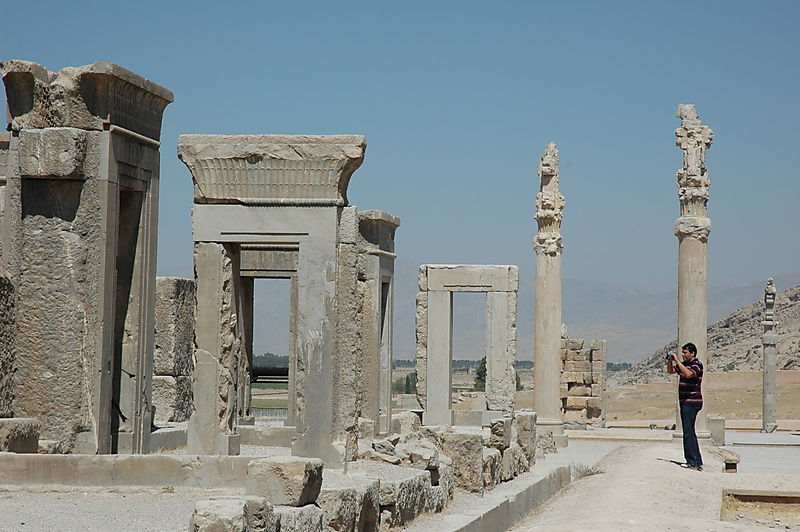
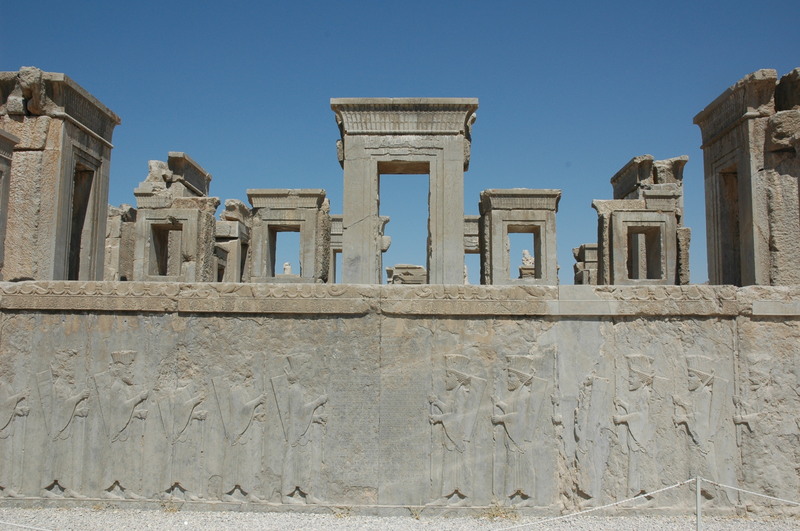
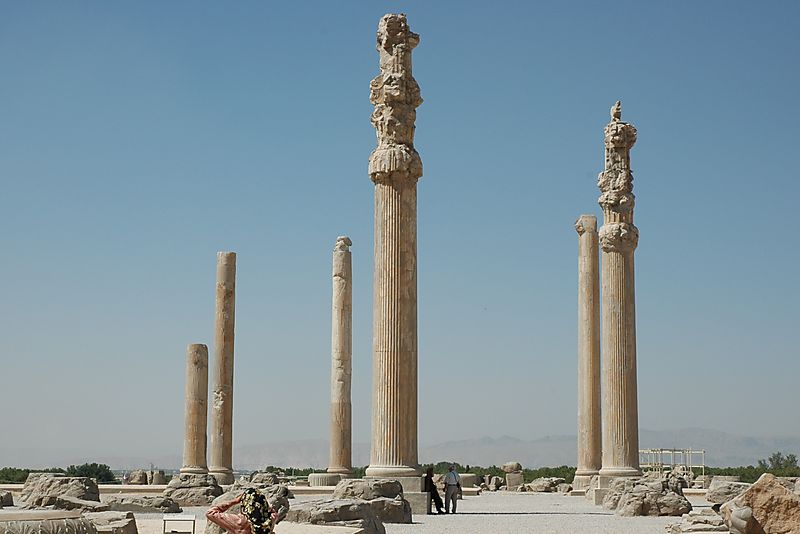
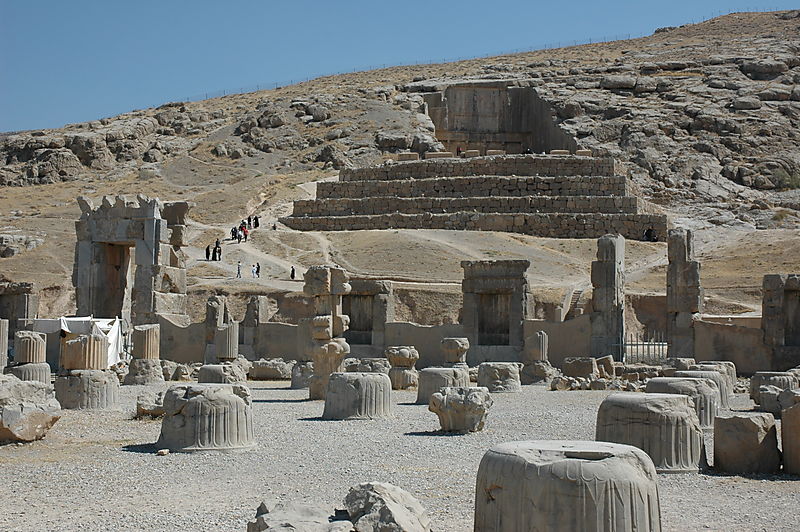
(L) Apadana Palace’s 23m high columns – when this building stood it must have been breathtaking. (R) Looking across the Palace of 100 Columns (note the stone mounts for the wooden columns) towards one of the royal tombs cut into the hill.
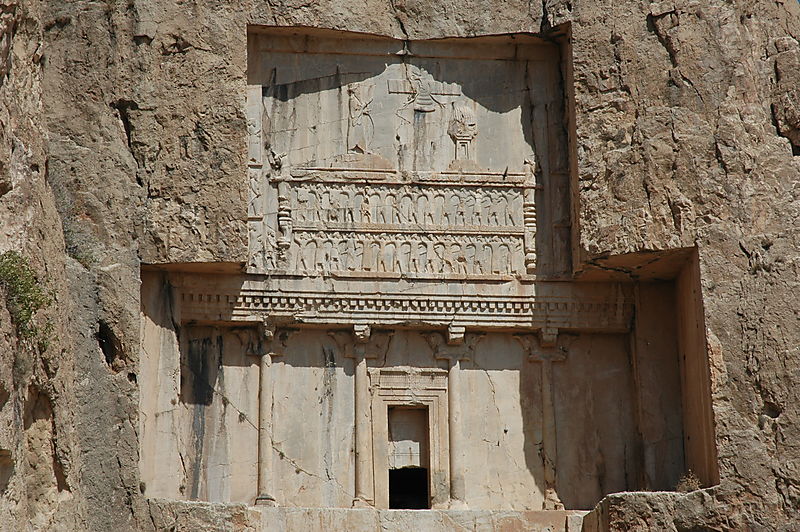
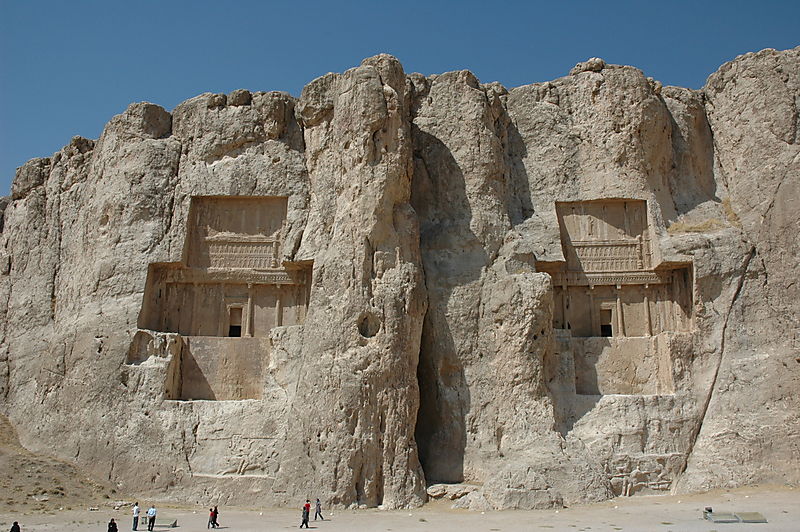
Above the site were a couple of royal tombs cut into the cliffs, but we drove a quick 10 minutes from Persepolis to Naqsh-e Rostam, an ancient necropolis with more impressive rock tombs – cut high up into the cliff face – of four Achaemenid kings. There were also some more fantastic Achaemenid and Sassanian rock carvings. The site really reminded me of photos I’ve seen of Petra in Jordan, and I did definitely feel sort of like Indiana Jones exploring the area. Or am I more of a Shot Round? “Indyyyyyyyyyyy!!!”




Yesterday was my last day in Yazd and I had one more, and slighty eerie, sight left to see – the Zoroastrian "Towers of Silence". Here's a little more info about Zoroastrianism: they're followers of Zoroaster, who was born about 550 BC in what is now Mazar-e-Sharif, Afghanistan, who postulated a single, omnipotent God (Ahura Mazda, who is represented by an eternal flame in their temples). Zoroaster's teachings are written in their "bible", the Avesta, and the core lesson is dualism, the battle between good and evil. There are only about 150,000 Zoroastrians in the world today – it used to be the dominant religion in ancient Persia, but the Arab Conquest did a good job of converting people to Islam!
Since Zoroastrians believe in purity of the elements, the don't bury their dead (because it pollutes the earth), nor do they cremate them (because it pollutes the air). Instead, up until the 1960's, bodies were placed in the stone Towers of Silence on hills outside of town to be picked clean by vultures. In one of those jobs you really don't want, a priest would sit with the bodies (which were placed in the seated position) to observe which eye the birds picked out first: the right and the soul faced a good future, the left and the future didn't look so rosy. Yucko.
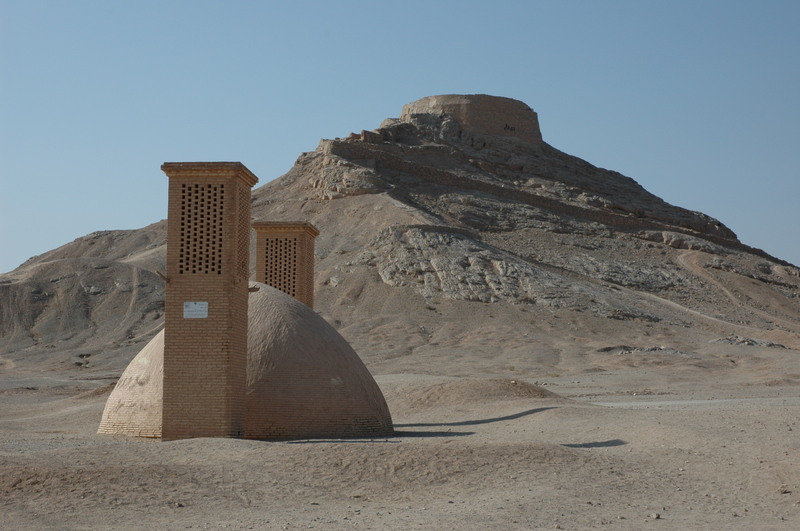
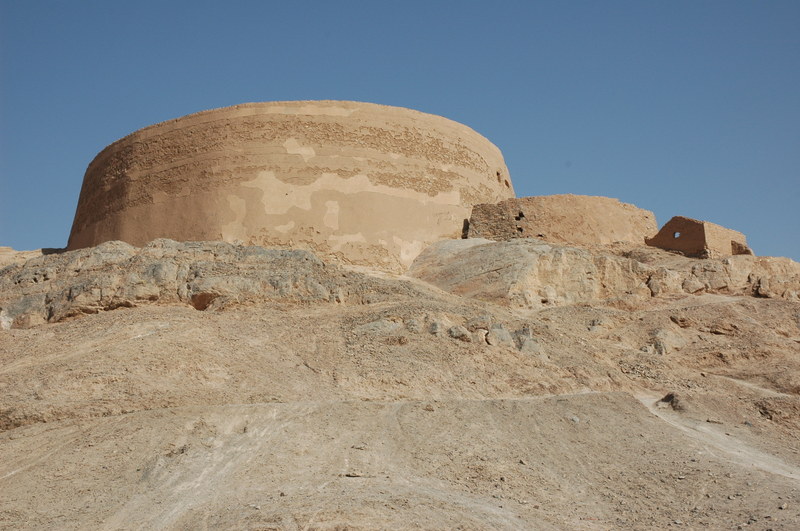
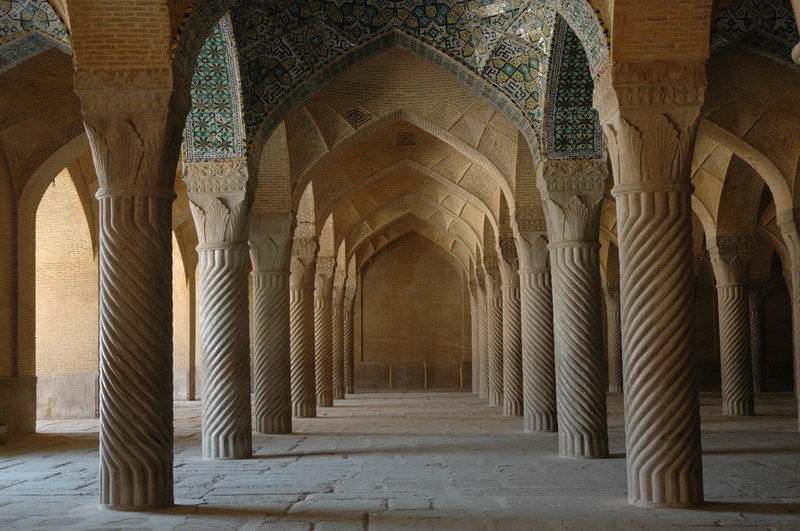
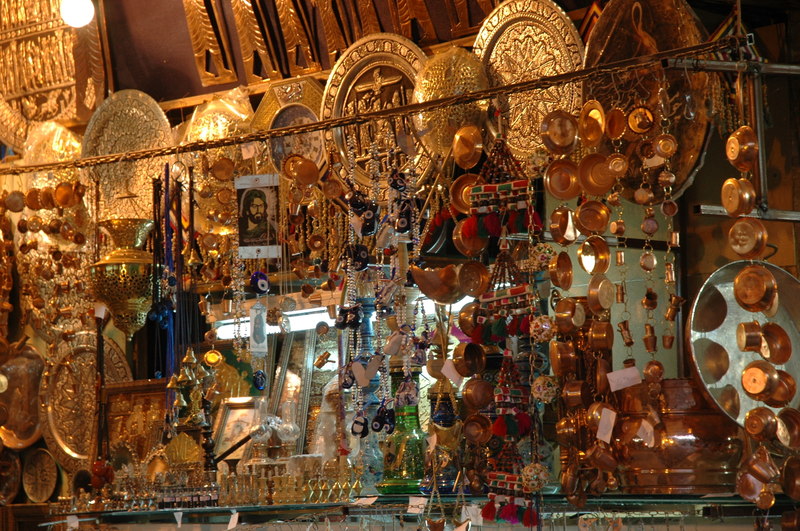
With that somewhat grisly site behind me, I left Yazd and took a seven hour bus ride south to Shiraz. I'd heard that Shiraz didn't have much to offer – especially in comparison to gorgeous Yazd, which I loved – so I wasn't expecting much out of the city. I was essentially coming here in able to make a day trip out to the ruins of the ancient royal city of Persepolis (which I'm doing tomorrow – can't wait!). After a good night's sleep last night I took in a few of the sights of the city today: the dome-roofed bazaar was a good one to wander through with a great local atmosphere, and I chilled out this afternoon in an old hamam which had been beautifully converted into a teahouse. A few of the mosques were worth a look as well.
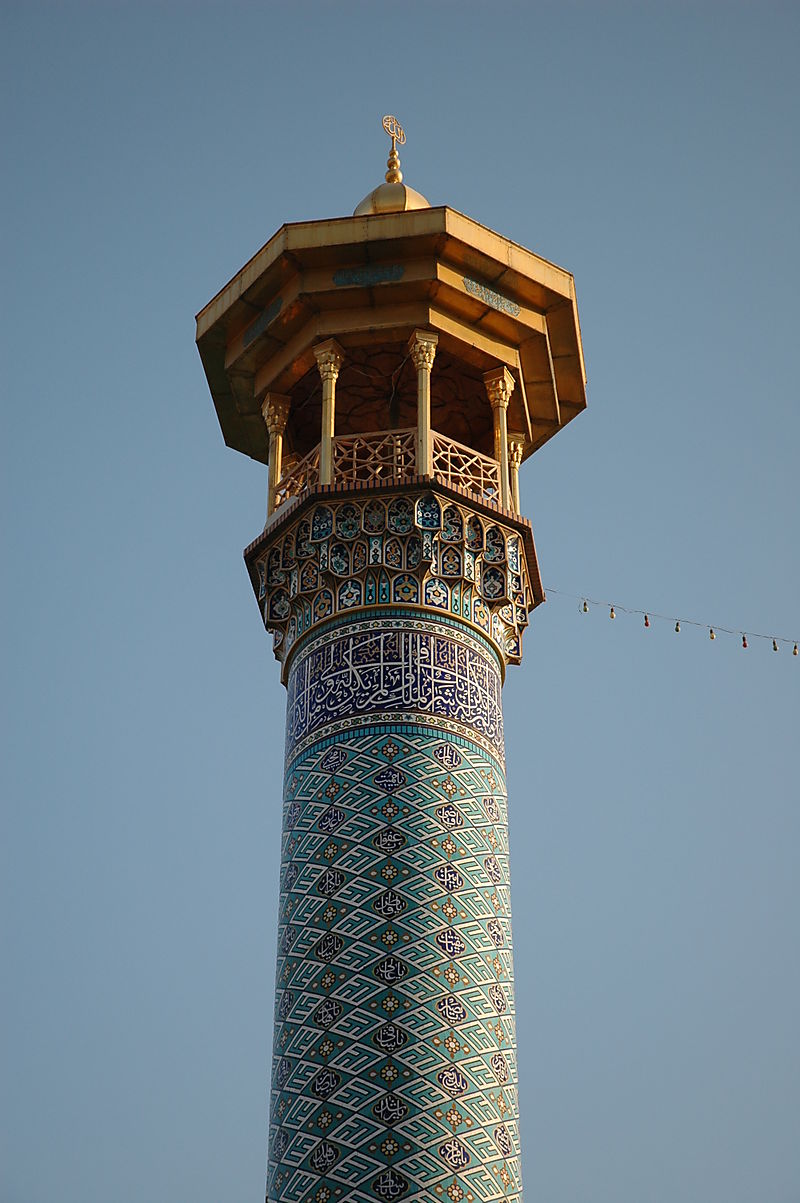
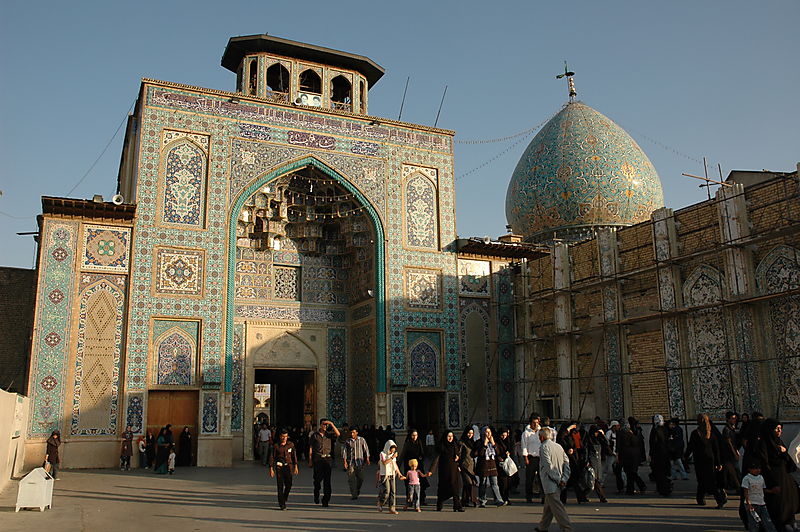
I was also able to witness thousands of Shiites visiting the Shah-e Cheragh Mausoleum, and important pilgrimage site. The remains of Sayyed Mir Ahmad (a brother of Imam Reza, the eighth Imam I think he was – apologies to any Shiites reading this!) are entombed here in the most bizarre mirrored mausoleum, with absolutely every surface covered in tiny mirrored tiles. The effect was dazzling – shame no cameras were allowed. I couldn't work out exactly what was going on but it was amazing to see many people overcome with emotion, reciting prayers, and strangely kissing every single surface in sight (not just the tomb itself but all the walls, doors, door handles etc. – ewwww).
To all those wine buffs out there, I'm afraid to announce that the Islamic Revolution even did away with the last of Shiraz's famous red wine! What a shame… Still, all the better for Australia's wine industry I guess! Mmmmm I could really do with a glass of wine, although the last few weeks have been a great detox.
Without much else to report from Shiraz, and seeing I haven't done it in a couple of posts, I thought I might add a few more fun facts and interesting observations:
- Most of the locals I've spoken to have never left Iran, not even to a neighbouring country like Pakistan or Turkey. Now I found out why, apart from the obvious economic constraints: it turns out that you have to serve in the military to be eligible for a passport!
- The currency is called the rial but confusingly you're usually told everything in toman (10 rials = toman). Ayatollah Khomenei is on every bill (as well as every billboard and vacant wall!) and I think it's kinda cute that they call the 10,000 rial bill a "Khomenei".
- The national language is Farsi, which is written in Arabic script but completely different. Interestingly, while words are written right-to-left across the page, numbers are written left-to-right. I can't make any sense whatsoever out of written Farsi script, but I'm getting along OK with the numbers as you can actually see teeny weeny bit of similarity between some of the numbers we use and the Persian ones.
- I've noticed that you hardly see any dogs – and by hardly I mean never – and I asked a group of schoolkids about it the other day. Turns out, probably rightly so, that dogs are considered unclean and disease-ridden, and are therefore disliked.
- I had a TV in my room last night and was curious to see what I could find on the box. There are just five channels, all apparently government-run, so you can just imagine what they're like. My favourite is their "CNN", called the "Iranian News Network", which has the only English I could find on TV in those little news bars that run across the bottom of the screen. It was funny to read their (the government's) take on the world outside Iran: a mix of displeasure about the Pope's apparent "blasphemous" remarks about Islam, anger over something the "Zionist regime" was up to in Palestine, and of course something about US "imperialism" and "interventionism".
- While we're on media, I picked up a copy of the Tehran Times today, the only English language daily in circulation throughout the country. It's choc-a-bloc full of the "party line", but it makes for an entertaining read nonetheless! Here's something though: I found out that there's a bookstore near Tehran University in which you can find all the Western magazines you could want, everything from Vogue to Time! I never thought that would be possible here… If only I'd known that earlier – I'm having Economist withdrawl!!
- Internet censorship isn't as bad as I thought it would be. Even sites like CNN are unblocked. For some reason though, The Age newspaper from back home in Melbourne is blocked, while the Sydney Morning Herald (its sister paper with almost identical content) isn't. Weird…
- Women have three choices to cover themselves up and abide by sharia (religious) law. From conservative to progressive the choices are: (1) chador, a black cloak (think: black bedsheet) that a woman wraps around herself to cover everything apart from the face, hands and feet. Here's the freakiest thing about it… It isn't fastened closed by a button or a pin, and has to be held closed either by a hand or with TEETH! (2) hejab, sort of like a nun's habit, it fits snugly around the woman's face and ends below the shoulder. (3) headscarf, pretty self-explanatory, in combination with a "manteau" jacket down to the knee.
- My favourite Iranian dish is dizi or abgusht (I'm all kebab-ed out), which funny enough is considered a bit of a poor-man's food. It's a lamb and vegetable stew that comes in an earthenware pot. First you decant the yummy soup/broth our of the pot and into a bowl, and you then chuck in a whole bunch of flat bread to soak up the soup. Turning back to the pot, you take a metal plunger to mash up the contents of the stew into a paste. Then consume – yum!
- The buses are always fun because it's always a bit of "musical chairs" to get everyone ordered correctly. As women can't generally sit next to men, especially unmarried women, it's always a bit of a shuffle to get everyone seated according to their social norms.
I was really keen to get out of the cities and explore the countryside and deserts of Iran, and a day-trip from Yazd gave me just that opportunity.
We started off in the town of Meybod nearby and had a look at the Narein castle ruins, a Safavid-era ice house, and a quirky pigeon tower which used to be used to collect guano for fertiliser (quirky because they’ve now filled it with about 100 stuffed birds to “recreate” the effect).

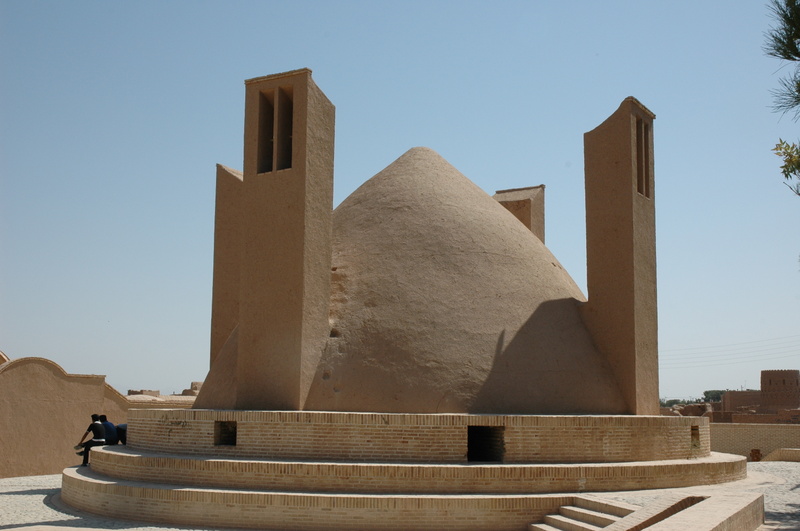

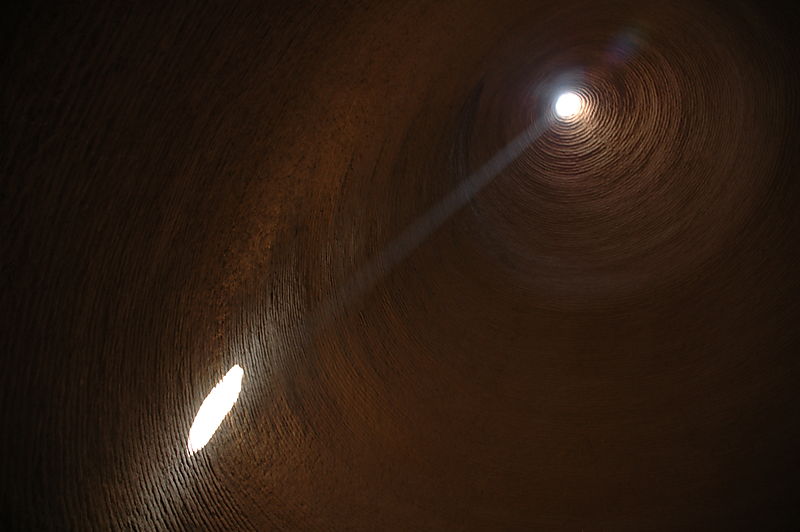
Ancient mud brick fortress. Interior of an ice store.
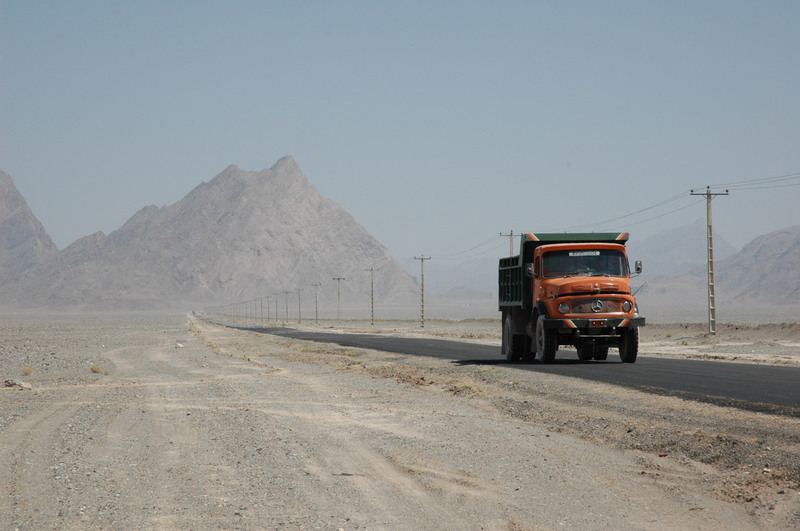
From Meybod we drove north into the endless expanses of the Dasht-e Lut desert. It was beautiful out there – all browns and greys with a blue sky and glaring sun beating down, wide plains of loose stones and a dry grass, and huuuuge mountains looming in the distance. Completely desolate and empty. Distances were really deceiving as well because the air was surprisingly clear – you’d swear the mountains are just a few km’s away, but they’re really 10 or 20km away and soar over 3000+ metres. We pulled the car over for a photo shoot and I can honestly say that there are only a few places I’ve felt as much in the middle of nowhere – maybe driving across the back blocks of Nevada or on the Nullabor in Australia?
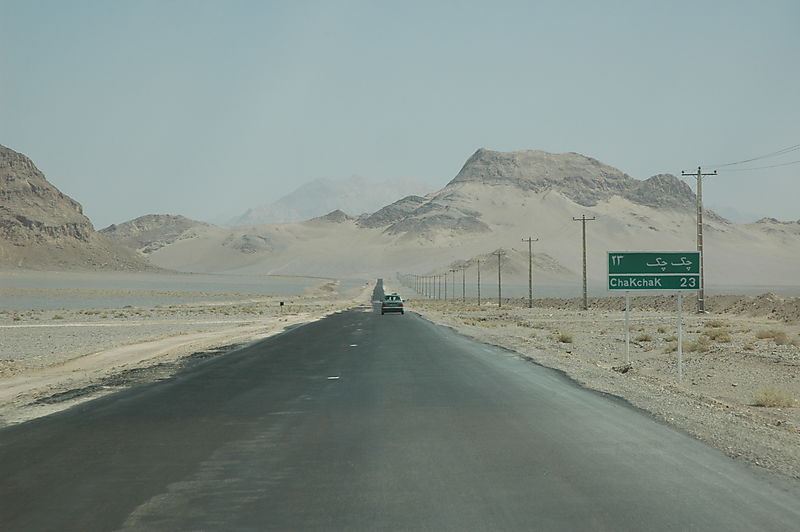
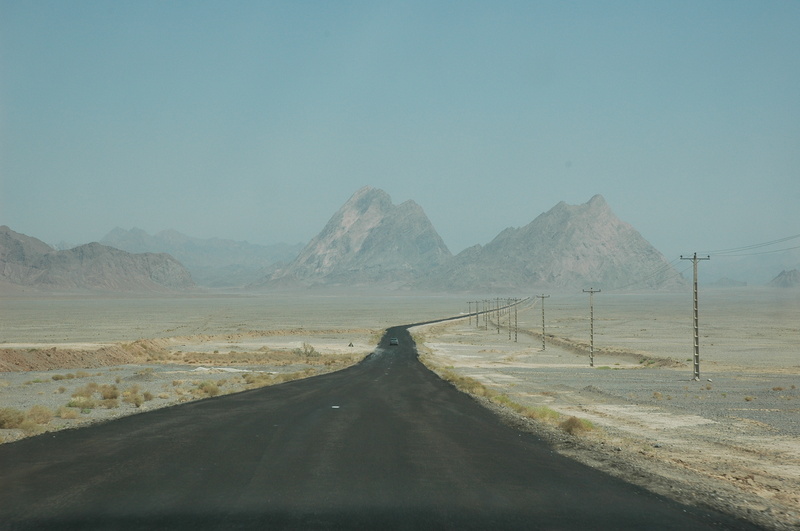
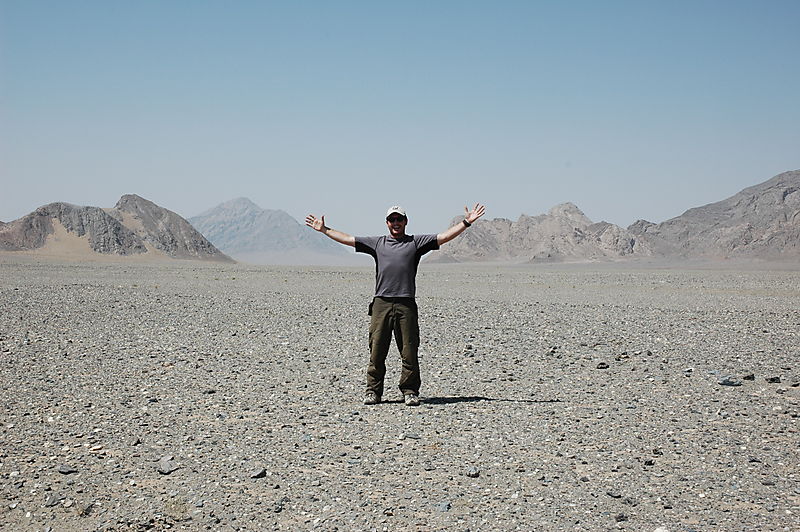
Middle of Nowhere, Iran.
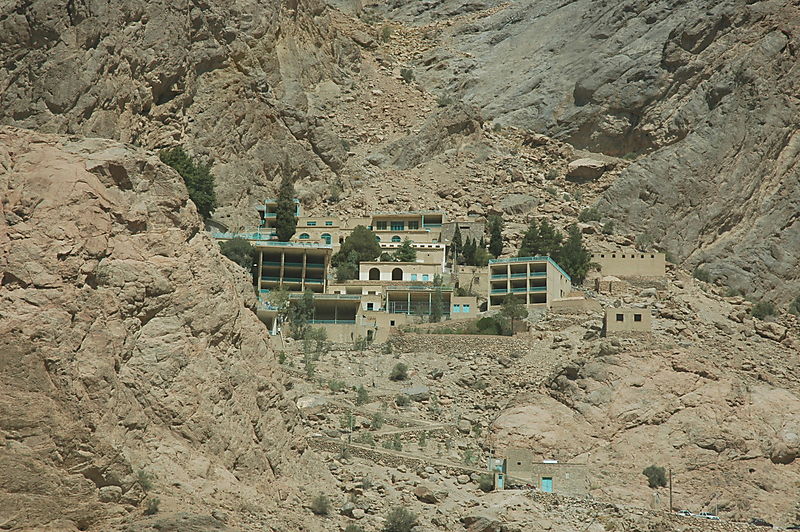
Our next stop was the most important Zoroastrian pilgrimage site in Iran, a little hillside temple at a place called Chak Chak. Who are the Zoroastrians you might ask? Well I was scratching my head as well, but I found out that it is the oldest – yep, that’s right – monotheistic (ie. only one God/Allah) religion in the world. All the other big monotheistic religions like Islam, Christianity and Judaism take some of their rituals and beliefs from Zoroaster. Zoroastrianism is a little bit sorta pagan as they worship the four elements of the earth – water and fire are always represented together in the temples.
The temple at Chak Chak itself was a bit of a non-event. There was some symbolic story about the Zoroastrian leader finding water coming out of the mountain in the desert blah blah blah, but there were just a few dribbles of water coming down off the cliff face. Hence the Farsi name for the place – Chak Chak means “Drip Drip”.
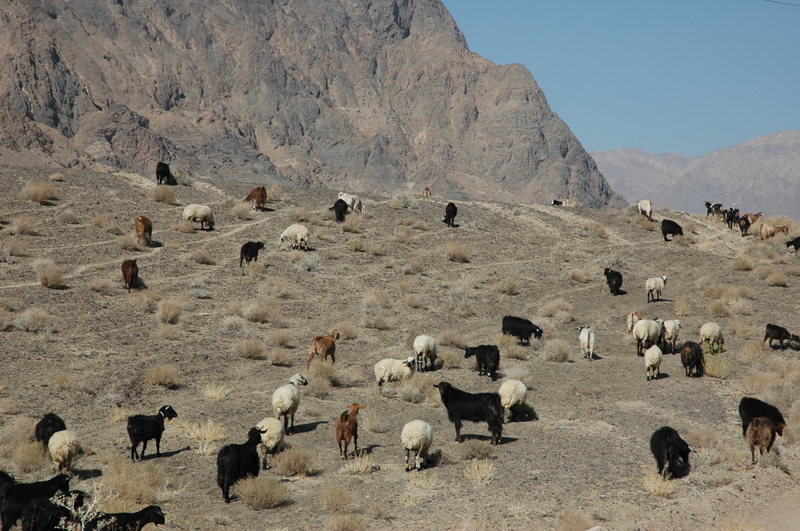
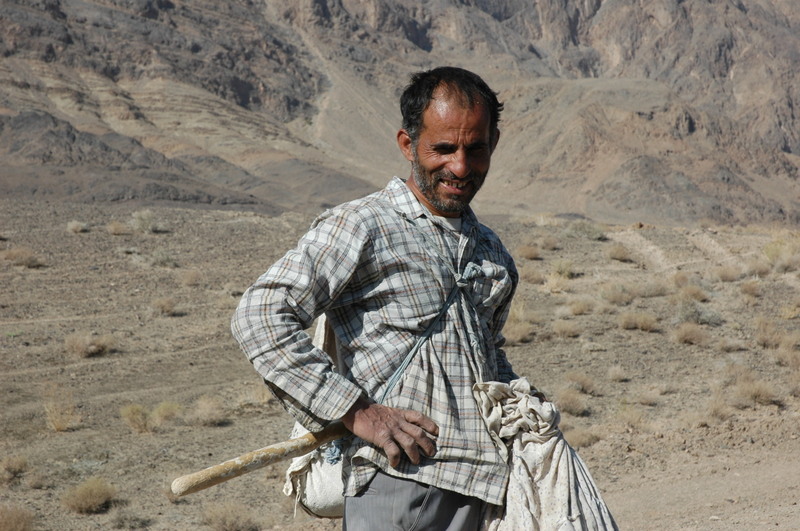
Driving from Chak Chak to Kharanaq we came across a goat herd and its shepherd (or is it goat herder?) crossing the countryside. What both the goats and the herder live on I have no idea…
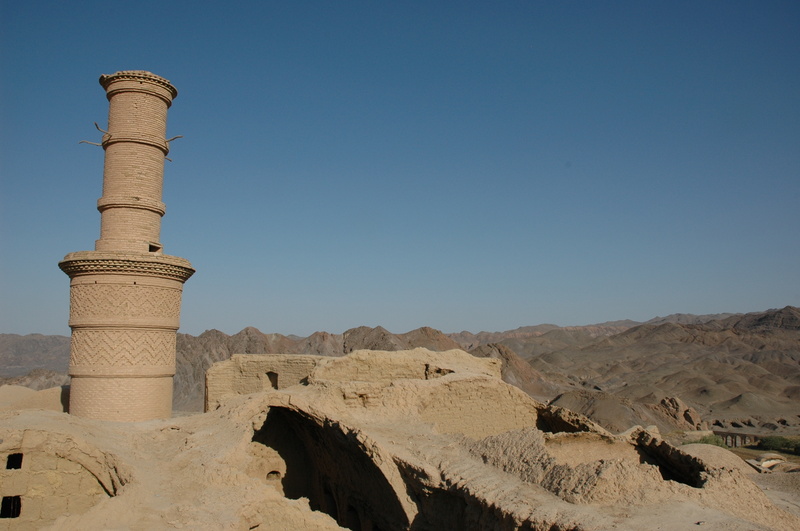
Our last stop was the abandoned village of Kharanaq. It’s old mud brick village is slowly crumbling down, so the locals have moved out and rebuilt their town nearby. The old town is quite eerie and ghostly and was fun to explore. I was able to scramble up the minaret in the photo below which was quite a challenge – let’s just say it was a tight squeeze!
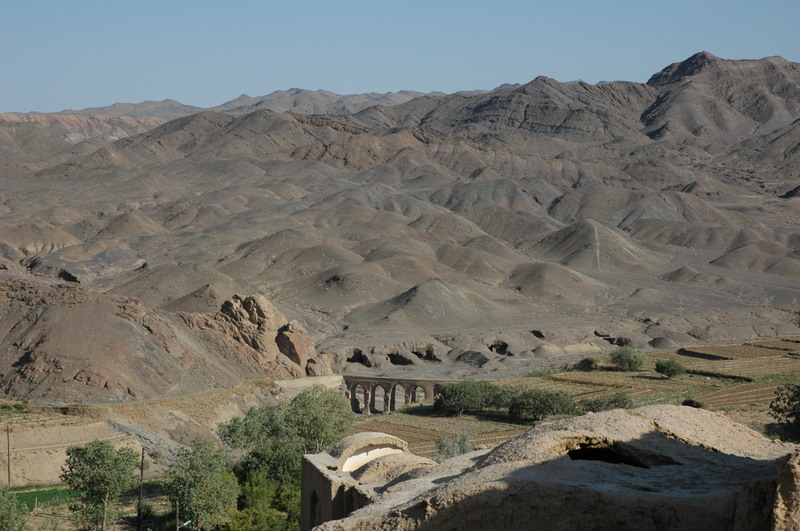
There was also a caravanserai nearby that had recently been immaculately restored to its former glory. I think they have plans to open it as a hotel – nice!
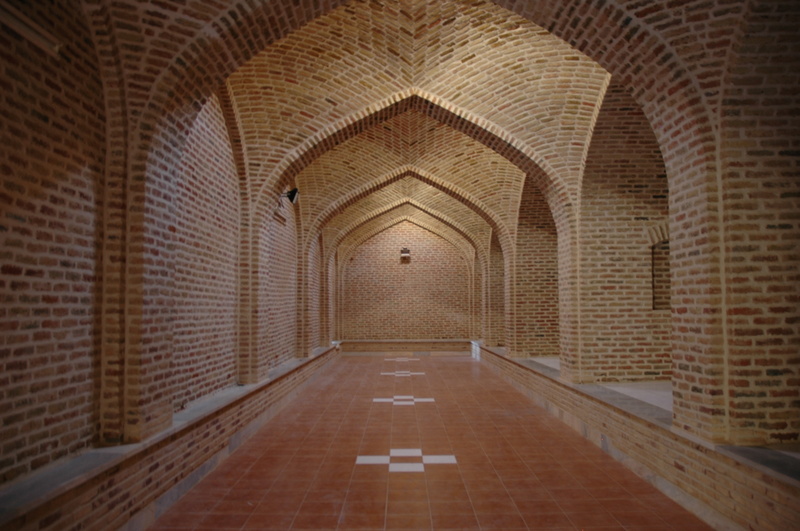
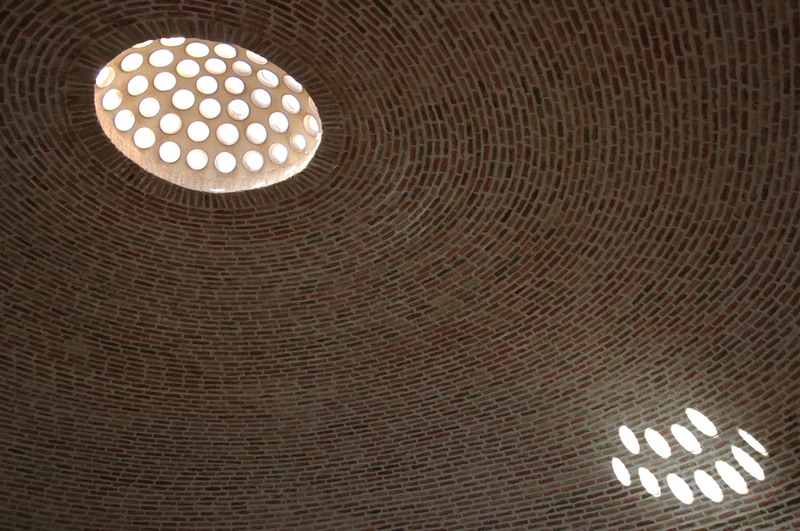
We arrived back in Yazd just in time to enjoy sunset from the hotel rooftop after a delicious dinner with a selection of non-alcoholic beverages on offer. Aaaaaaah, it doesn’t get much better than this…!!!
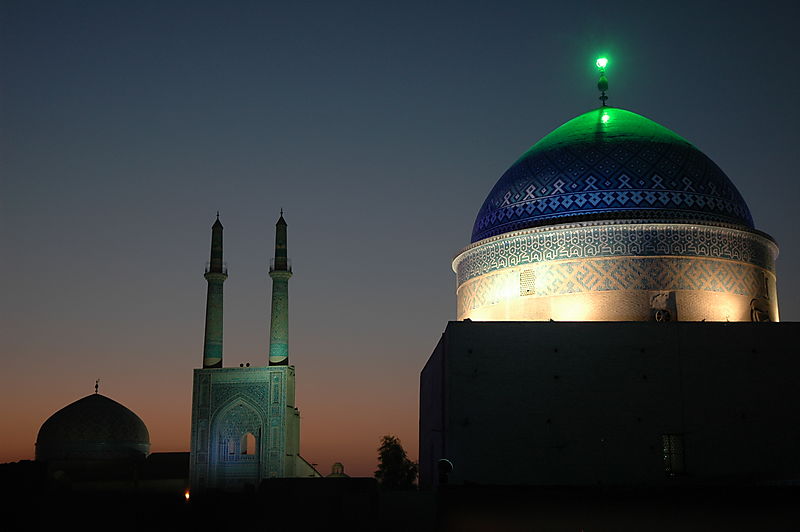
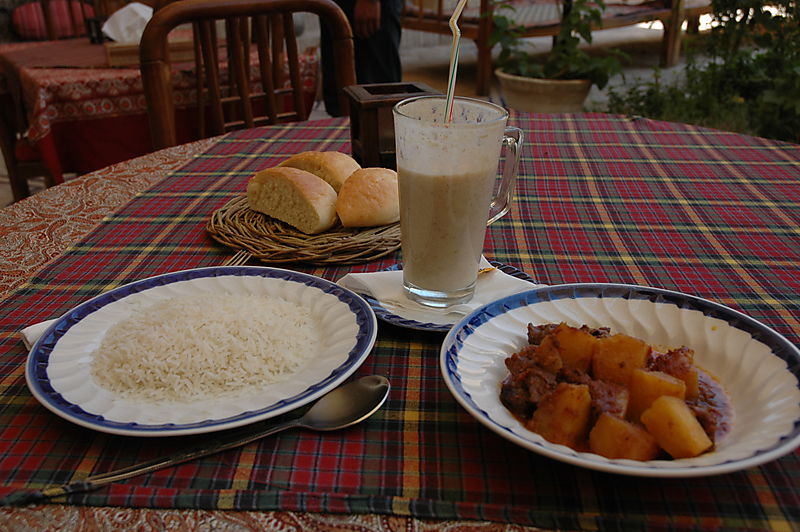 Dinner is served: camel stew, rice and a date milkshake – delicious!