Day 101: The Dasht-e Lut Desert
I was really keen to get out of the cities and explore the countryside and deserts of Iran, and a day-trip from Yazd gave me just that opportunity.
We started off in the town of Meybod nearby and had a look at the Narein castle ruins, a Safavid-era ice house, and a quirky pigeon tower which used to be used to collect guano for fertiliser (quirky because they’ve now filled it with about 100 stuffed birds to “recreate” the effect).

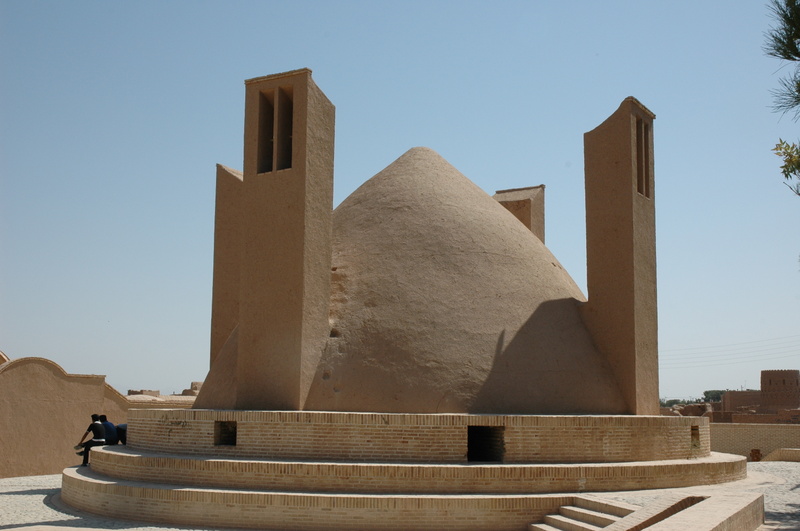

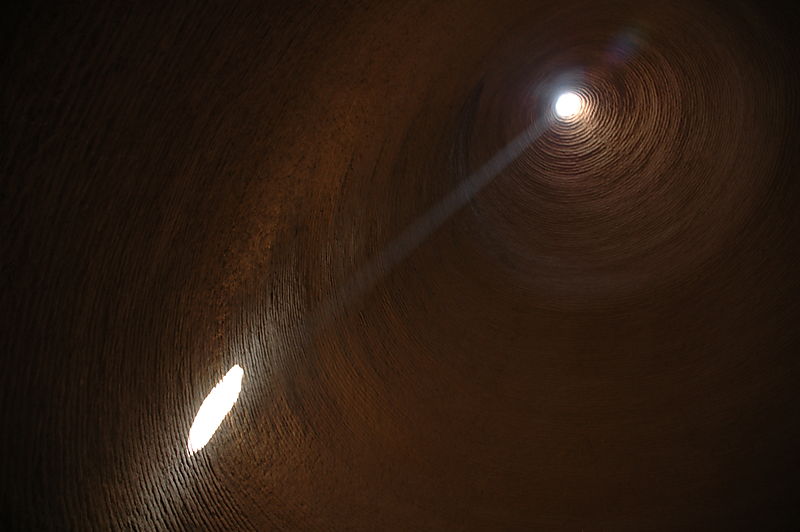
Ancient mud brick fortress. Interior of an ice store.
From Meybod we drove north into the endless expanses of the Dasht-e Lut desert. It was beautiful out there – all browns and greys with a blue sky and glaring sun beating down, wide plains of loose stones and a dry grass, and huuuuge mountains looming in the distance. Completely desolate and empty. Distances were really deceiving as well because the air was surprisingly clear – you’d swear the mountains are just a few km’s away, but they’re really 10 or 20km away and soar over 3000+ metres. We pulled the car over for a photo shoot and I can honestly say that there are only a few places I’ve felt as much in the middle of nowhere – maybe driving across the back blocks of Nevada or on the Nullabor in Australia?
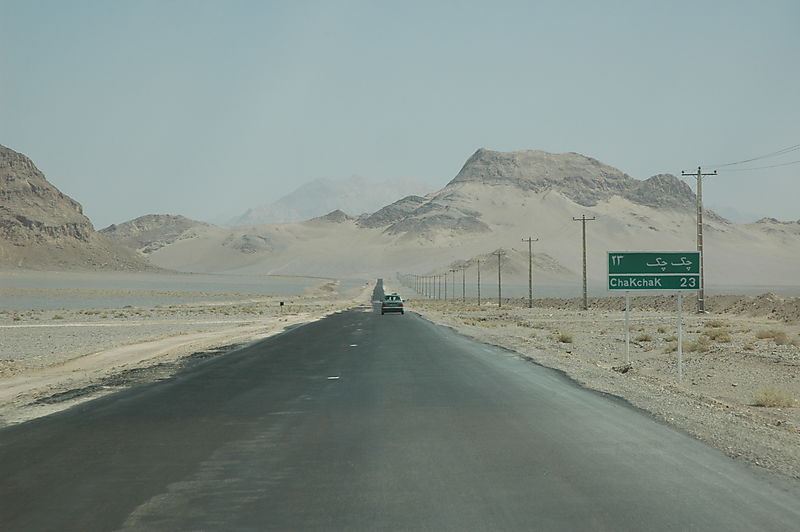
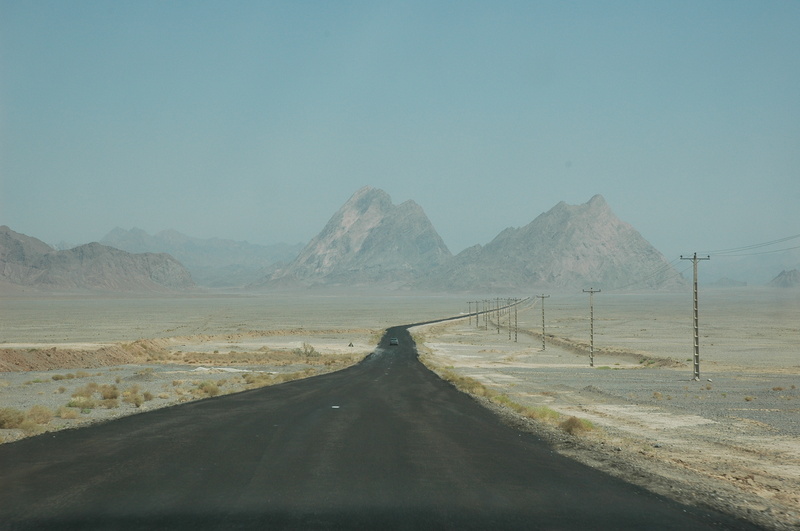
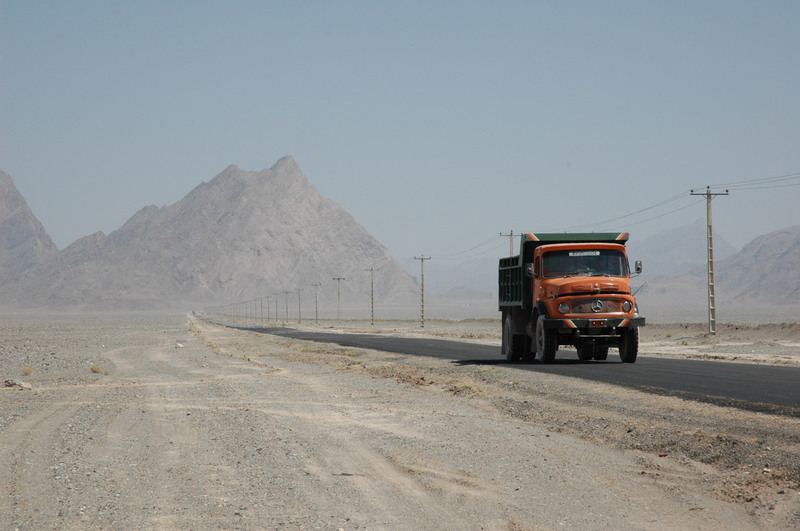
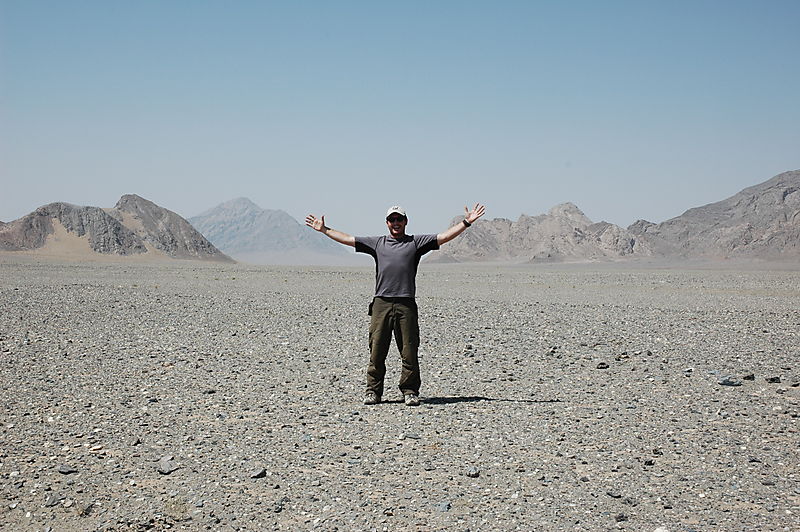
Middle of Nowhere, Iran.
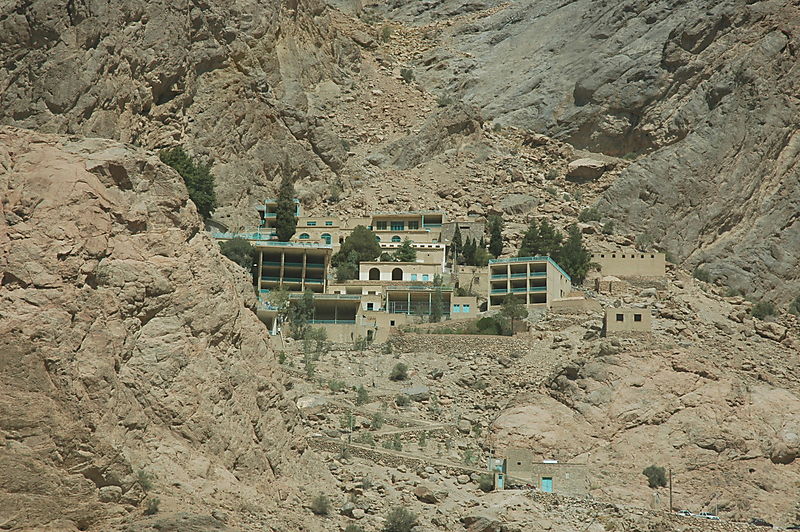
Our next stop was the most important Zoroastrian pilgrimage site in Iran, a little hillside temple at a place called Chak Chak. Who are the Zoroastrians you might ask? Well I was scratching my head as well, but I found out that it is the oldest – yep, that’s right – monotheistic (ie. only one God/Allah) religion in the world. All the other big monotheistic religions like Islam, Christianity and Judaism take some of their rituals and beliefs from Zoroaster. Zoroastrianism is a little bit sorta pagan as they worship the four elements of the earth – water and fire are always represented together in the temples.
The temple at Chak Chak itself was a bit of a non-event. There was some symbolic story about the Zoroastrian leader finding water coming out of the mountain in the desert blah blah blah, but there were just a few dribbles of water coming down off the cliff face. Hence the Farsi name for the place – Chak Chak means “Drip Drip”.
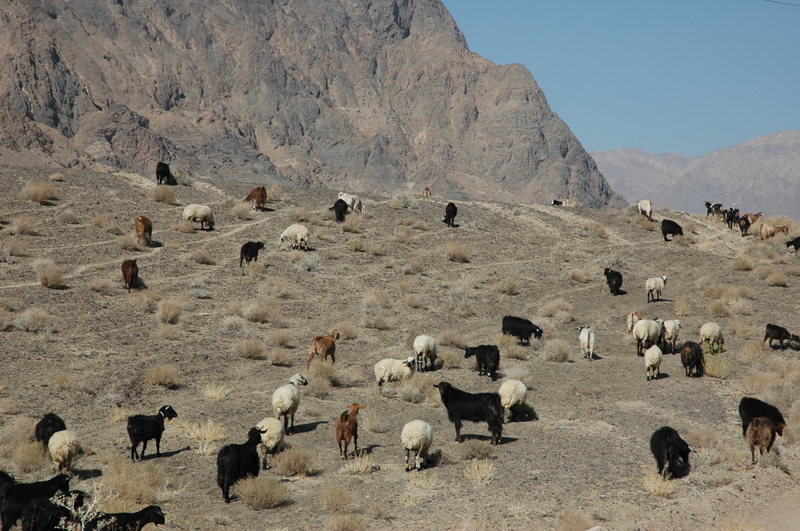
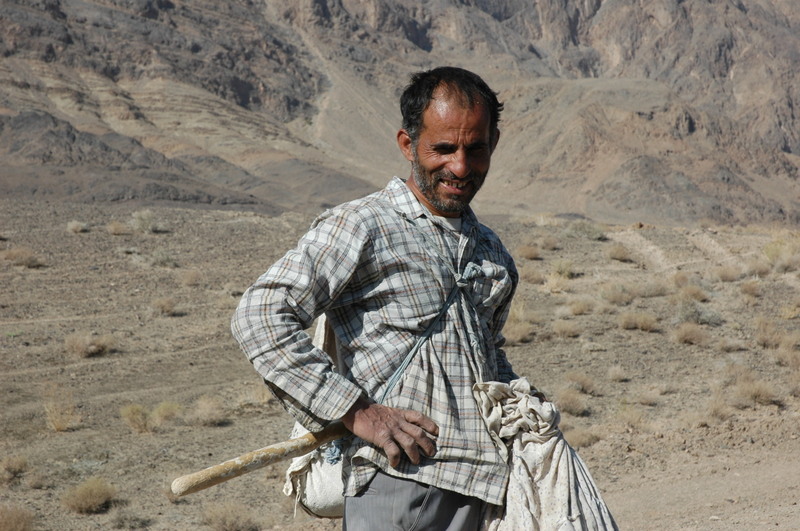
Driving from Chak Chak to Kharanaq we came across a goat herd and its shepherd (or is it goat herder?) crossing the countryside. What both the goats and the herder live on I have no idea…
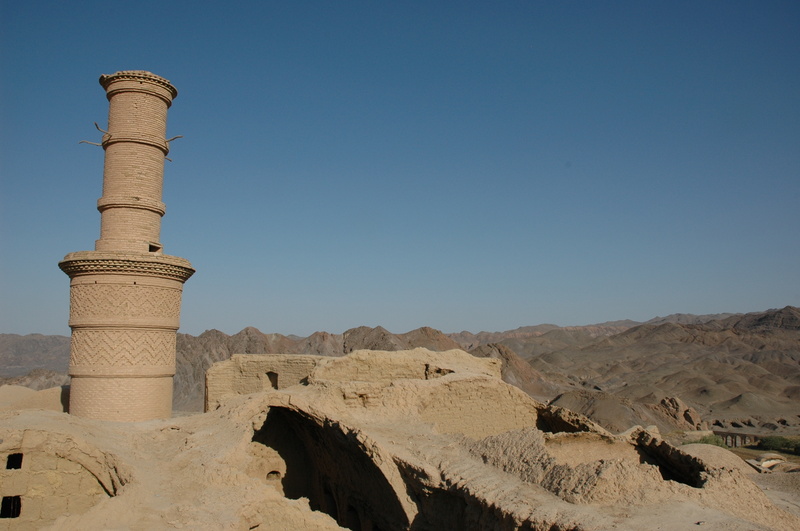
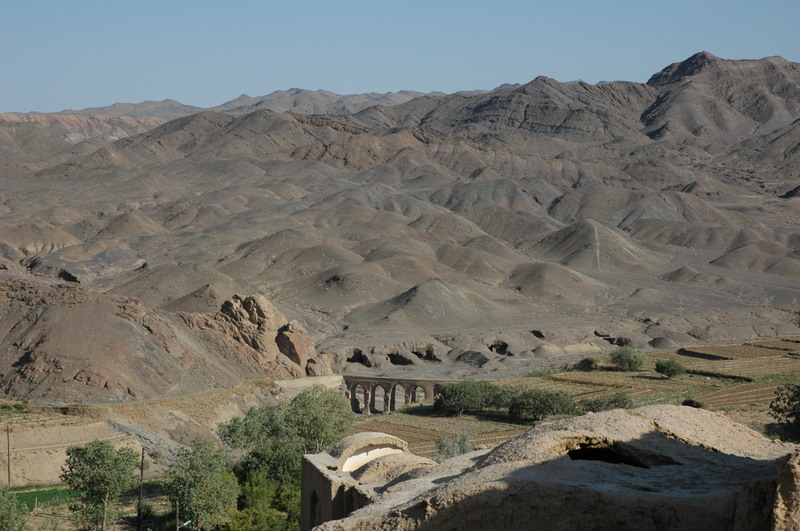
Our last stop was the abandoned village of Kharanaq. It’s old mud brick village is slowly crumbling down, so the locals have moved out and rebuilt their town nearby. The old town is quite eerie and ghostly and was fun to explore. I was able to scramble up the minaret in the photo below which was quite a challenge – let’s just say it was a tight squeeze!
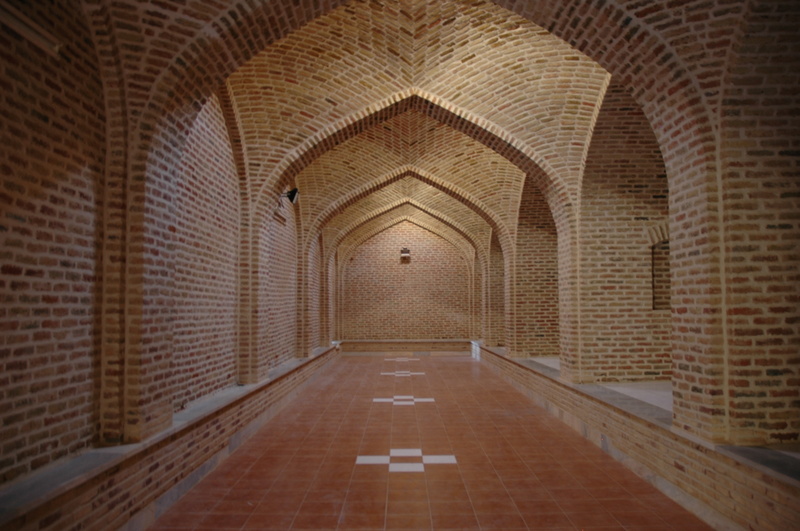
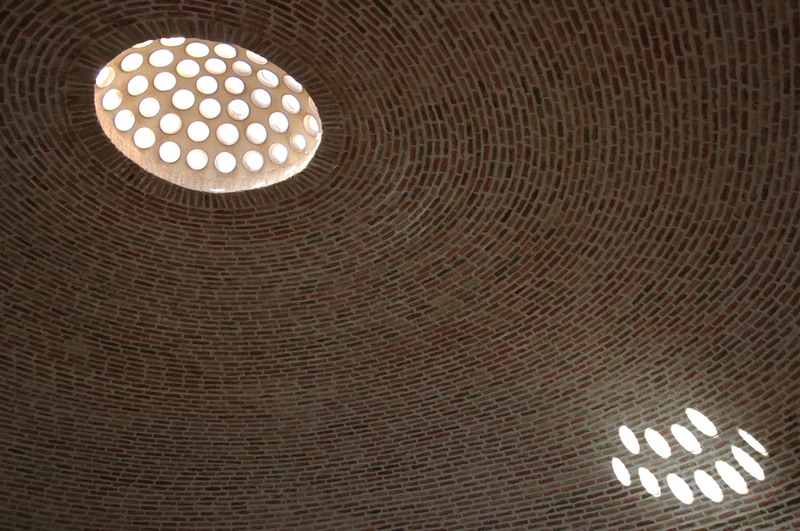
There was also a caravanserai nearby that had recently been immaculately restored to its former glory. I think they have plans to open it as a hotel – nice!
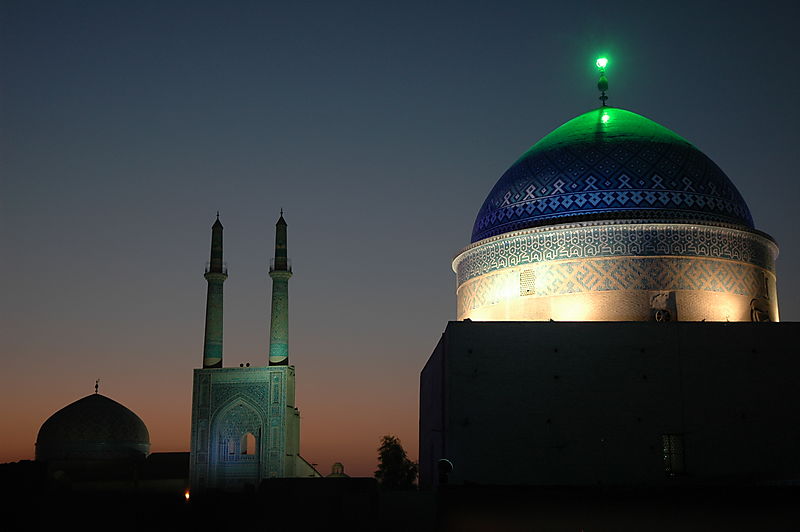
We arrived back in Yazd just in time to enjoy sunset from the hotel rooftop after a delicious dinner with a selection of non-alcoholic beverages on offer. Aaaaaaah, it doesn’t get much better than this…!!!
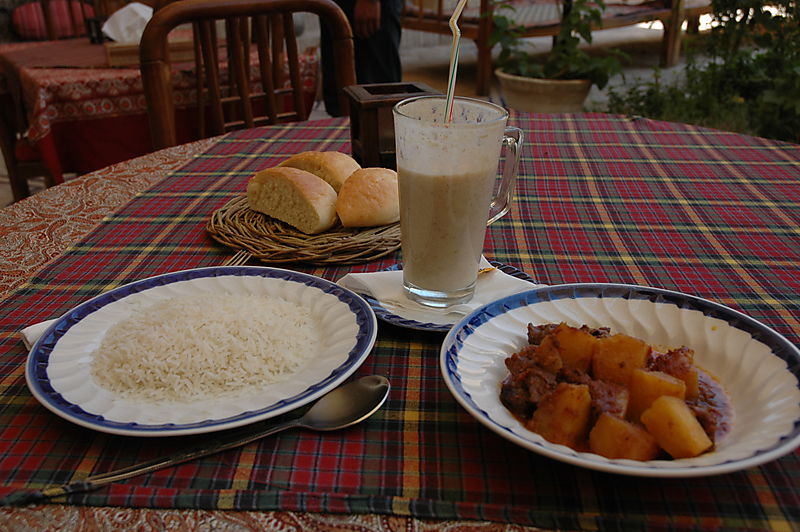 Dinner is served: camel stew, rice and a date milkshake – delicious!