I’ve been in China for several days now, and I have to admit it’s been OK so far. I was a bit apprehentious about coming back here since my first trip back in 2001. In Kyrgyzstan I heard my fair share of China horror stories from backpackers heading west, and I wasn’t looking forward, among other things, to the nightmarish rugby scrums at bus and train ticket offices, filthy toilets and bathrooms, pushy and rude Chinese, everyone spitting everywhere, and restaurant conditions that automatically get your stomach churning. But, since I checked in to the inappropriately named "Seman Hotel" (a classic, dog-eared and former grand hotel), it’s been so far so good – sort of.
Kashgar is a pleasant enough place. Anywhere else this would be considered a small city, but in China this is nothing more than a town. But the Chinese have done their best to make it as Chinese as possible – i.e. fuck it up. The ethic Uighur here are distinct from the Han Chinese in every way from their looks (Central Asian), their language (Turkic, written in Arabic script) and their religion (Muslim). They are also fiercely proud of their hertiage, and will often make the distinction that they are not Chinese (I was also pleasantly pleased to hear that there is still a strong independence movement in Xinjiang). The Chinese government have done their best to dilute the Uighur people here, and have for the past few decades urged Han Chinese to "Go West", and the two races are probably 50-50 these days in Kashgar (although the Han Chinese are said to get the lion’s share of the economic pie). On the up side, Ramadan hasn’t been so hard to tolerate here…
China has also pumped billions of yuan into the region. Once again, the up-side are things like great roads. On the down-side, Kashgar now looks and for the most part feels like any other Chinese city. Brand new, wide, tree-lined streets strip all the atmosphere out of the place, displacing the old city centre along the way. All in the name of "progress" I’ve been told (yes Andy, I’ve actually heard it said many times!). There are only a few places now you can delve into the old mud brick parts of the city and see the traditional Uighur life, and some of those you have to pay a ridiculous 30 yuan for the privilege!


One fascinating experience was the Sunday Livestock Market, held every Sunday for generations on the eastern outskirts of town. All morning long trucksloads full of sheep, goats, cattle and donkeys rumble in, and local shepherds drive their flocks in from nearby farms. They treat the animals terribly by Western standards, but it was still intreresting to see the trades take place. Sellers primp and prepare their animals, giving them a last brush or a shear. Buyers check out the merchandise, inspecting the quality of the goods. And then the dealing begins! Sometimes violent and always heated, the two parties discuss and argue the trade until the price is agreed, and it’s settled with a good old-fashioned handshake (and witnessed by tens of people!).


Unfortunately, the famous Sunday Market was a bit of a let-down. This is the market in the region to find all the touristy souvenirs, clothes, hats, and everything else a person here could ever want and need (including a street-side shave!). Once again though Chinese dabbling has ruined it: it’s housed under a soul-less tin shed roof and everything is neat and orderly into categorized rows.


A few shots from the Kashgar market.

You can’t beat a big Chairman Mao statue!
For the last couple of days I’ve been out along the southern edge of the great Taklamakan Desert where the Silk Road route once passed – not much left of it now though! I wasn’t able to find any other travelers interested in joining me for a tour (+ camel ride + sleep in the dunes) so I was stuck catching public transport along the highway. I traveled through Yarkant, where the Uighur culture was far more visible than Kashgar, and I got to see a little bit of the flat and featureless desert expanses. I ended the day in Karghilik (also called Yecheng, depends which language), where the road south into Tibet turns off. Karghilik had NOTHING going for it and so I got out of there asap this morning. I fly out of Kashgar for Urumqi this evening. Next stop: Turpan, another formerly famous Silk Road town, this time north of the desert.


Well, my plans have changed – again!
Originally my idea was to travel from Kashgar along the remote but spectacular western highway into Tibet, through Ali and past Mt Kailash, and evetually to Lhasa. I was able to ask one seasoned traveler in Kyrgyzstan for his opinion (because he’d just done it) and it really sounded like a serious undertaking with lots of planning and preparation. This route, apart from being technically illegal for foreigners to travel along, is bloody hard work. It takes about 2-3 weeks from end to end, requires fording many rivers (some windshield deep!)and circumventing washed-away river bridges, traveling some atrocious roads, of course vehicle breakdowns are common, you have to carry your own supplies because there isn’t much food en route, and of course you have to dodge (i.e. drive around) the many Chinese army checkpoints. The traveler I spoke to even had to buy a 4WD vehicle in Lhasa to do the trip! In all it seemed too long (I don’t have much time) and too expensive, and enquiring here in Kashgar has led me to that same opinion. I’ll have to save that for another time… (Sadly the Chinese are paving the road all the way through so in a couple of years it’ll be a doddle.)
Plan B was to travel the remote Southern Silk Road route east along the edge of the Taklamakan Desert and over the Altun Mountains to Golmud, where I could join the main tourist bus/train route to Lhasa. Once again this idea was thwarted by the travel time (one week to Golmud), iffy public transport connections and zero reliable information along the route, and the extortionate costs of getting in to and out of Tibet (the Chinese PSB really rips foreigners off with the handful of permits and passes you need to acquire and the "tour" you have to join to go there).
With Tibet off the agenda, I started looking at my other options. Xinjiang Autonomous Region (the big block of Western China where I am now) really didn’t seem to have much going for it once I worked through my guidebook, so I switched gears and looked a little further east. The next province along is Gansu, a thin and long strip which hugs the north-eastern border of the Tibetan high plateau. It has a treasure trove of things to see and do, so I set my sights on there. I’ll still be following the traditional Silk Road route (which historically ended at Xi’an next door), and will pass various Buddhist caves, Silk Road towns and cities, and even a Tibetan Buddhist monastery along the way! This last one, the Labrang Monastery in mountainous Xiahe, was a real find and means I can get a Tibetan "fix" without stepping foot there. In fact, for the reason that it’s not within Tibet (with its associated politics and issues), it’s even more Tibetan than the parts of poor old Tibet that have been heavily infused with Han Chinese migrants and culture.
It’s good to have a plan and I’m really looking forward to experiencing this little-visited corner of China. I’ll get started in a couple of days, when I return from the Taklamakan Desert (I’m off there tomorrow) and fly to Urumqi, and then hop on an overnight train to Dunhuang to visit the world-famous Mogao Caves.
Kashgar is the beginning (or the end, depending which way you go) of the great Karakoram Highway. This road connects China to Pakistan over the 4800m Khunjerab Pass in the western Himalaya, and continues down to Islamabad. It took 20 years to plan and build and is an engineering marvel. It takes well over a week to drive it from end to end, and unfortunately my plans don’t allow for me to do it. BUT I was able to get a bit of a taste!
I signed up to do a day trip to Karakul Lake, five hours drive south of Kashgar and deep within the Pamir mountains. Along with the same three Israelis (Koresh, Tina, Ivan) that I’d come over the Torugart Pass with, we left Kashgar early in probably the slowest taxi ever that we’d chartered for the day.
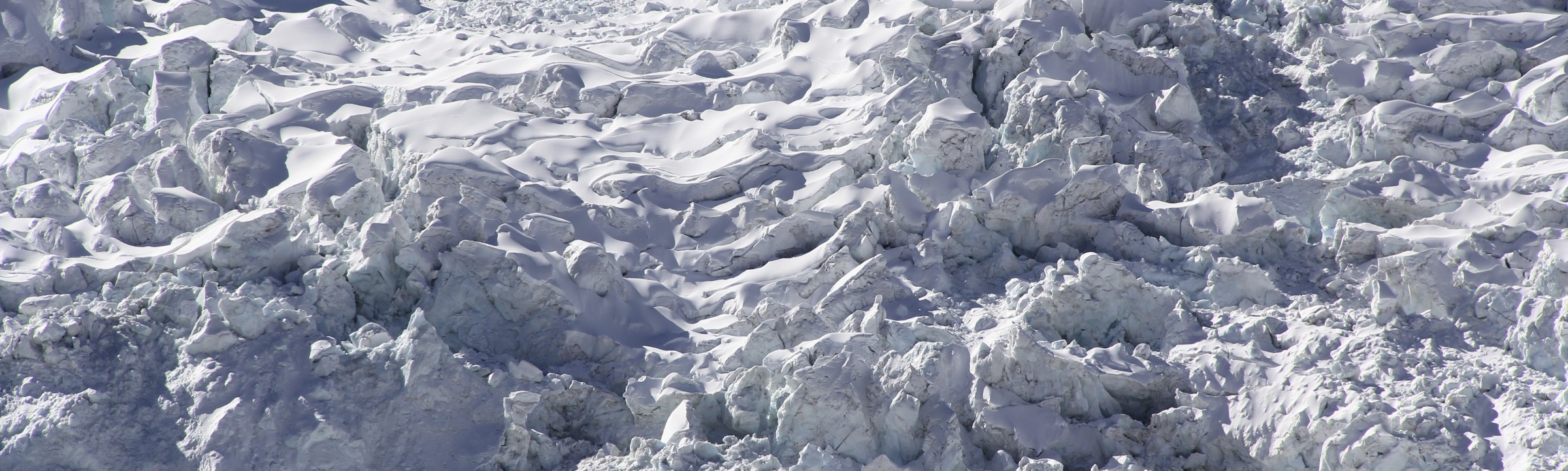
As we drove south we skirted past the western fringe of the Taklamakan Desert before delving deep into a narrow mountain valley with cliffs that soared kilometres above us. The next few hours drive were some of the most spectacular I’ve ever experienced. We followed the Ghez river south, and the size of some of the boulders in the river bed spoke volumes about the rockfalls that sometimes come down (even now, before winter, parts of the road were washed out) and the strength of the river in the Spring thaw. On both side of the canyon many glaciers and ice falls cascaded down from the mountains into the valleys.
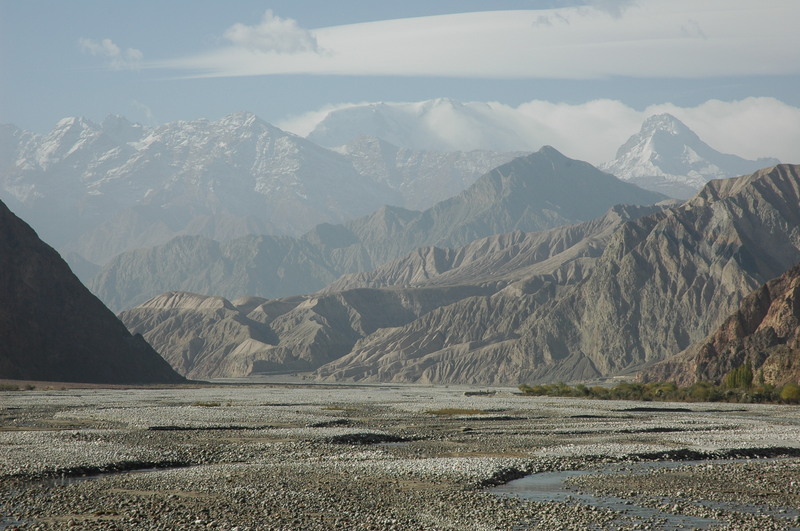
Flood plains, deep ravines and gigantic mountains – pure Karakoram!
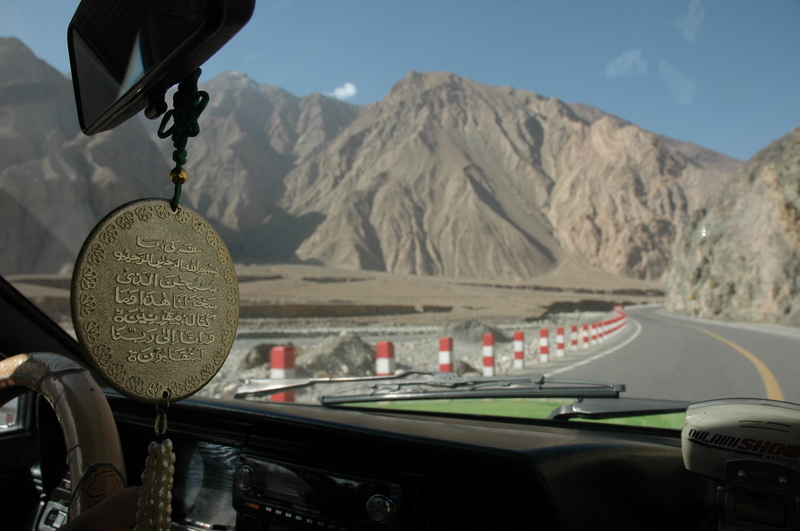
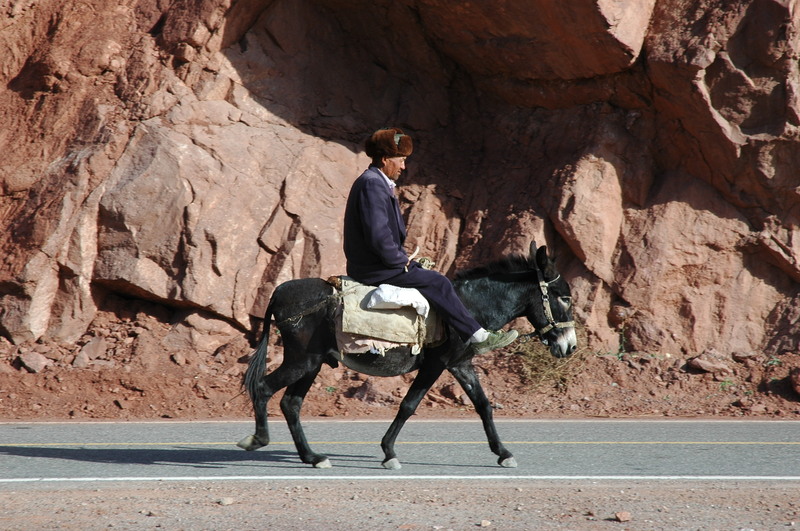
In sh’allah we will make it! Karakoram the old fashioned way.
Two hours into the canyon we drove past a wide river plateau ringed with huuuge sand dunes that spilled up onto the lower slopes of the mountains. The place is aptly named Kumtagh (Sand Mountain).
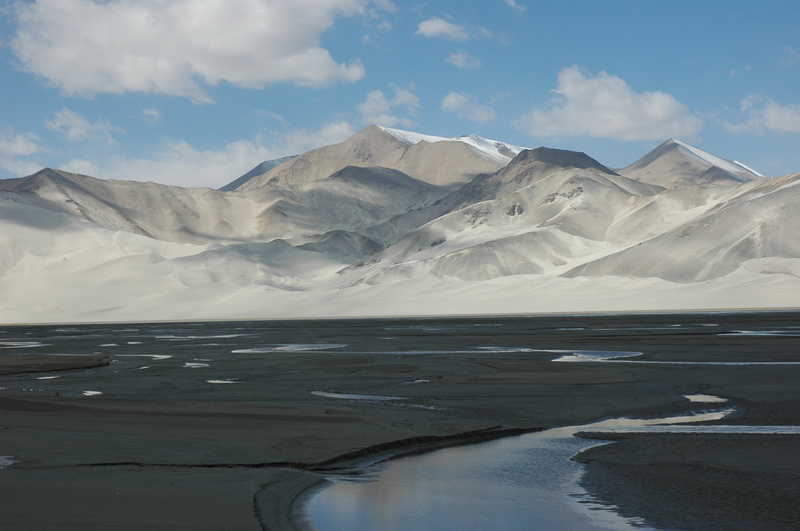
Mountains meet deserts – pure Karakoram!
A further two hours up the valley we arrived at 3000m-high Karakul Lake, a small alpine lake with a few basic concrete yurts built around it (the area is inhabited by ethnic Kyrgyz and Tajik people). While the lake itself was pretty average, the vista beyond was outstanding. The Kilimanjaro-esque massif of 7546m Muztagh Ata rose up more than 4km above us on the other (northern) side of the lake, and the even higher 7719m Kongur peak was in clouds to the south. Only the scores of glaciers streaming down the valleys on its sides were visible – and they were impressive enough!
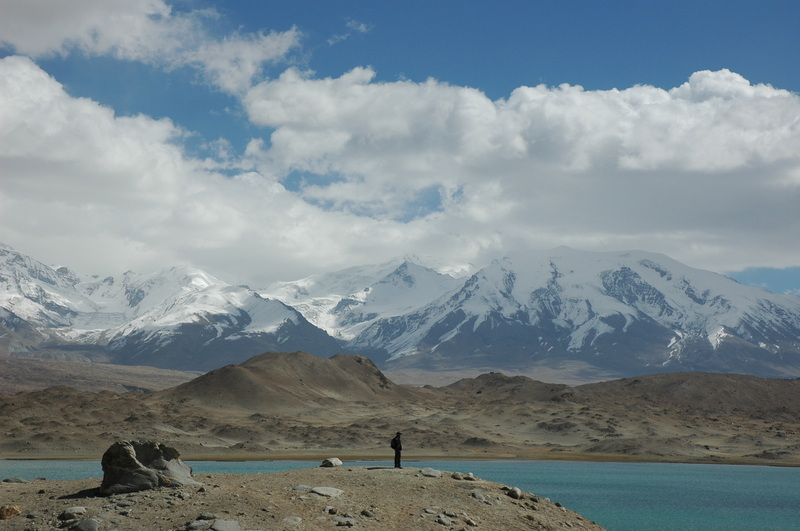
What a vista!
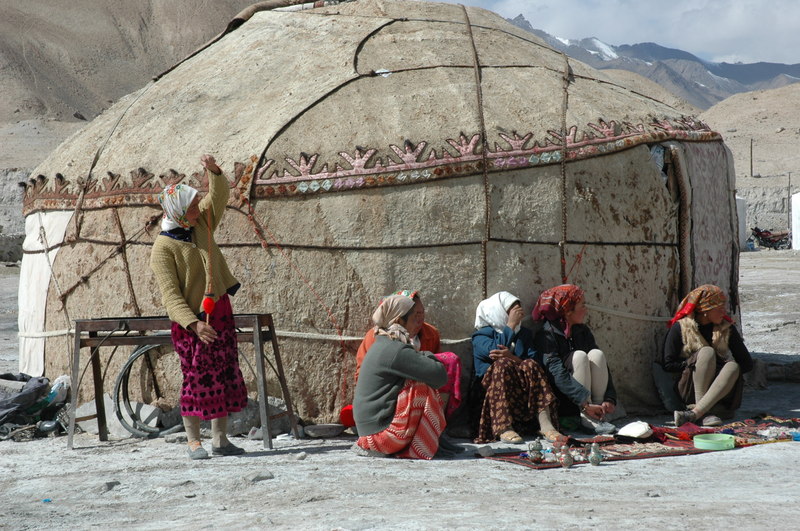
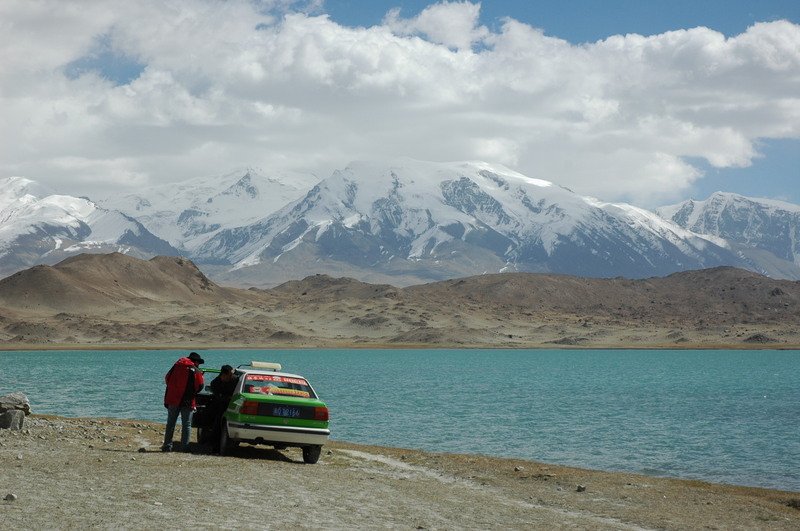
The local Tajiks. Taxi!
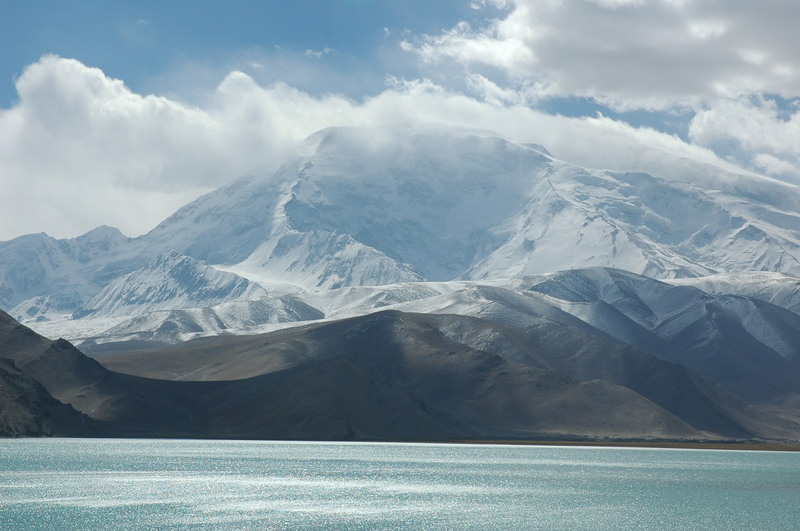
The beautiful 7546m Muztagh Ata across the lake.