It’s been really nice to relax back in Buenos Aires after all the fun and games down in Patagonia. I’ve been taking more Spanish classes since I’ve been back, but with just four hours a day of classes in the morning I’ve been using the afternoons to explore some more of the city.
Christmas was pretty much a non-event as, together with a small group of friends from the school who were still kicking around the city, we struggled to find any restaurant or even a bar open to celebrate with a big dinner. The only places open were the high-end places around Puerto Madero which were asking USD100+ for a set menu – ouch. But after quite some searching we found a run-of-the-mill local parrilla down in San Telmo and got a reasonable feed there.
Christmas Eve was an experience, and come midnight every porteño seemed intent on blowing up the city with all the fireworts on this earth. Let’s just say that it wasn’t the best time to go for a walk down the street – I’ve never had fire crackers come raining down upon me! I did take the chance to go to Mass too, which was a really interesting (and new) experience for me. On Christmas Day the city was completely empty as everyone recovered from a big night beforehand so we took to one of the parks near Puerto Madero to chill, read, listen to music and people watch.
Here’s a few bits and pieces around the city…
Puerto Madero: The old port area was recently renovated and overhauled and is one of my favourite places in the city. The original red brick warehouses which line one side of the port are full of charm and have been converted into high-end shops, restaurants and classy apartments, and the old cranes add a touch of authenticity to it as well.
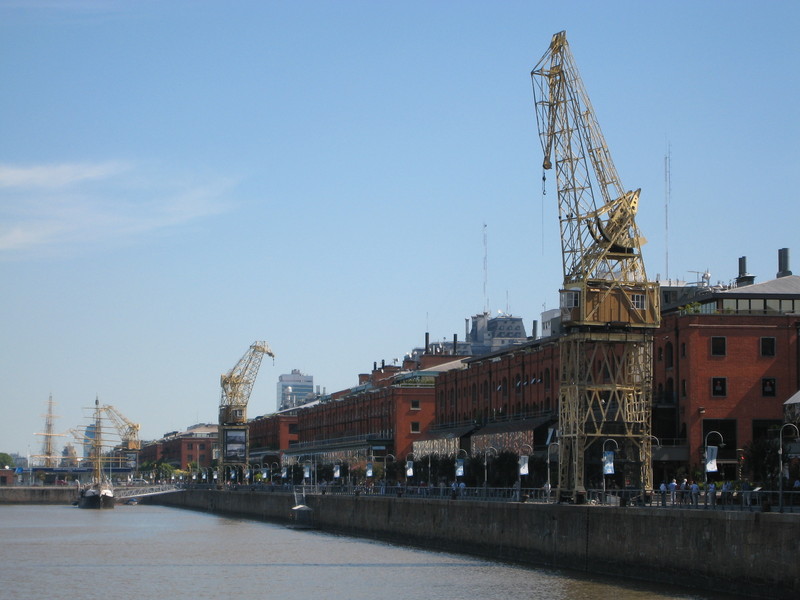
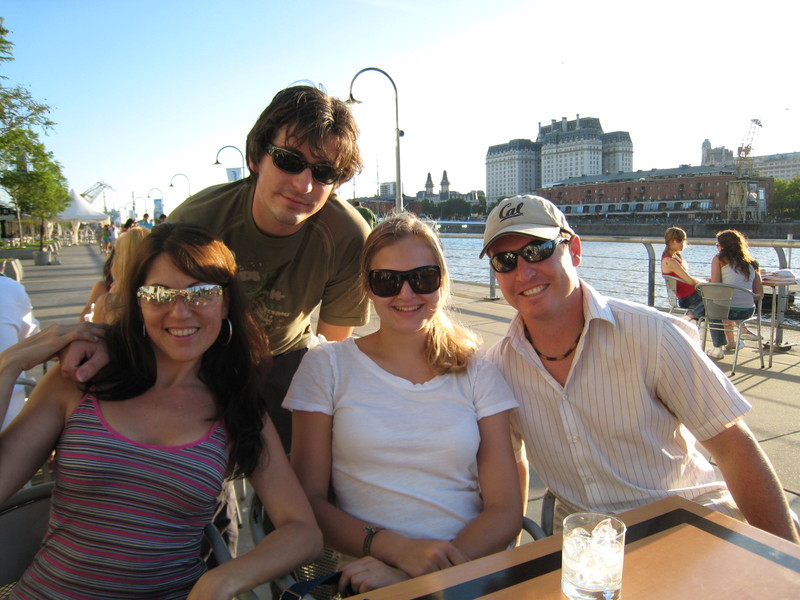
(L) The old and now renovated warehouses along the waterfront. (R) Enjoying an evening drink with Carina (my landlord), Silvio and Amelie.
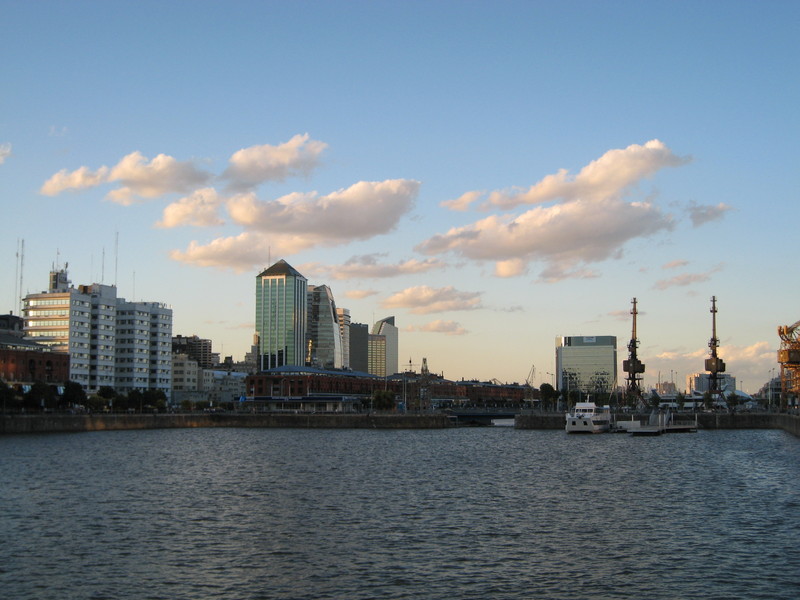
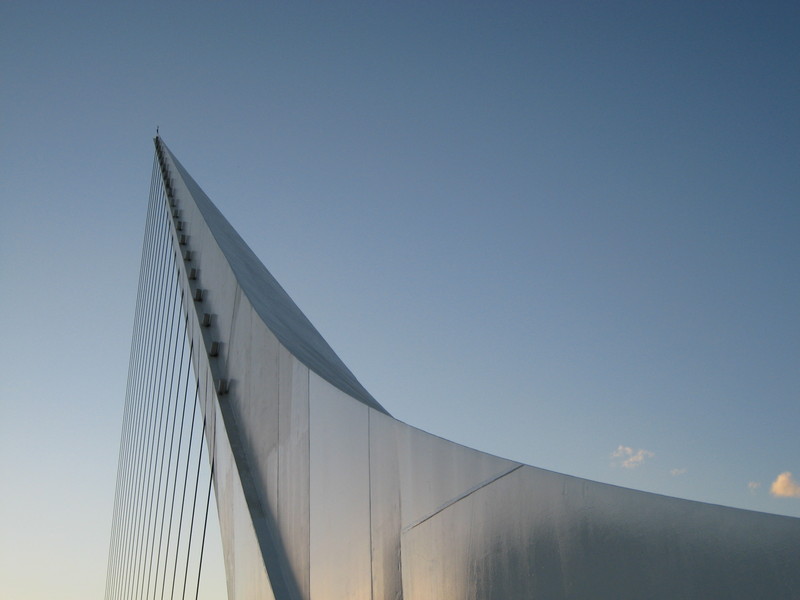
(L) Puerto Madero at sunset. (R) The bridge at twilight.
The Subte: The Subterraneo subway system in Buenos Aires is one of the oldest in the world, and is definitely an experience! It’s horrendously packed around rush hour and should be avoided at all costs, but apart from that it’s a decent and fun (and cheap at $0.70 pesos) way to get around the city.
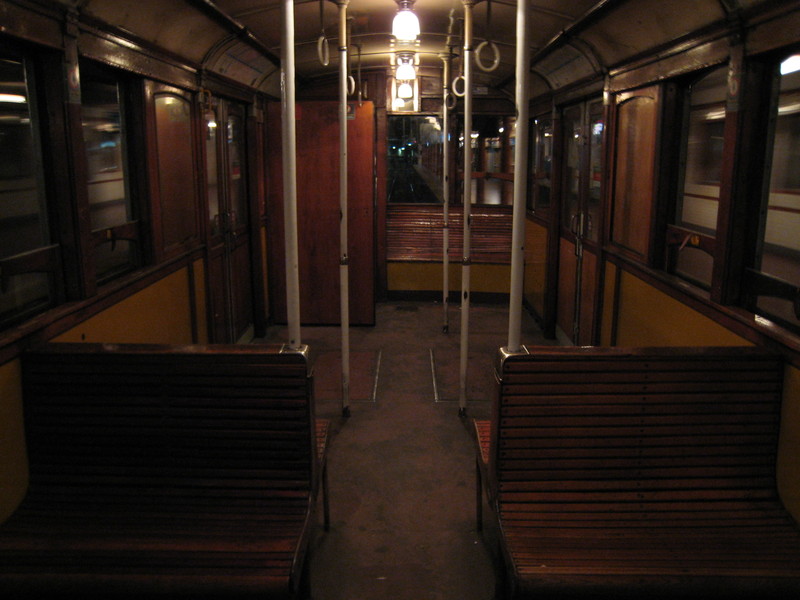
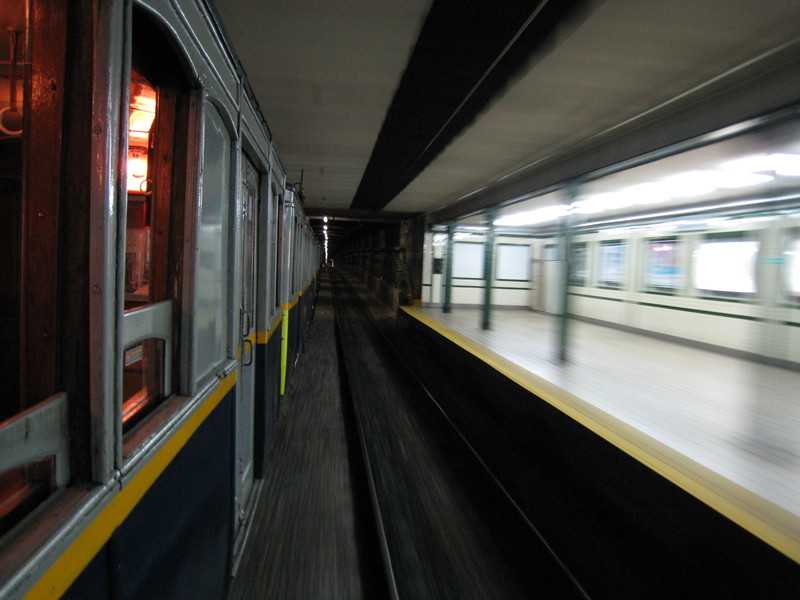
One of the gorgeous old wooden carriages on the Subte’s Linie A (which remind me of the old W-class trams in Melbourne).
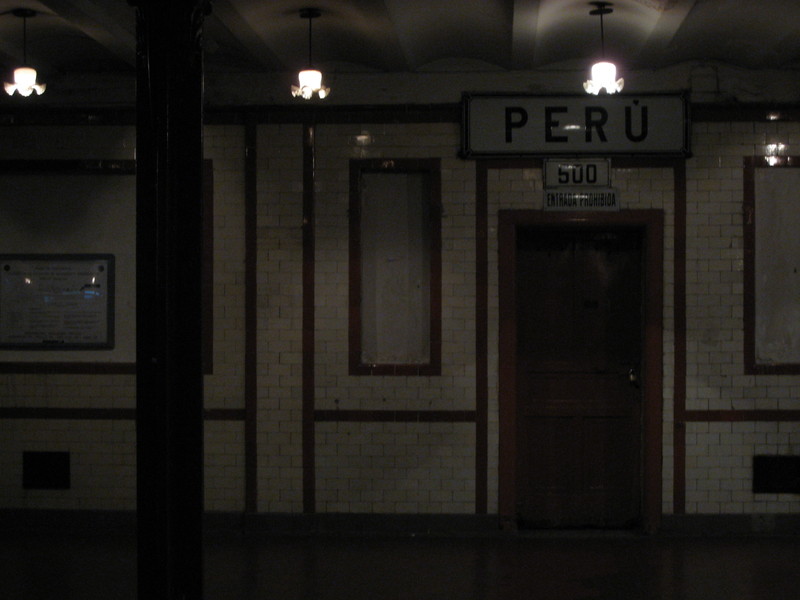
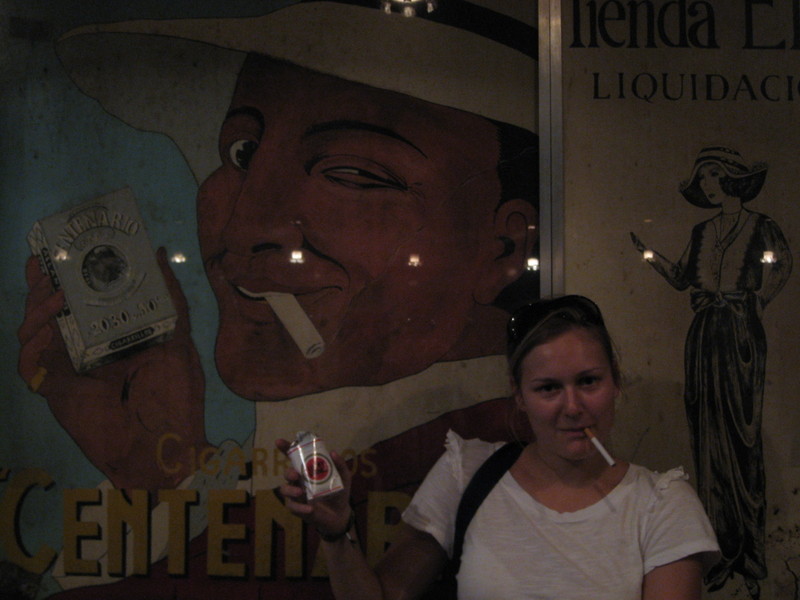
Peru Station on Linie A which is still modeled as it was at the turn of the century, even down to the posters (as modeled by Amelie).
Plaza Congreso: The Argentinian congress is near where I live and also near the language school, and I walk around the plaza every day. The building is like a baby version of the US Congress but a bit more dishevelled and run-down. There’s always some group protesting something-or-other across the street in the pleasant little park that makes up the plaza, and there are usually barricades ready and handfuls of cops waiting around for the next flare-up – you’ve gotta love a good fiery democracy, and the Argentines have a lot to complain about after decades of bad government!
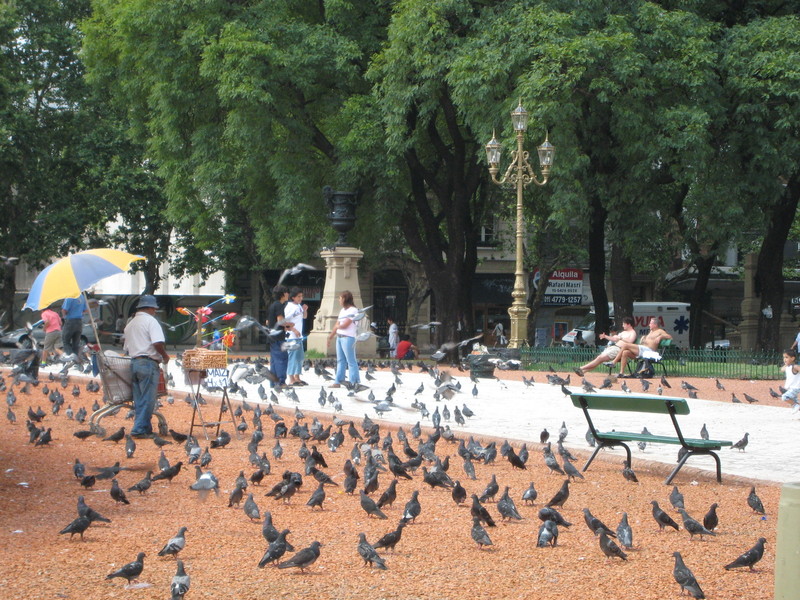
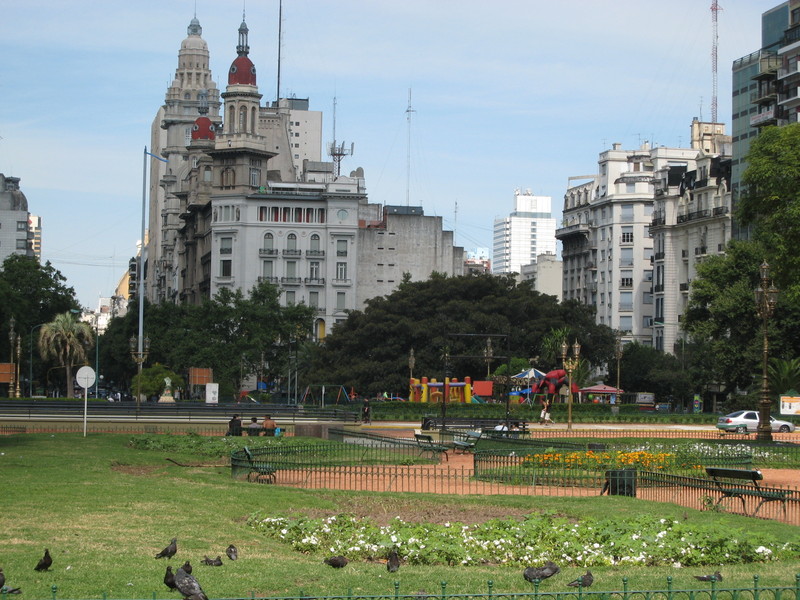
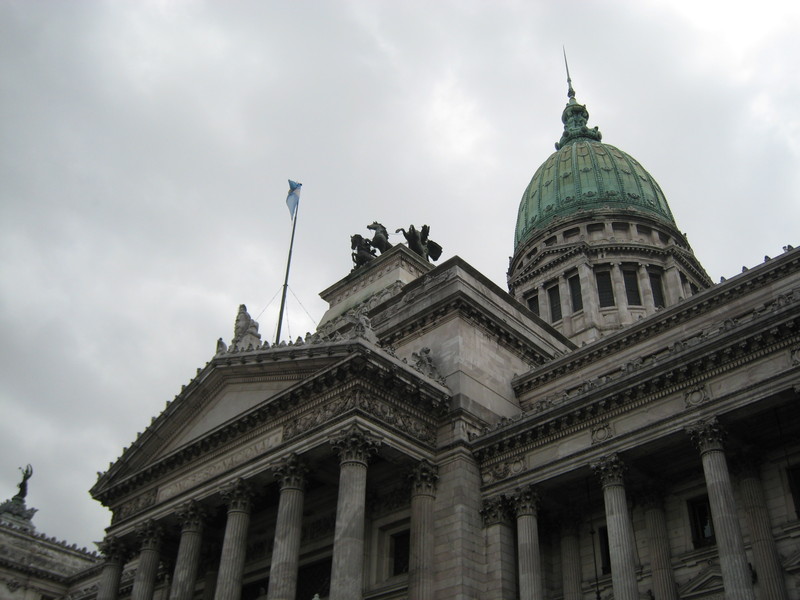
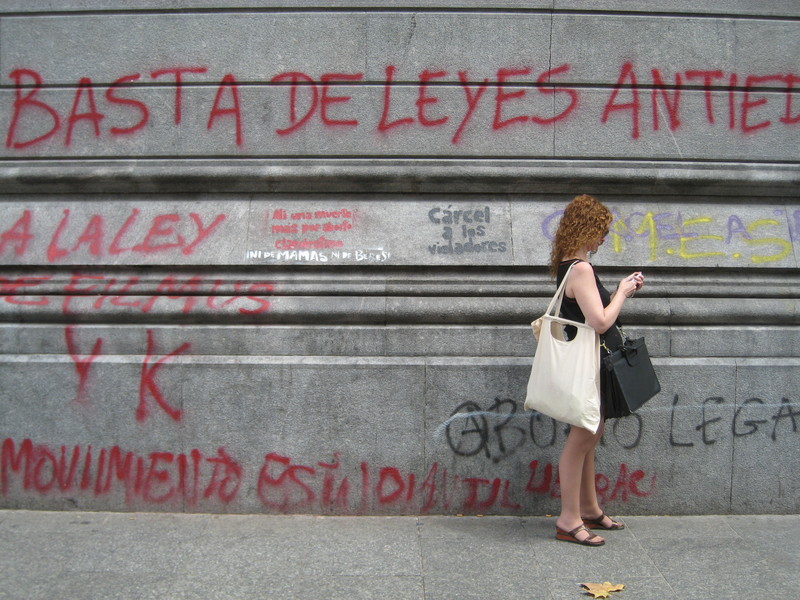
(L) El Congreso. (R) Political comment on its walls.
Avenida de Mayo: One of my favourite streets in the city and as its lined with plane trees it feels a little like Collins Street (for any Melbournians out there). It connects the Presidential Palace with the Congress and so there’s always some protest or another going on along its length.
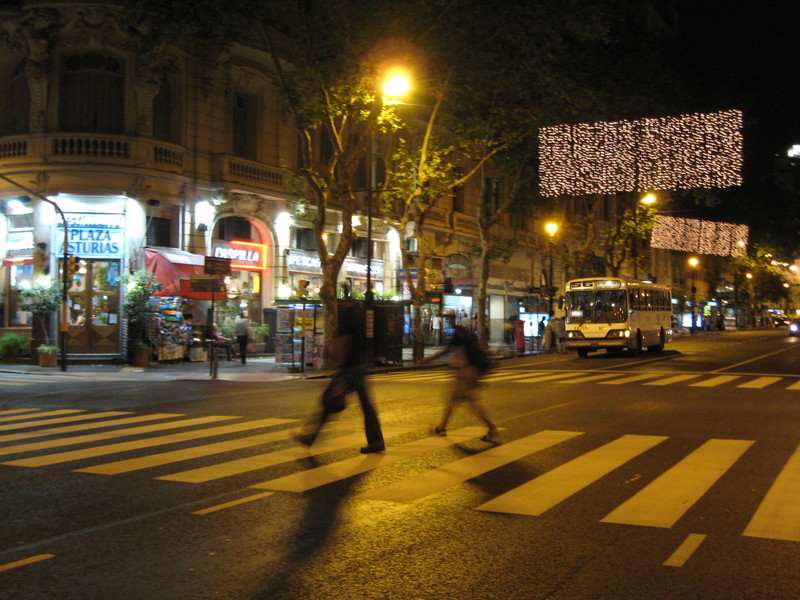
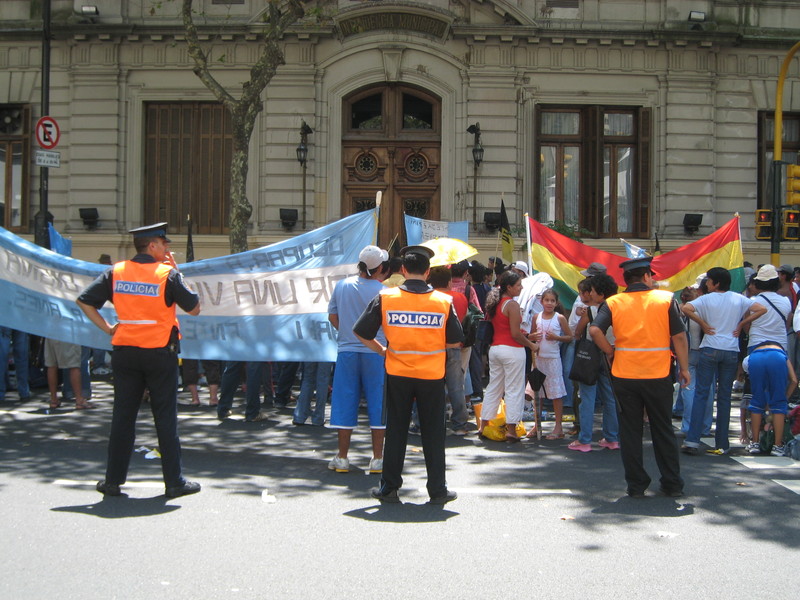
(L) Avenida de Mayo by night. (R) Yet another protest.
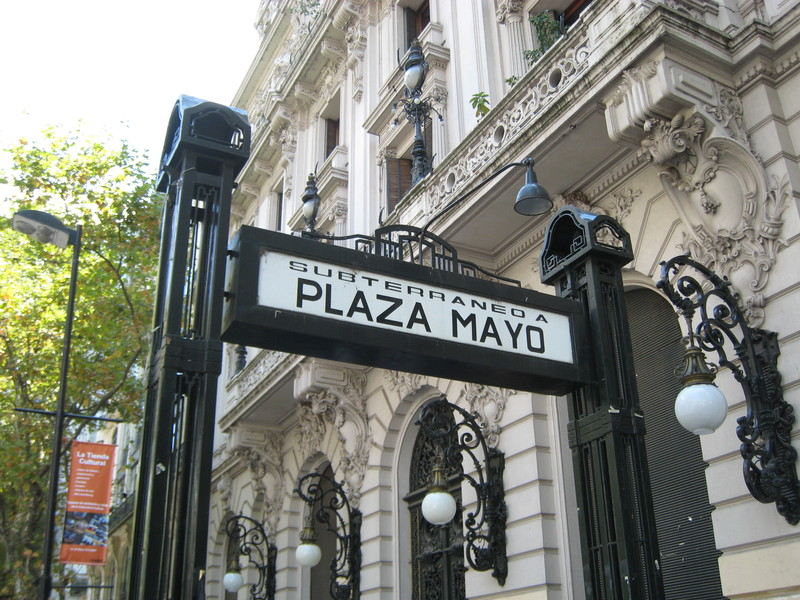 Entrance to the Subte.
Avenida 9. de Julio: This is purportedly the “widest street in the world” with something like 16 lanes at its widest point. It’s a major thoroughfare of the city and the tall, white Obelisco (which celebrates Argentine independence) is a distinct, central reference point.
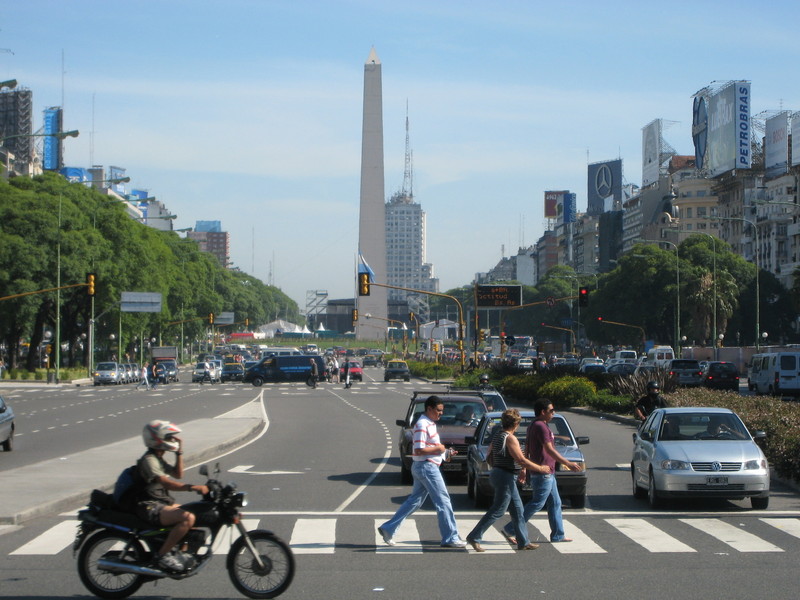
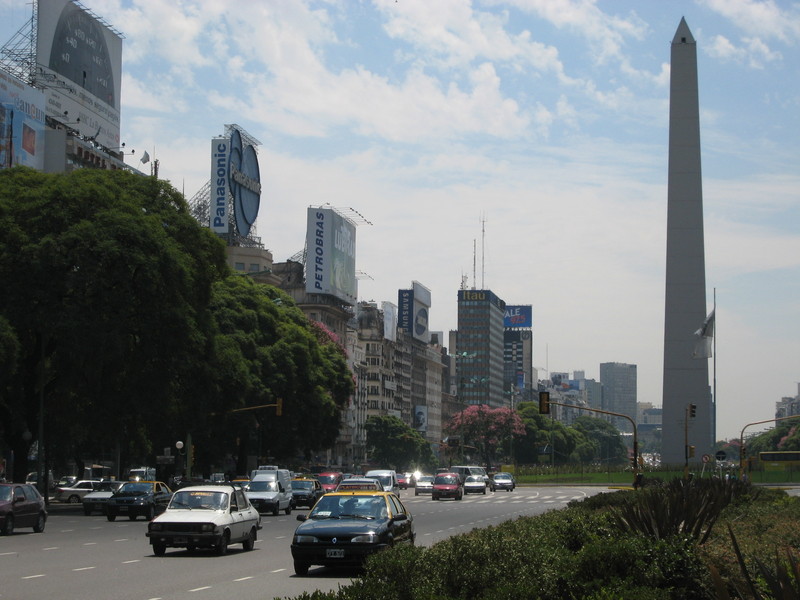
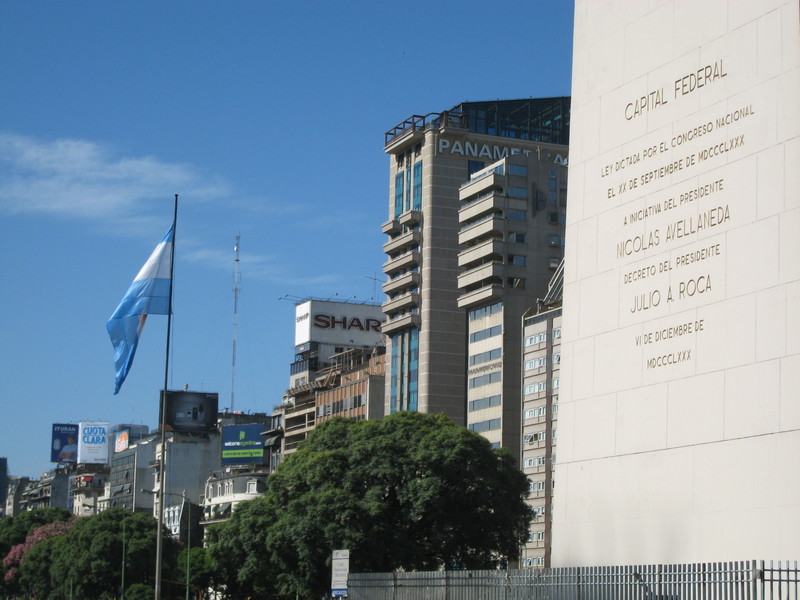 At the base of the Obelisco.
Some shots from going out…
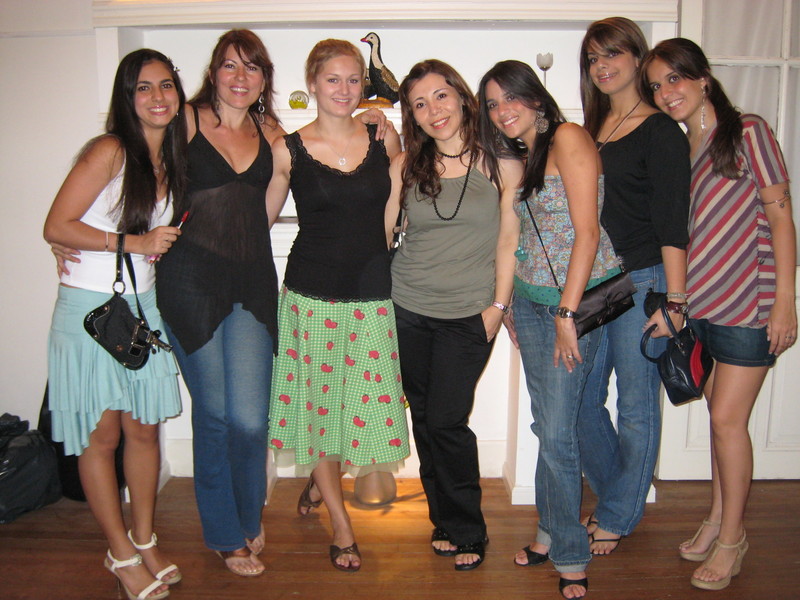
The lovely ladies of the apartment prepare to hit the town…
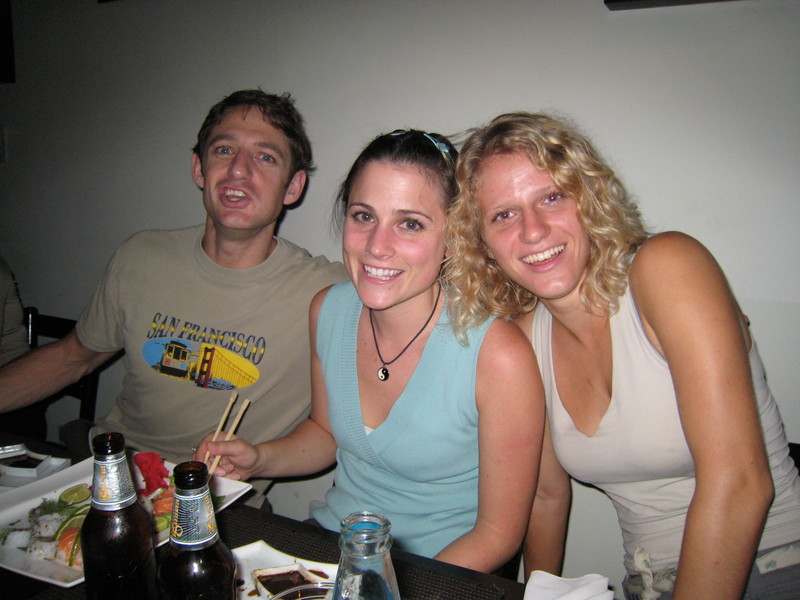
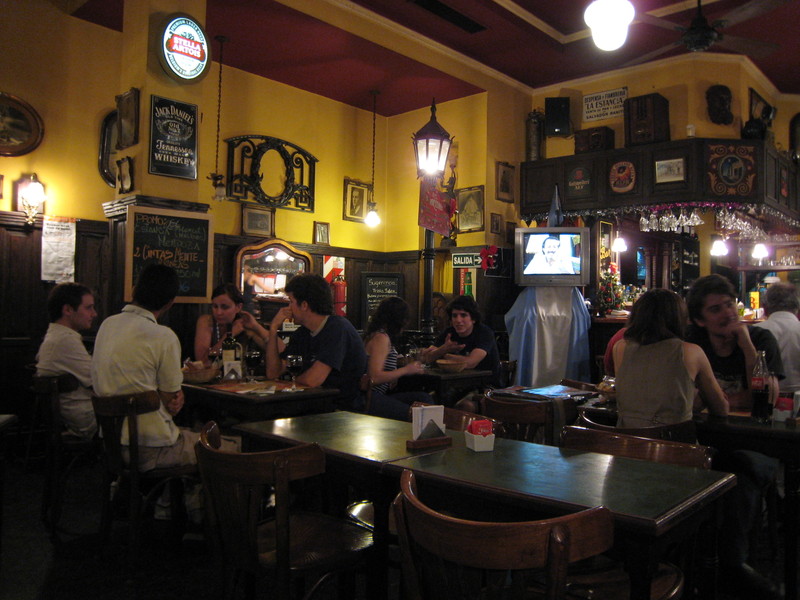
(L) The Ibero crowd enjoy some sushi. (R) A typical Buenos Aires parrilla.
Last stop on our whirlwind trip of Patagonia was the coastal town of Puerto Madryn. Its conveniently placed around about the halfway mark between Río Gallegos (right down south on the Atlantic coast) and Buenos Aires, some two solid days travel away.
It turned out to be a bit of a bitch to get there in the end as we kind got ourselves off the main tourist path. Most travelers head north-south up and down the length of Patagonia, however we needed to go against the grain and go east from Puerto Natales (Chile) to Río Gallegos (Argentina). Direct buses weren’t running the morning we wanted to leave so we needed to go back across the border to our ol’ favourite Río Turbio (the dump of a mining town) to get a connecting bus to Río Gallegos.


(L) Politics at the border. (R) Most of Patagonia looks like this!
By the time we got there it was already the end of the day and we were fortunate enough (given that Christmas was so close) to grab two tickets on a sleeper bus north to Trelew, just south of Puerto Madryn. The long-distance buses are definitely an experience in Argentina: double-decker, usually pretty new, meals and in-flight movies, and seat that recline a decent amount. We settled in for the night and it was a gruelling 20 hours later that we finally arrived in Trelew. From there it was a short bus ride to Puerto Madryn and we collapsed into our hostel room pretty exhausted from a solid two days of traveling.
Puerto Madryn is known for its marine life and is the jumping-off point for the nearby National Park that covers the flat expanse of Península Valdés, a huge tract of land now preserved in the name of animal conservation. Mark and I signed up for a day-trip out there to see a few of its inhabitants. It was well worthwhile, even though I was feeling a tad worse for wear after an(other) all-nighter (damn this Argentine way of life! 🙂 ).

Sunrise on the beach – aaaaah…….
We first went to a viewing point where we saw sea lions and elephant seals wallowing around on the beach. As it was high tide there was a chance we might spot a pod of killer whales (this is the place you might have seen in documentaries where the orcas come onshore to pinch seals and sea lions), but we didn’t see diddily squat. I think the best thing I saw was this little armadillo…

Next stop was a penguin rookery. These were Magellan penguins, much bigger than the fairy penguins we get near Melbourne. As their chicks had been born just a few weeks earlier we were hoping to spot a couple of these balls of fluff, but they were all tucked away deep in the burrows.


Final stop for the day was THE highlight – a boat trip out into the bay to spot southern right whales! We just caught the end of the season, and we’d heard that there were still a few mothers and their calves in the neighbourhood. As it was mid-afternoon by the time we got there, and given the tendency of Patagonian wind to blow and blow hard, there was a fair bit of chop on the seas and a good swell running. BUT we were indeed lucky enough to spot two of these incredible animals up close and personal, and spotted another in the distance – FANTASTIC! Not much to see truth be told, but just to be in the presence of these giant and endangered mammals was awesome. Unfortunately though, given the rough boat ride out there, we didn’t have that much time snapping away with our photos before we had to turn around and head back.


With the sights of Puerto Madryn behind us, Mark and I are going our separate ways. He is heading to Bariloche, back up in the mountains of northern Patagonia, for a bit more hiking and maybe a spot of climbing. As I’m injured I’d just be a spectator if I went there, so I’ve instead decided to head back to Buenos Aires for Christmas (and another 24 hour bus ride to survive tonight – urgh…).
After our recovery day in El Calafate we headed further south towards Torres del Paine, which is in neighbouring Chile. Our route there took us across the flat, open and incredibly barren pampas, with the occasional estancia or glimpse of the Andes to the west (we even say Torres del Paine in the distance with its cluster of glacier-laden peaks). The route took us through Río Turbio, a dump of a coal-mining town, and then to the border a little further on. After much faffing about (Argentina and Chile don’t quite get along…), including a search for banned foodstuffs that had us holding our breath (we’d done all our food shopping in Calafate), we eventually made it to Puerto Natales, a not unpleasant little town on the water. Without much to hold us there we jumped straight on another bus to the Parque National de Torres del Paine some four hours north-west along a rough road through some lovely alpine scenery. Once we entered the park we were able to get a minibus to take us to the start point of our trek.

A few of Torres del Paine’s famous peaks peek through the clouds as we approach the park.
Without enough time to do the world-famous full circuit of the massif (which takes 7-10 days), we planned a shortened version of the “W” trek along the southern side of the range. This hike, lasting 3-5 days, takes in the major highlights of the area.

Our first day was a short three-hour hike up to Campamento Chileno, a Swiss-style refuge with bunk beds, a hot kitchen, and a campsite next-door. We camped there the night and were pretty pleased with our day’s travel, which started all the way back in El Calafate.


Traveling in style.
We woke up early on Day Two to drizzly and grey conditions, but we wanted to make the side-trip up the valley to see the Torres del Paine, a group of 3000m pink granite pillars/towers above a small glacial lake. The weather got worse as we climbed up, and we unfortunately couldn’t see a damn thing once we got to the lake – bummer!!! (I later bought a postcard to see what I missed out on…)


The weather lifted as we walked back down the valley so we packed up the tent and were on our way by late morning. We walked back out the way we came but then turned west and traversed along the escarpment which spilled down from the other famous feature of Torres del Paine called Los Cuernos (The Horns). These are granite mountains worn smooth into beautiful shapes by aeons of glacial erosion, and they loomed above us as we hiked – an outstanding sight.


The weather continued to improve as we hiked west on Day Two and we were treated with great views of Lago Nordenskjold to the south, and the craggy peak of Paine Grande to the west with its hanging glaciers and massive seracs. We could even spot part of the Campo de Hielo Sur, our old friend the Patagonian Ice Cap, spilling down to the large Glaciar Grey (Chile’s answer to the Perito Moreno glacier).


We camped the night at Campamento Italiano’s large – and full – campground by the river. We originally planned to hike further up the valley to Campamento Britanico the next morning, but both of us were felling pretty shagged from the long day of walking (around 30km all up) the previous day. The hip injury I niggled on the Ice Cap started playing up again as well, so we scrapped that idea and enjoyed a relaxing night and a bit of a sleep-in.


On Day Three we had a boat to catch in the early afternoon across Lago Pehoe to connect us with our bus back to Puerto Natales, so given this tim constraint we chose to hike straight out to Refugio Pehoe, a hotel-style refuge where the boat departs from. The weather made our decision easier as well with Patagonian rain and wind all morning and not a Torre or a Cuerno in sight. On the bus ride out of the park the weather started to lift again and we got a pretty decent view of the entire Torres del Paine range.


Back in Puerto Natales we dried out our gear and treated ourselves to a big slap-up meal at a local seafood restaurant (no more camp stove food – yay!). The quality of the seafood was outstanding, and included the largest scallops I’ve ever seen. We were also treated to another fantastic Patagonian “big sky” sunset over the harbour with the mountains in the distance.
