Day 87: Nemrut Tour Day 2
I woke up at 3am quite excited – Nemrut had been on my "to do" list for years and I couldn't believe I was finally going to get to see it. We piled into the minivan and drove for about an hour and a half along some of the worst roads I've ever traveled along up towards the summit of the mountain. We arrived about 45 minutes before dawn and walked 20 minutes from the car park to the summit.
A bit of background for those of you who haven't heard about Nemrut. It's a prominent 2150m mountain in the south of Turkey, and was formerly a part of the pre-Roman Commagene kingdom (we're talking 1st Century BC here folks…). A pretty humble bloke, King Antiochus I Epiphanes built a huge funeral mound atop Nemrut for himself, and placed statues of himself alongside the great god-kings of the past on two terraces just below the summit. It was forgotten for centuries and only rediscovered back in 1881.
We arrived at the eastern terrace in time to see the sun rise, and it was a magnificent view over the mountains and valleys below. The terrace itself is dotted with the 2m-tall heads of the statues seated above the terrace, which have fallen down over the centuries. There's Apollo, Zeus, a bunch of other gods and of course Antiochus himself.
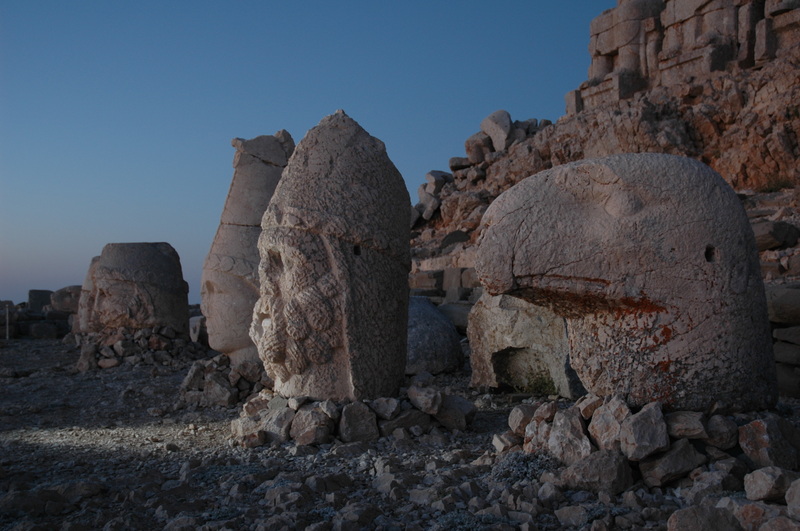
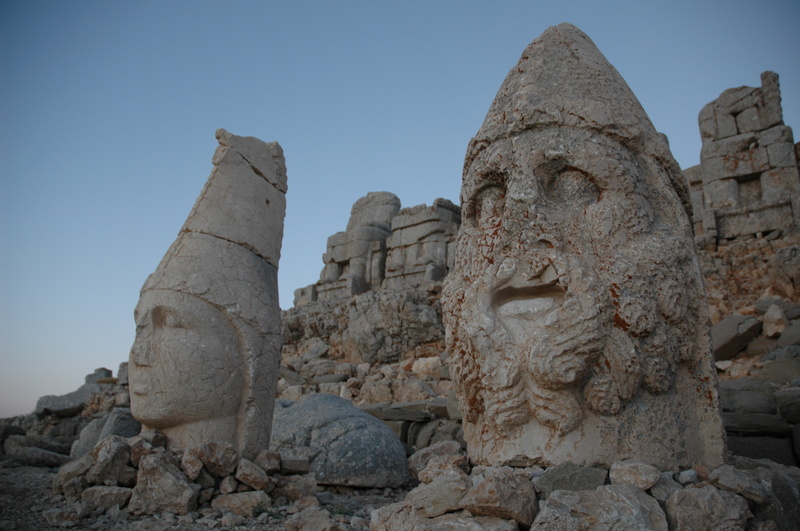
The statues in the pre-dawn light. The groovy looking guy with the beard is the god Heracles.
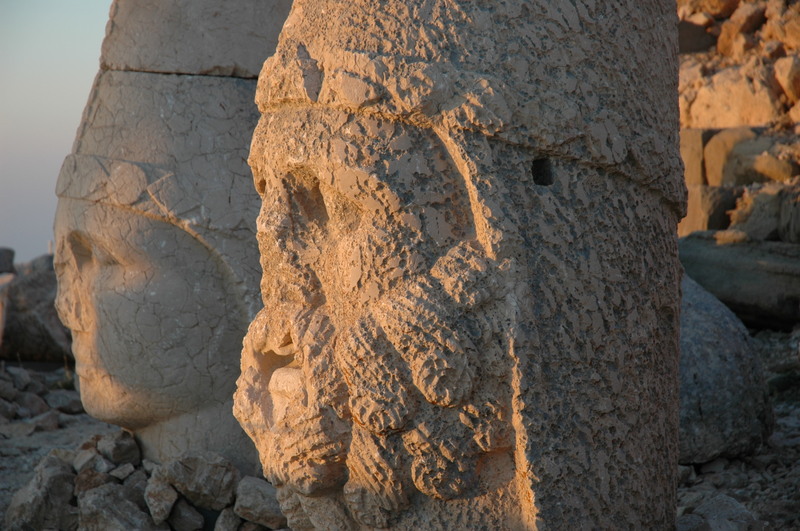
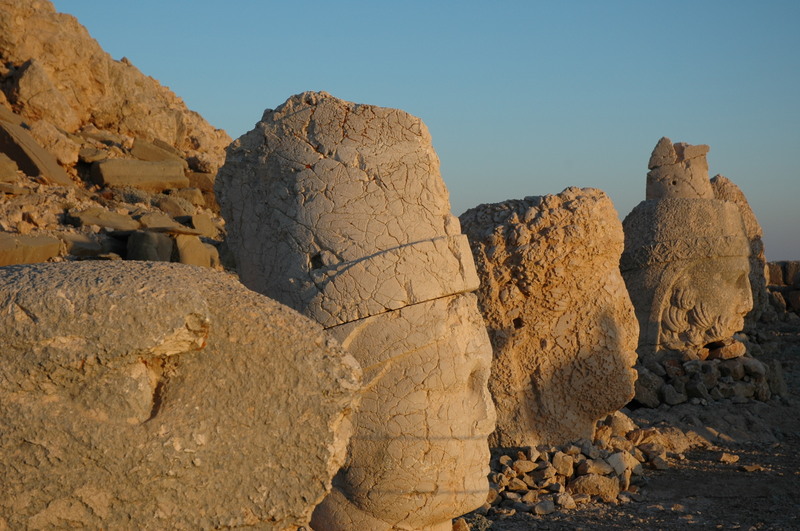
The same statues at dawn.
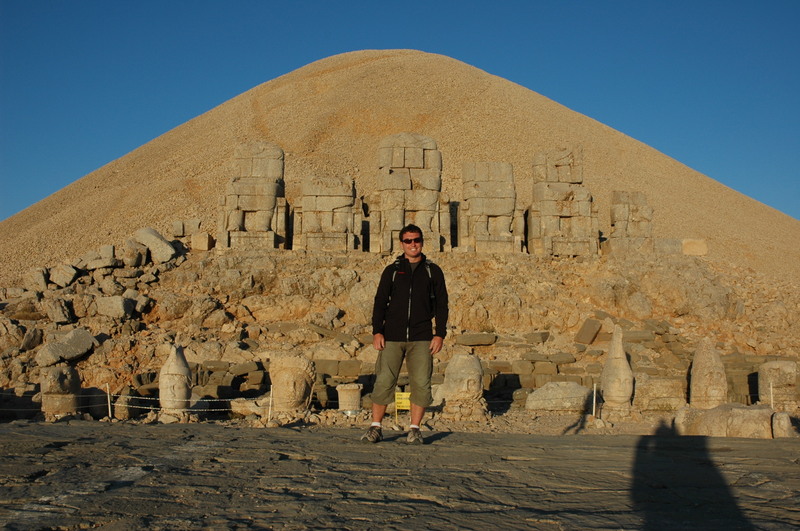
On the eastern terrace. That huge pile of stones behind the statues is the funeral mound built on top of the mountain summit – the king's tomb is under there somewhere!
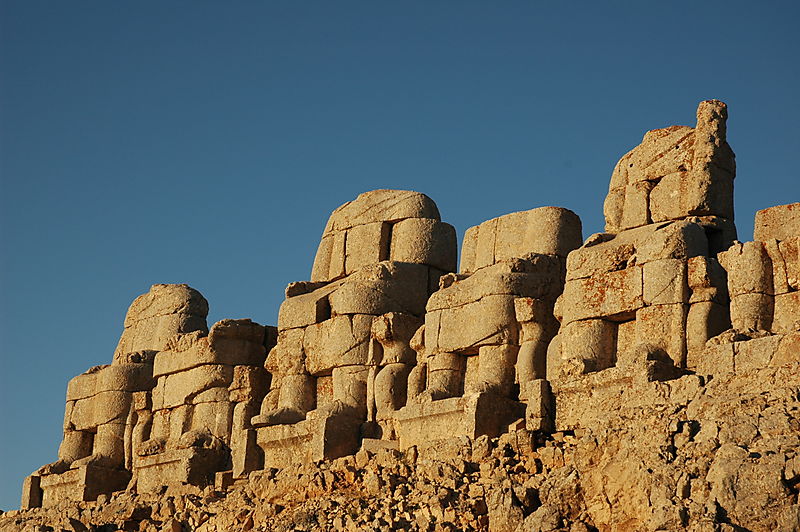
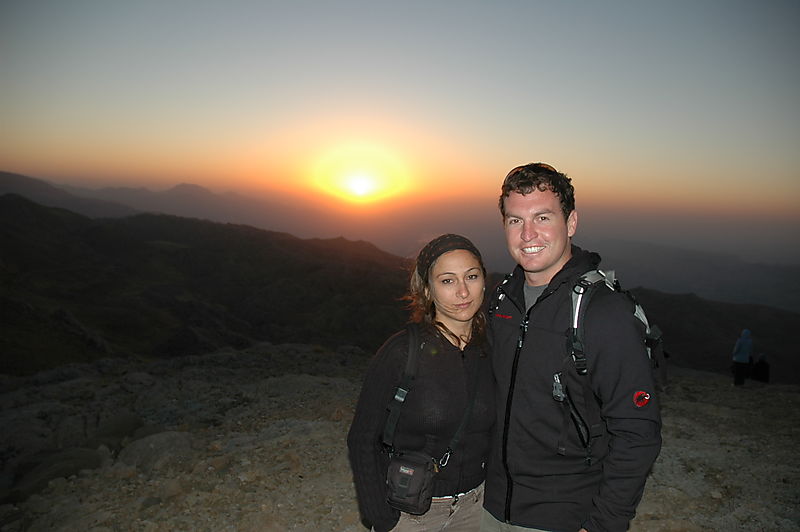
The headless statues. Nev and I at dawn.
After sunrise we walked around the 50m-high funeral mound (discernible from the fist-sized stones placed there in a pyramid shape) to the western terrace, almost identical to the eastern terrace. The statue heads are in better condition however. Shame they were in the shade tho – next time I'll have to come for sunset!
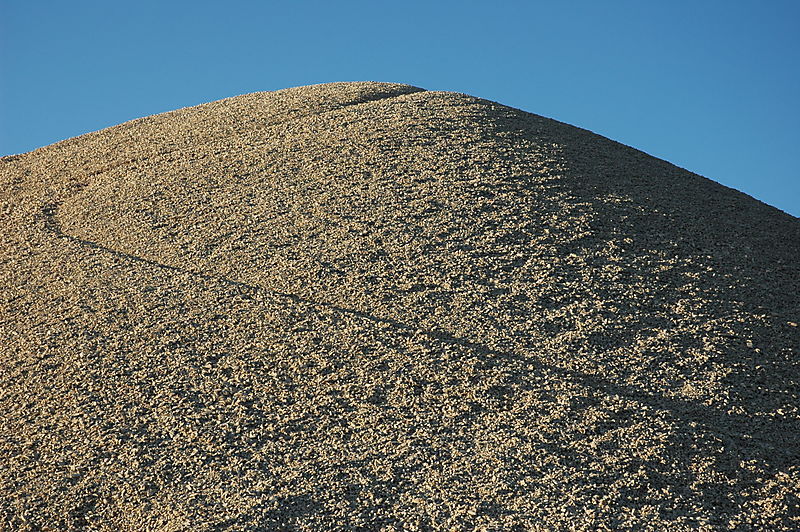
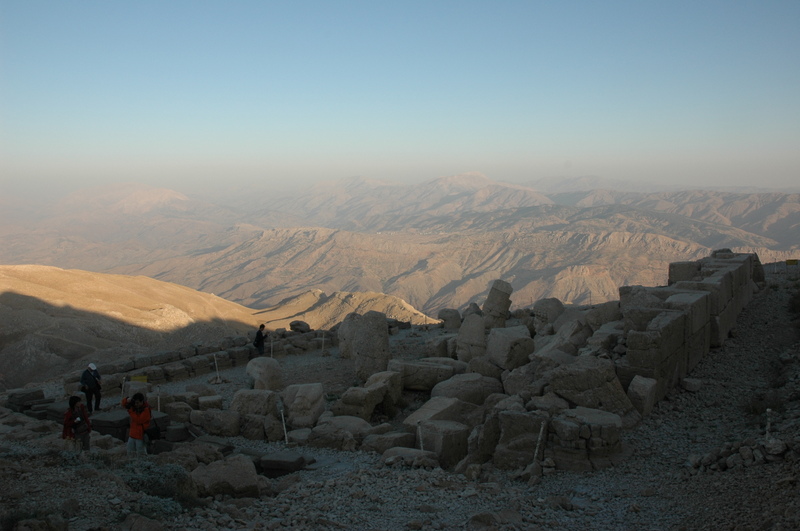
The path to the summit. Western terrace in the morning shade.
On the way back to the hotel we stopped off at a few other sights along the way. First stop was the ruins of Arsameia, the Commagene capital founded in 80 BC. It sits atop a decent sized hill and has some fantastic stone relief carvings, including one in near perfect condition of King Mithridates I shaking hands with the god Heracles.
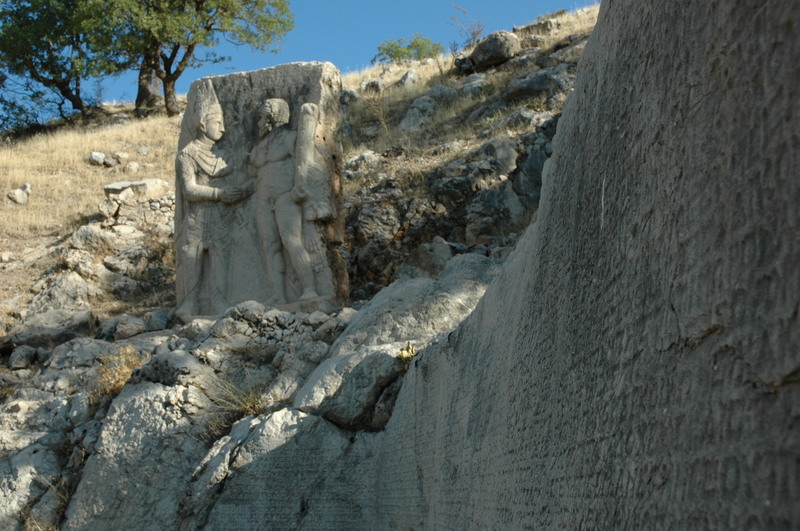
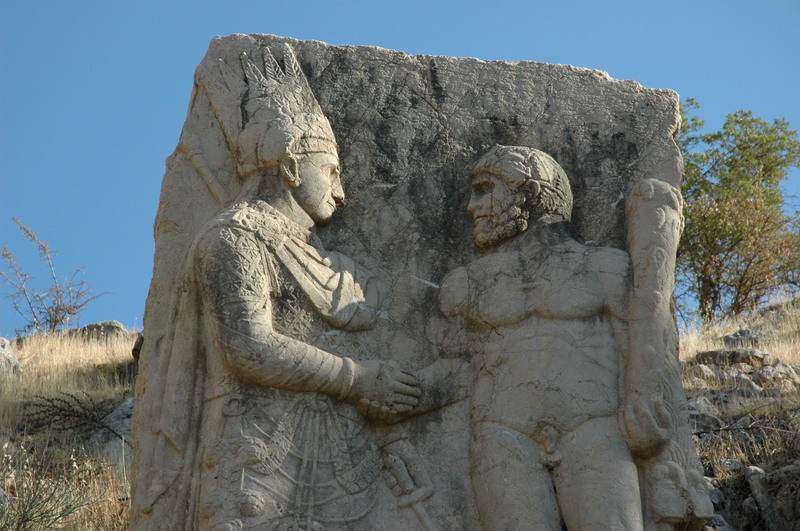
A perfectly intact stone relief carving with a stone wall of Greek inscriptions.
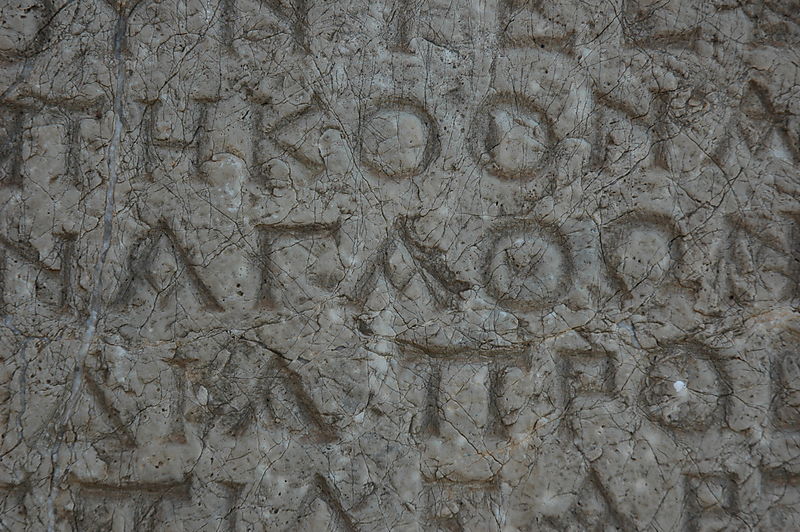 It's all Greek to me…
We saw a few other ruins of the Commagene kingdom (Yeni Kale, Karakus Tumulus) but the other highlight of the tour for me was the 2nd Century AD Roman bridge built over the Cendere river.
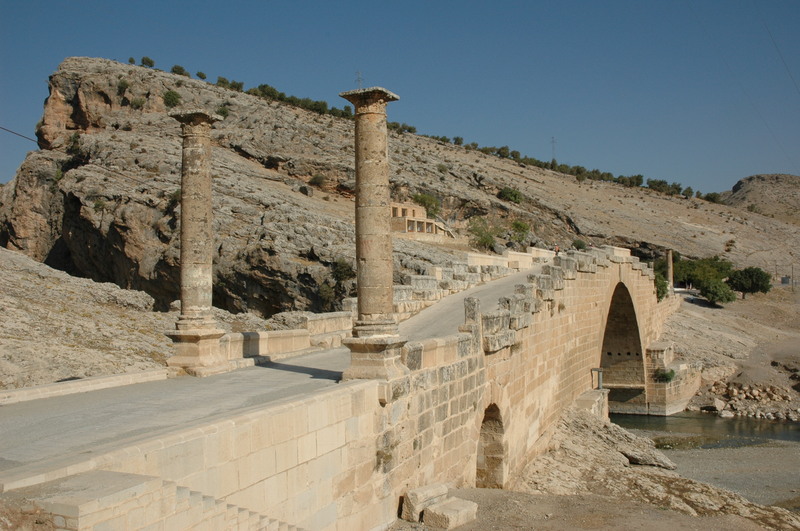
After freshening up back at the hotel we drove further south, past the massive Ataturk Dam on the Euphrates River, to the pilgrimage town of Sanliurfa. The town was known as Urfa until 1984, but after nearby Antep renamed themselves Gaziantep (Heroic Antep) they couldn't be outdone and renamed their city Glorious Urfa. The town definitely has a more Middle Eastern flavour to it than Western or even Central Turkey, most likely due to its close proximity to Syria – bearded men in salvar (the baggy pants), many women in chadors, and lots of pilgrims visiting sights.
At the Golbasi area of the city we saw the ponds filled with "holy" carp and a garden of roses, a symbolic recreation of a legend surrounding Abraham (Ibrahim, who is also considered a great Islamic prophet).
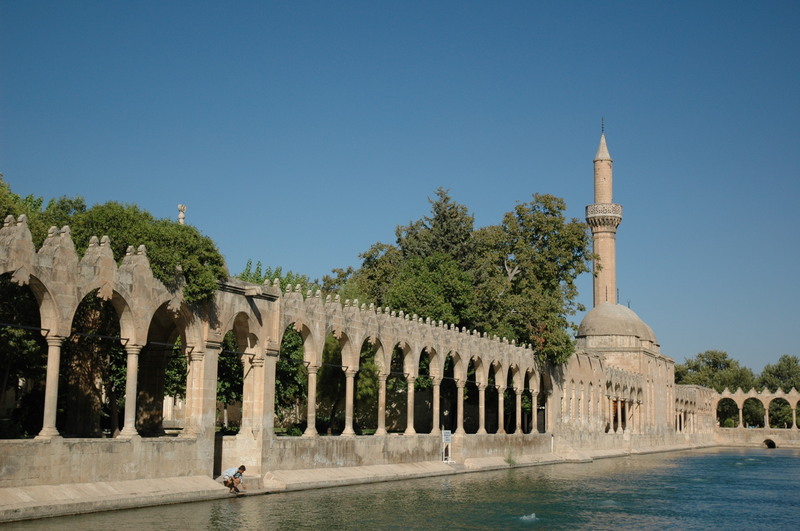
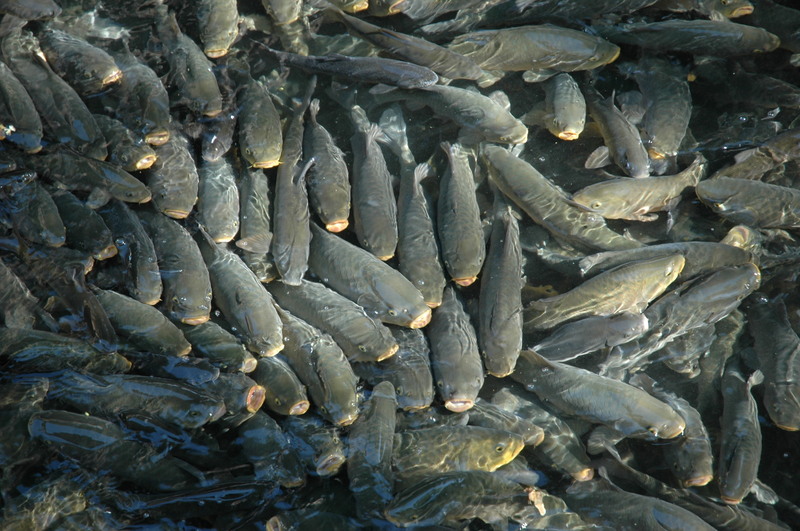
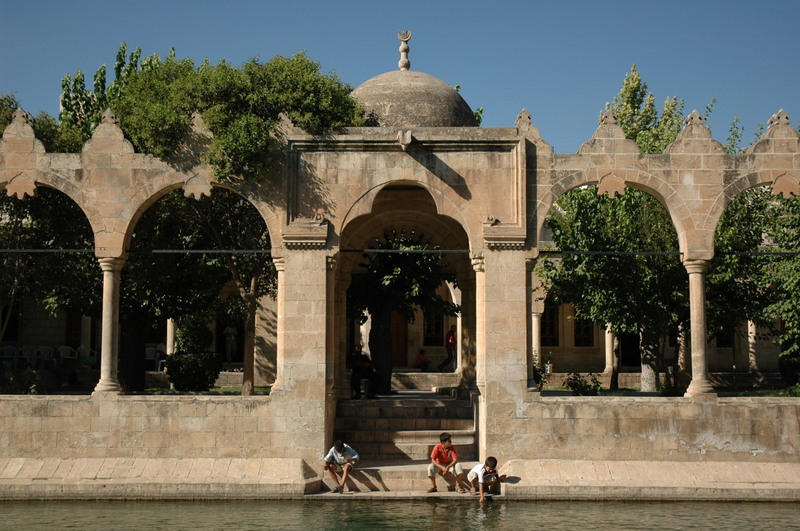
From there we walked through the Dergah complex of religious buildings and mosques. We also visited the pilgrimage site of Hazreti Ibrahim Halilullah, a cave in which legend has it Abraham was born and hid here for his first seven years. To finish our visit of Urfa we walked through the massive bazaar. In a weak attempt to "fit in" better as I'll be traveling around by myself I bought a red and white head scarf (a la Yasser Arafat – sort of) that had me labelled "Paul of Australia" (like "Lawrence of Arabia") by the rest of the tour group.
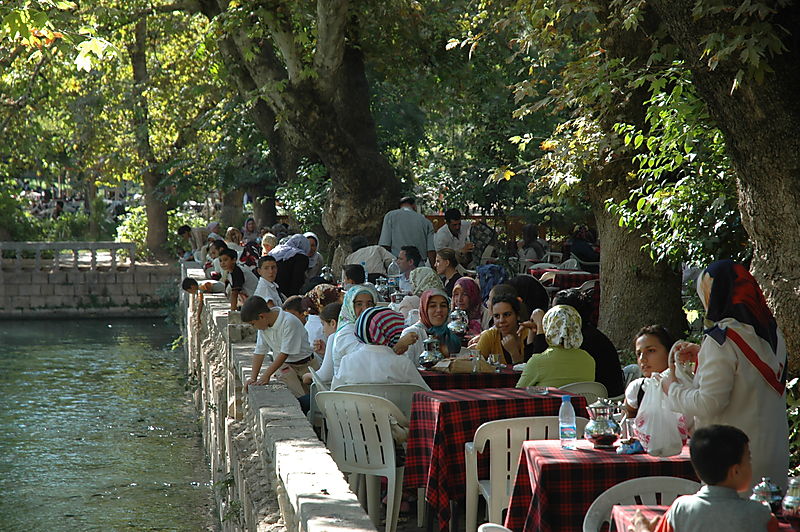
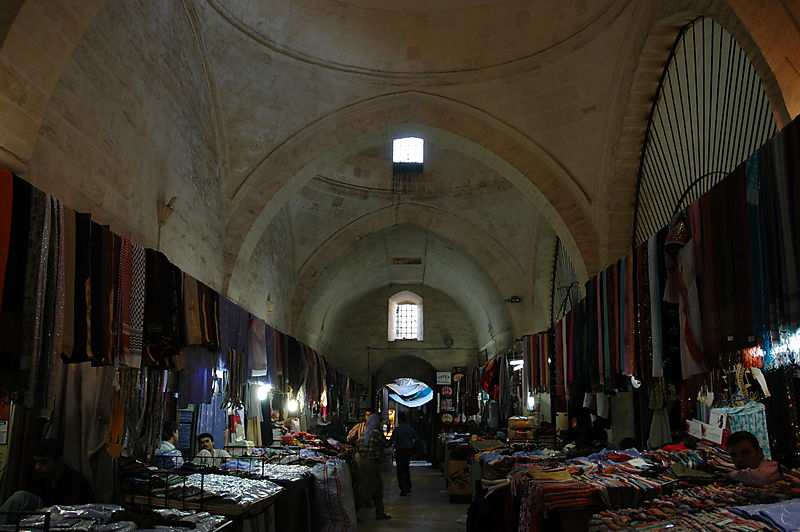
Relaxing by the ponds. In the bazaar.
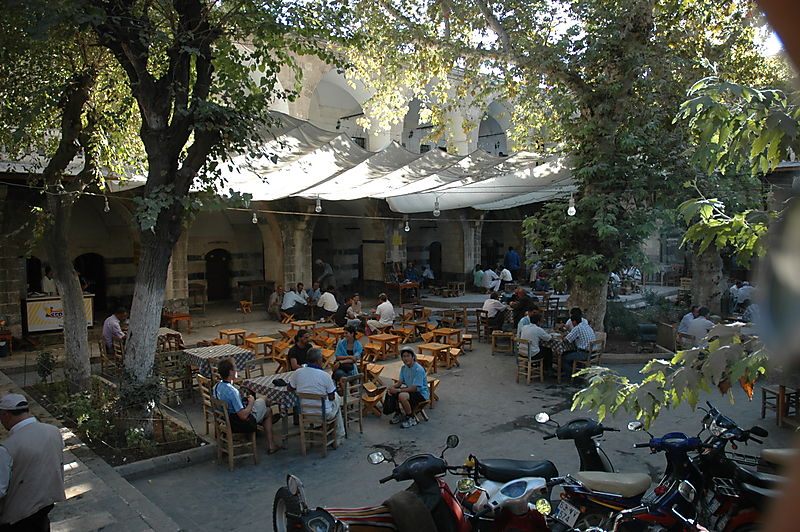 Delightful tea garden in the bazaar.
At sunset we drove further south from Urfa (to within kilometres of the Syrian border) to the town of Harran, which even gets a mention in the Book of Genesis – now that's old! It has an interesting history (Abraham lived here around 1900 BC and the first Islamic university was built here in the 8th Century AD) but there's really not that much to see as the Monguls razed the city back in the 14th Century AD when they roared through. You can still see the outline of the city walls, and the castle ruins still stand. The traditional mud brick "beehive houses" were also cool to see.
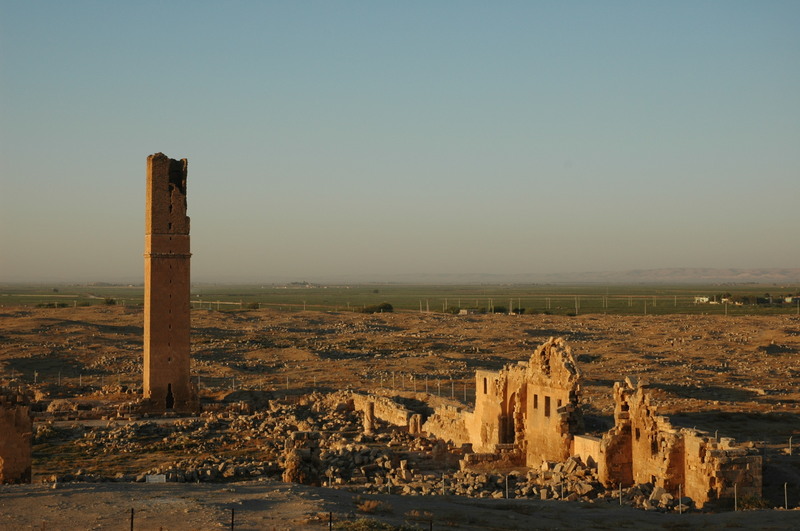
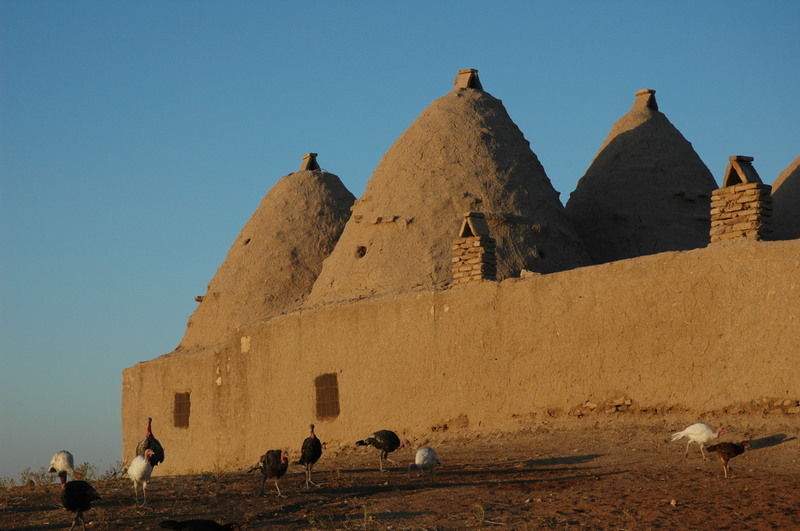
The remnants of the Islamic uni. Exterior of one of the beehive houses.
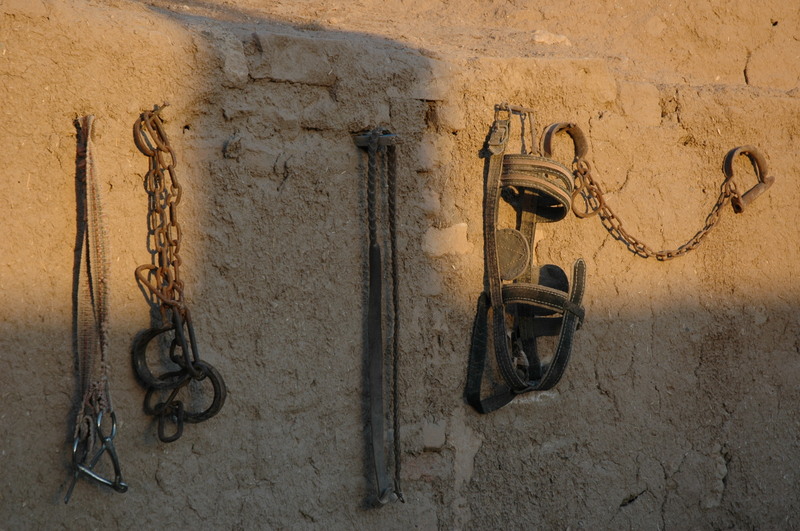
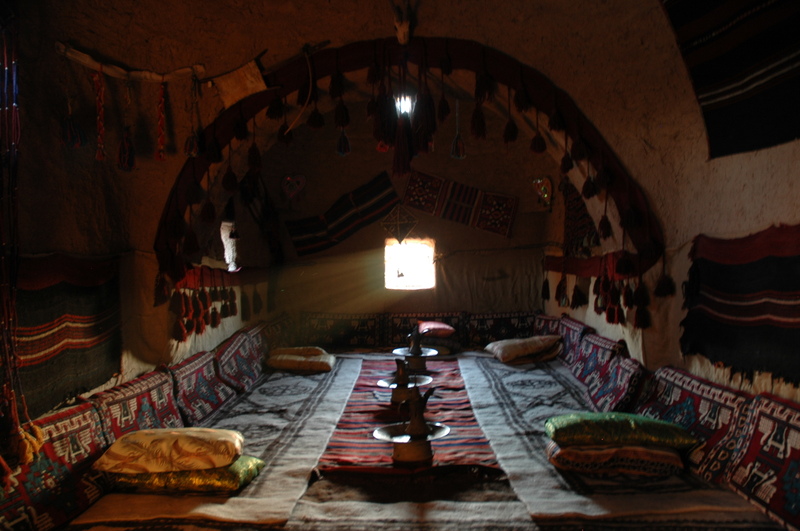
A few shots of the courtyard and the interior of the beehive house.
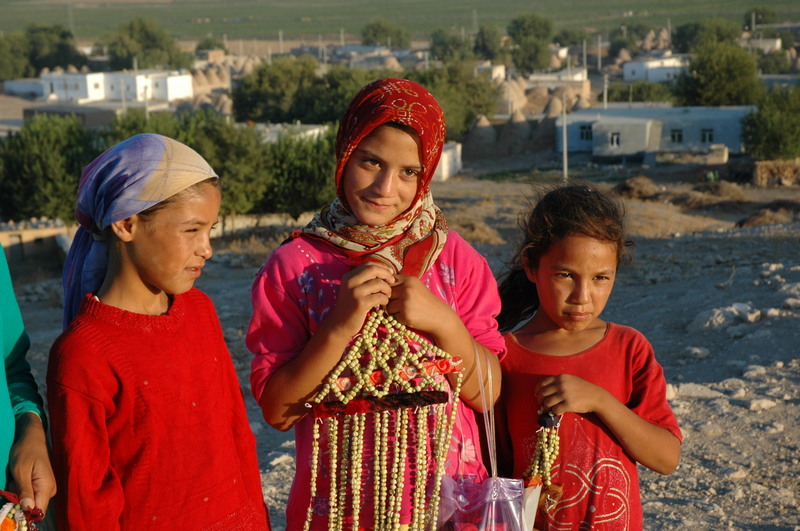
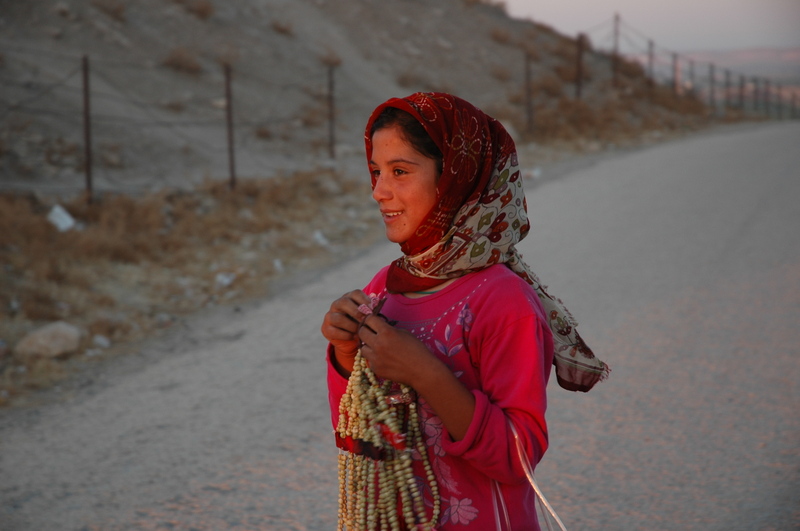
Shy local girls selling their home-made handicrafts.